
Backyard Ideas for Dining, Play and a Garden You Use
 BeforeModern
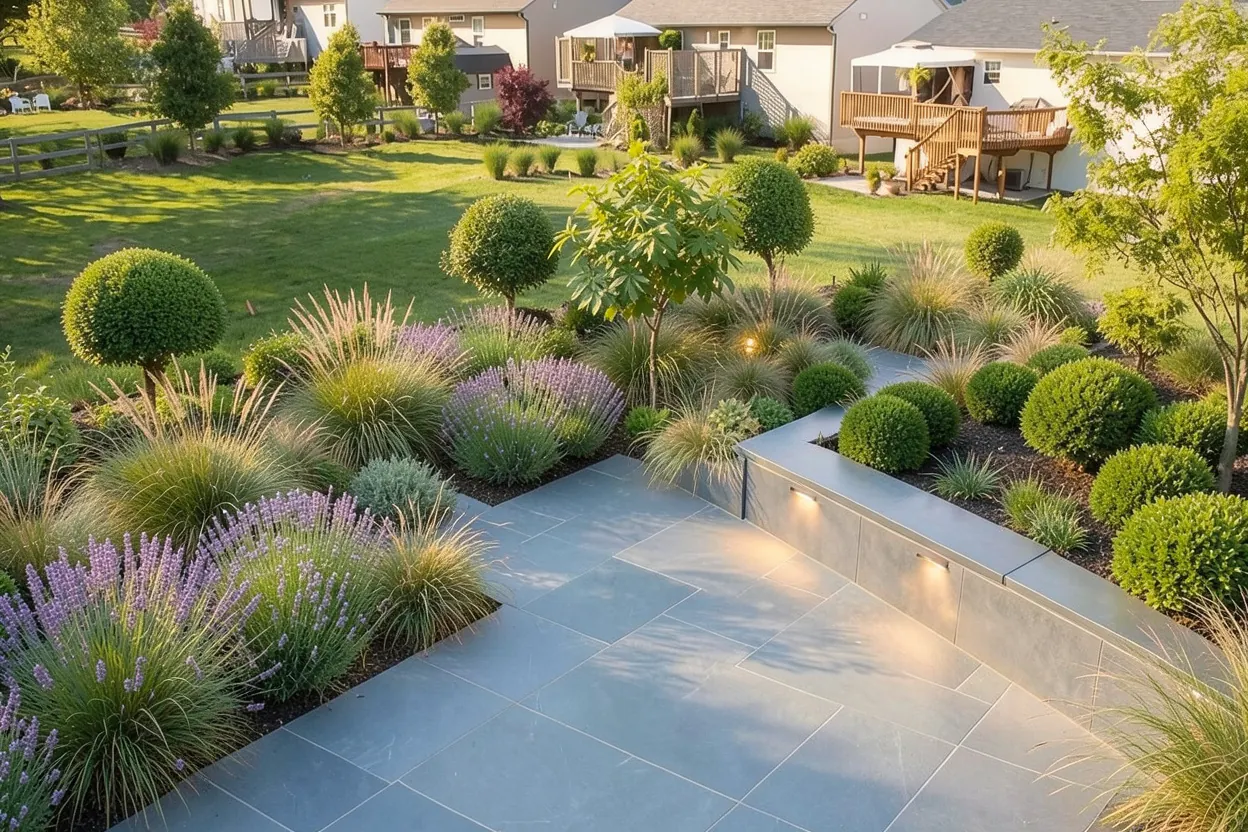
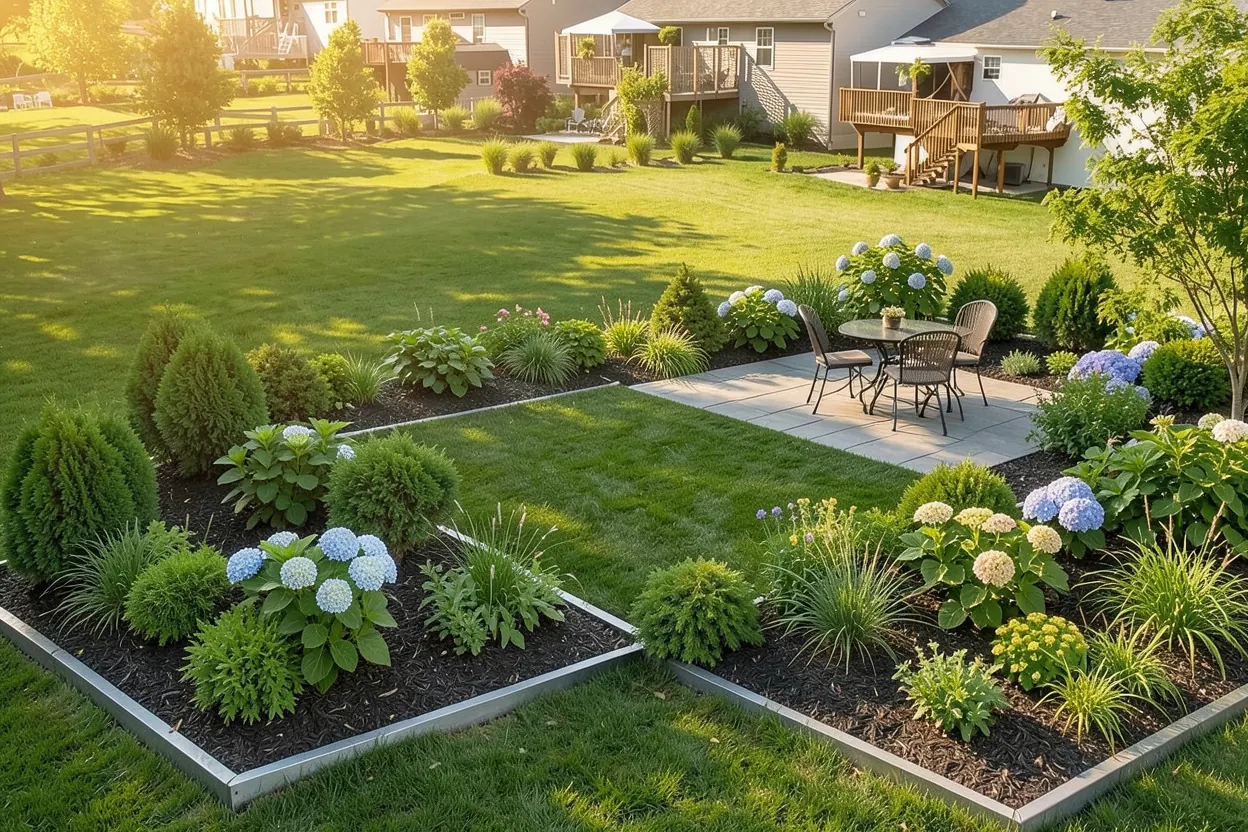
The best backyard ideas begin with how you spend a normal evening outside. A yard for two people reading needs a different layout from a yard for dinners, dogs and children. List two priorities, then protect enough open space for them. The real-yard comparisons below let you compare a social terrace, a softer planted garden and a quieter retreat without pretending every backyard needs every feature.
Try it on your own yardTwo real yards. Three possibilities each.
Drag each slider to reveal the original. Generated with LandscapeGPT using these actual photos; concepts are illustrative, not construction plans or verified plant lists.
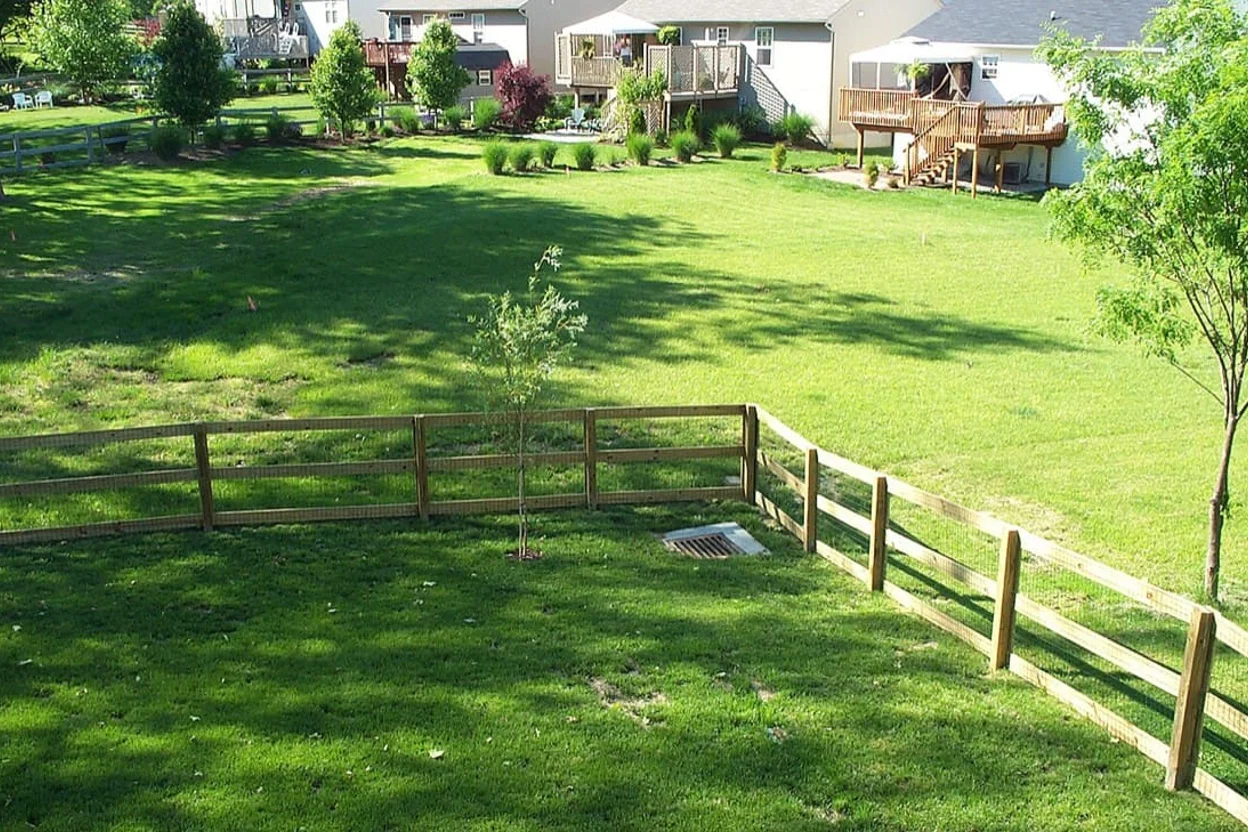
Open suburban backyard, USA
This open lawn has room for both play and a sitting area. Keep the useful center, then compare how each style defines a destination near the existing boundary.
BeforeModern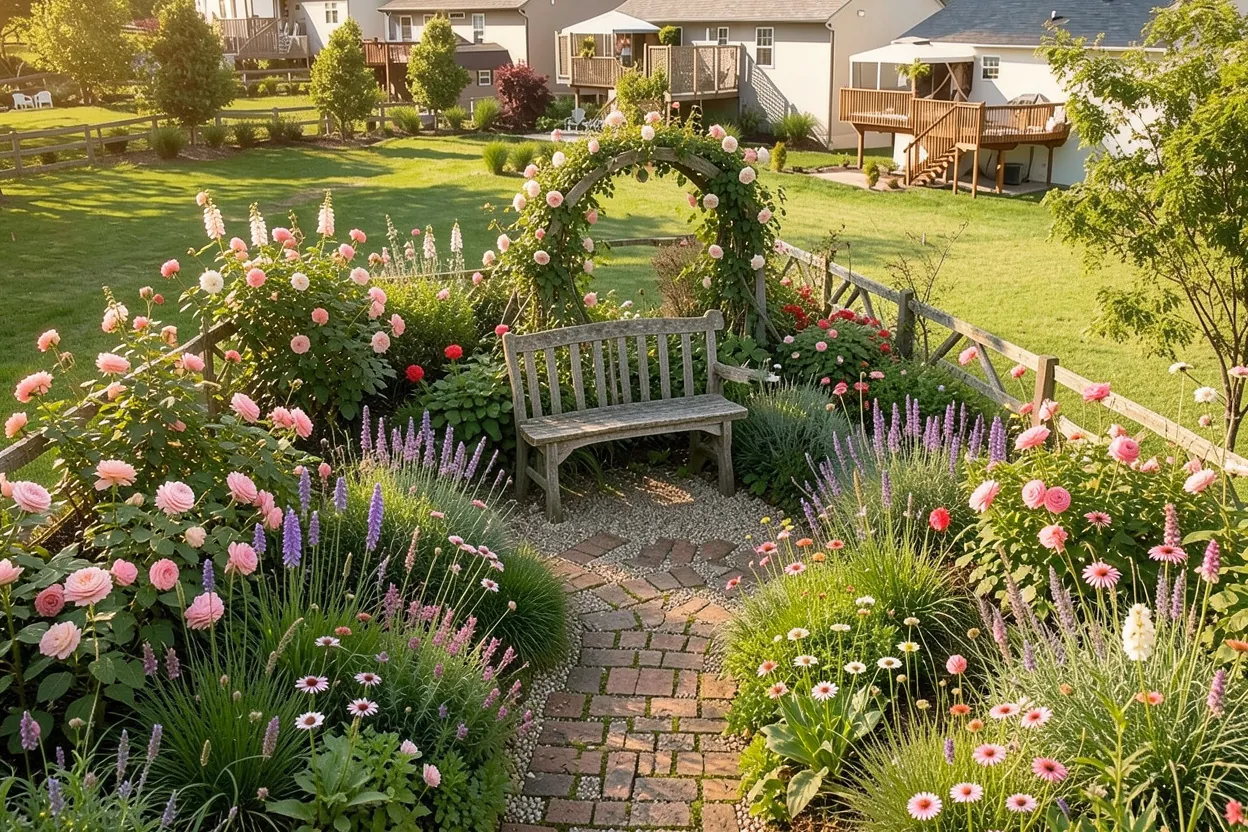 BeforeCottage
 BeforeLow-maintenance
Original photo: Veracious Rey · CC BY-SA 3.0 · Wikimedia Commons source. Cropped and resized. AI redesigns are adaptations, shared under the same license.

Shaded brick-townhouse patio, Massachusetts
The small patio sits beneath a tree beside a brick townhouse. Compare a generous planted edge with a more open sitting area; preserve comfortable circulation and choose plants for the actual shade.
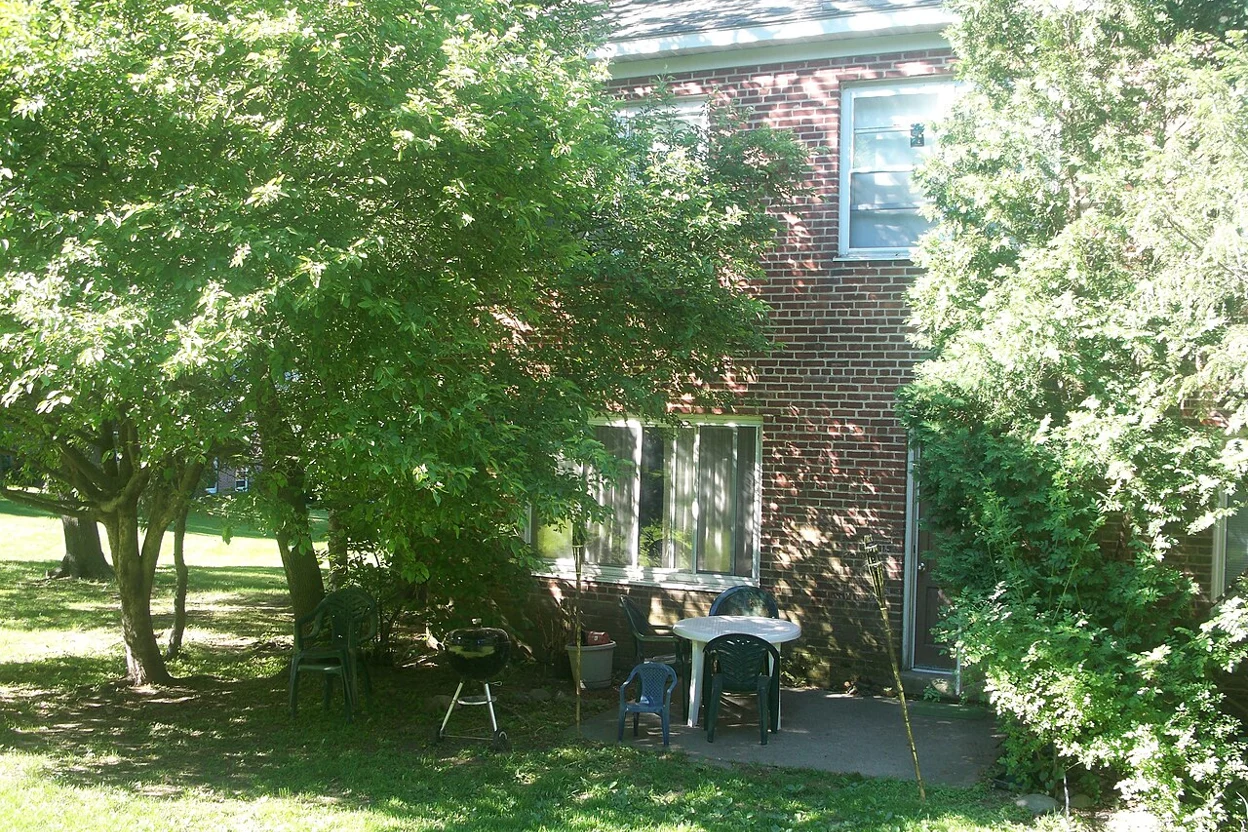
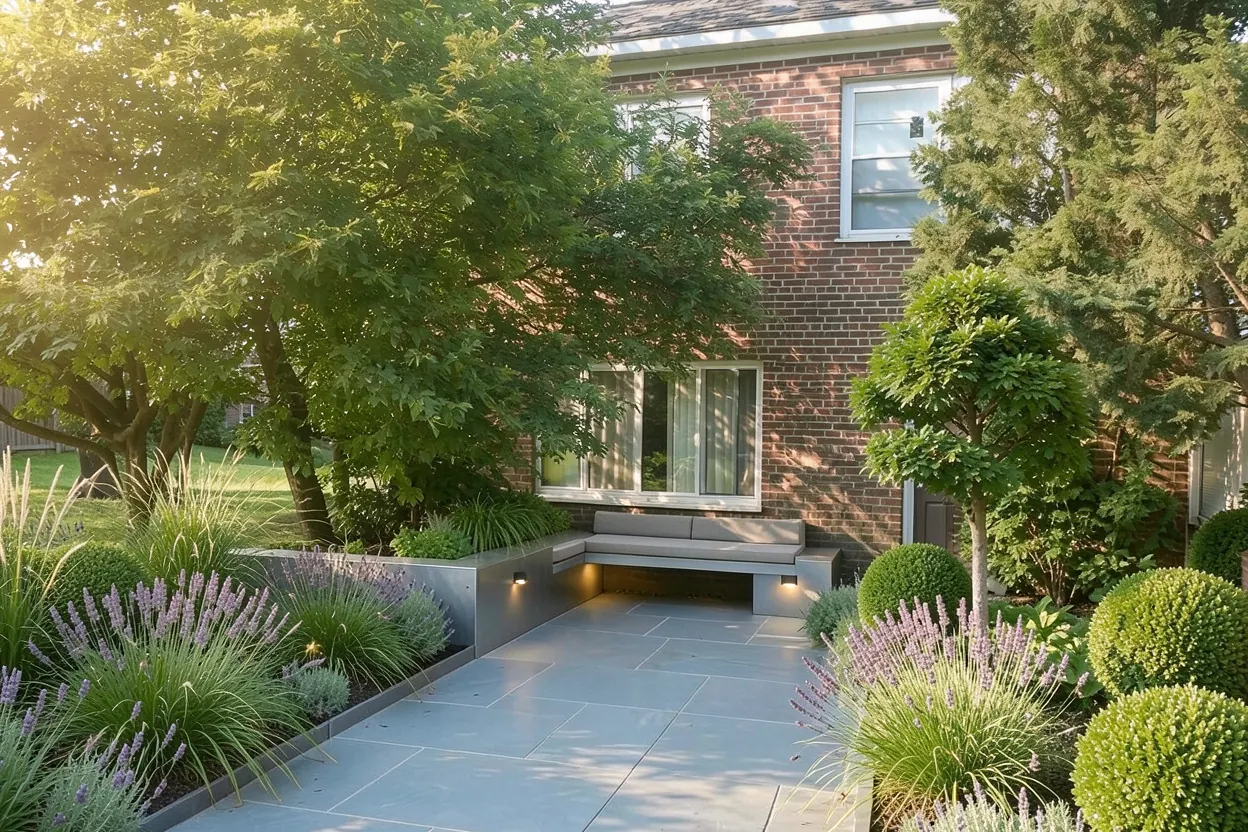 BeforeModern
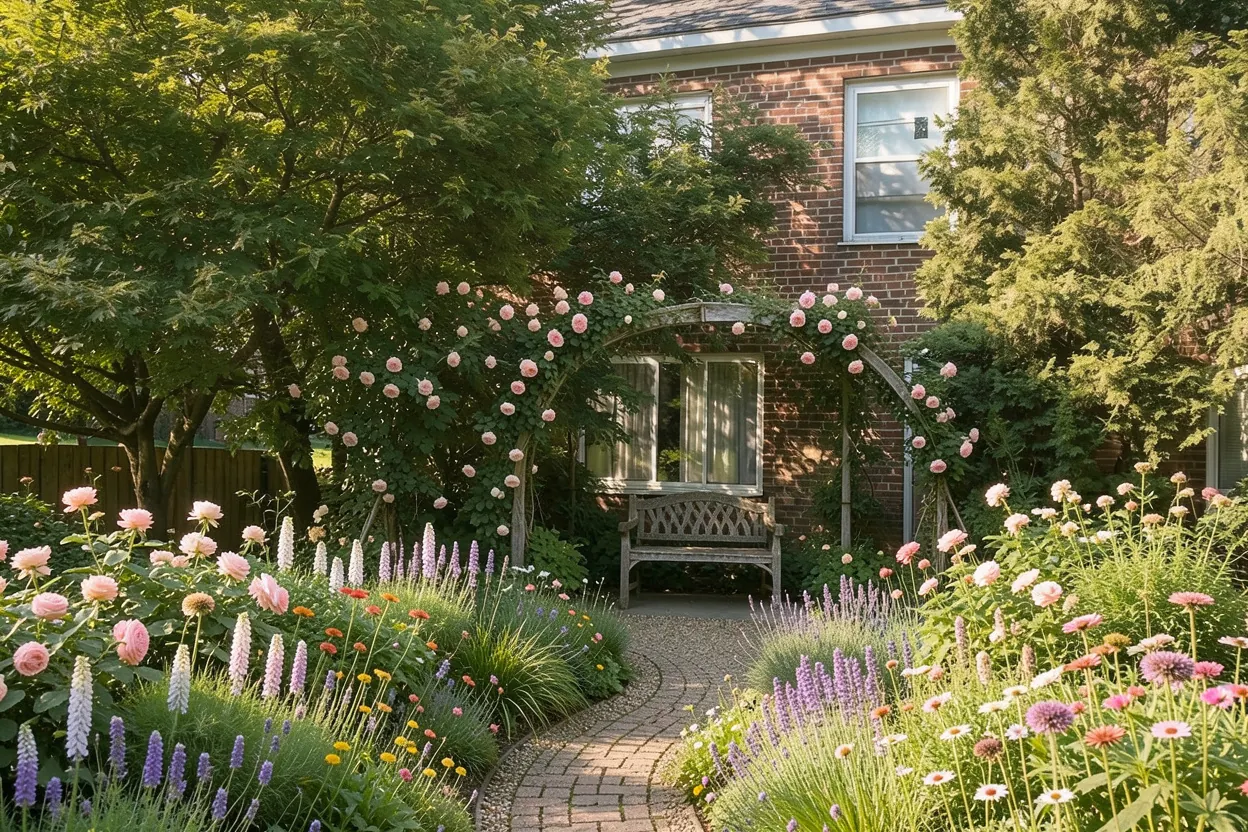 BeforeCottage
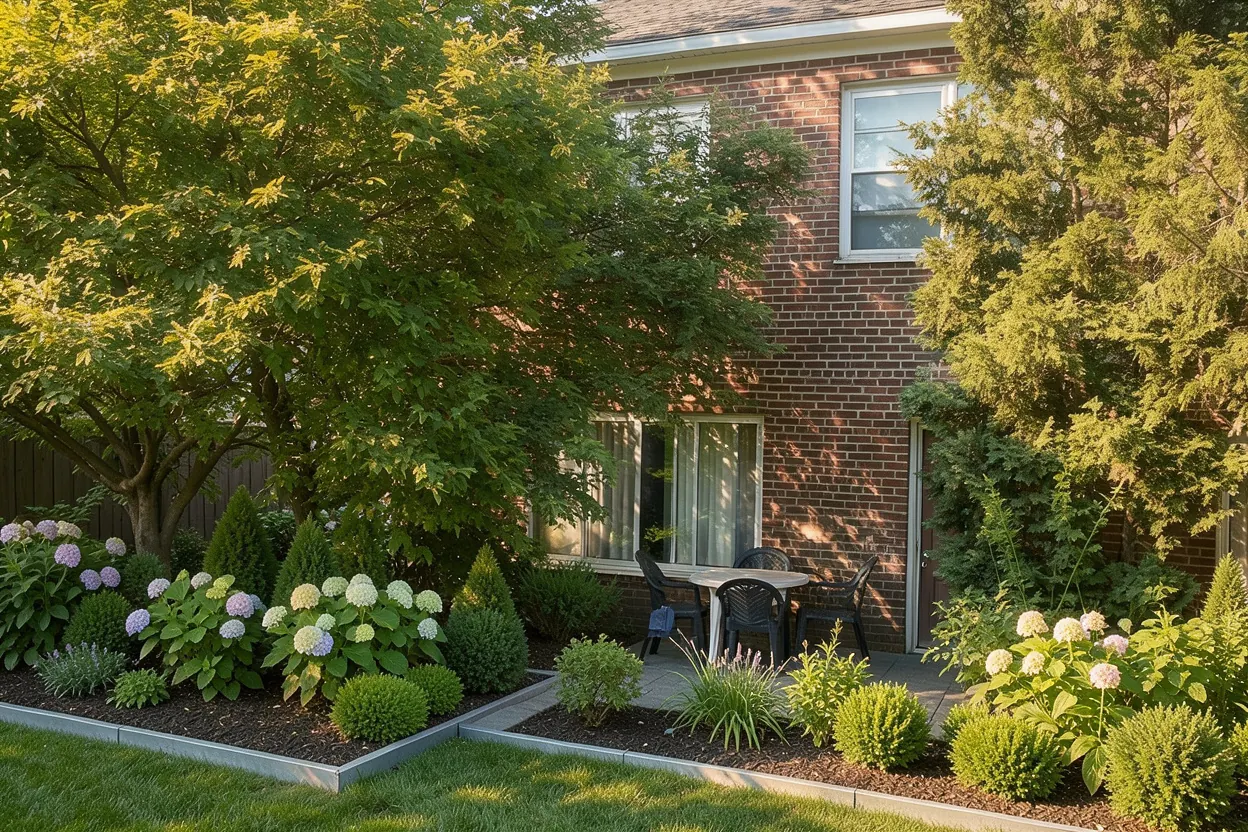 BeforeLow-maintenance
Original photo: EgorovaSvetlana · CC BY-SA 4.0 · Wikimedia Commons source. Cropped and resized. AI redesigns are adaptations, shared under the same license.

Plan a yard that works beyond the picture
1. Arrange rooms around everyday routes
Put dining close enough to the kitchen that carrying plates is easy. Place a quiet chair farther away, where there is a pleasant view and shade at the time you actually sit. Connect these spaces with one direct route rather than a maze of paths. Mark furniture footprints with chairs or string before ordering paving. Allow room to pull out seats and walk behind them. Keep the route from the gate to bins, storage and the back door usable even when a table is occupied.
2. Keep lawn where it earns its space
A simple rectangular or gently curved lawn can be valuable for play. Avoid tiny islands and narrow ribbons that take disproportionate effort to mow. Use the edges of the yard for deeper planting beds instead. In a sunny eastern or central US garden, locally suitable switchgrass, black-eyed Susan and asters can bring height and seasonal color. In shade, choose regional sedges, ferns and woodland perennials. Leave a durable running route for dogs rather than expecting delicate new planting to survive repeated shortcuts.
3. Build privacy at the right height
First identify the actual sightline: a neighbor’s ground-floor window, an elevated deck or a street beyond the fence. A short screen near your chair can be more effective than lining the entire boundary with tall trees. Try a freestanding trellis with a regionally suitable climber, or stagger a few shrubs with different seasonal interest. Check fence and structure rules, and leave access for repairs. Avoid bamboo that spreads by runners unless you understand the containment and maintenance it requires.
4. Choose a surface for the activity
Compact gravel suits a casual sitting corner on a level, well-contained base, but chair legs can sink and loose stone is awkward for wheels. Concrete pavers offer a more stable dining surface; reclaimed brick adds texture but needs careful leveling. Large slabs can feel calm in a modern yard, though they need a properly designed base. Keep finished levels and drainage coordinated with the house. A puddle-prone corner needs diagnosis before it becomes a patio, not simply another layer of gravel.
5. Plan for summer and the off-season
Observe the yard in morning and late afternoon. A sunny spring terrace may be uncomfortable in July; move the furniture first to test an alternative location. Deciduous trees can provide summer shade while admitting winter light, but their roots and mature canopy need room. Container citrus and olive trees in Mediterranean-inspired images need protection in cold climates. Keep some evergreen structure, seedheads or interesting bark so a planted backyard still has a shape after flowers fade.
6. Make the first phase complete
Set a rough DIY allowance of $500–$1,500 for a small seating corner and a modest planting refresh. A planting-led makeover with a larger material order might need $2,000–$6,000; a professionally built patio with substantial planting can exceed $10,000–$25,000. These are example US budgets, not local estimates, and exclude major grading or retaining structures. Start with one usable room and the route to it. Contact 811 before digging in the US, follow local marking instructions, and arrange checks for private lines. Photograph the result area before comparing styles.
Further reading: EPA WaterSense landscape planning, University of Missouri Extension on maintenance, Colorado State Extension on xeriscape conversions, and 811 before you dig.
Questions before you start
How do I design an empty backyard?
Pick the two activities you want most, mark furniture and circulation on the ground, and keep an open area between them. Add planting after the main layout works.
What can I do on a small budget?
Reuse sound paving, relocate existing furniture and improve one planting bed. Spend on drainage or unsafe surfaces before decorative additions.
How do I make a backyard more private?
Identify the sightline and place a screen or suitable planting close to the seating area. Check local limits and account for mature plant size.
Try it on your own yard
Upload a daylight photo. Compare styles on your actual space, then save a concept to discuss with your landscaper.
Design my yard — freeNo signup. Or use the camera button below to start here.