
Low Maintenance Landscaping Ideas with Less Weekly Work
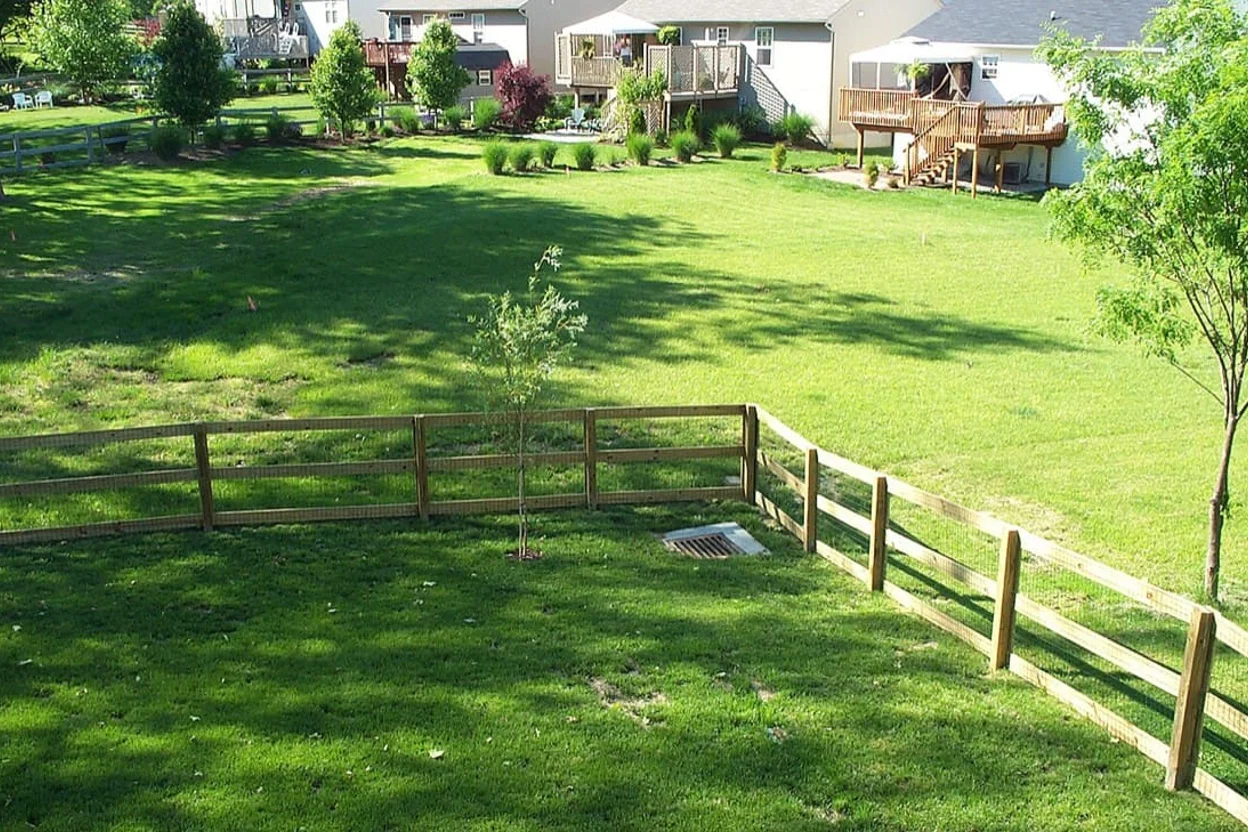
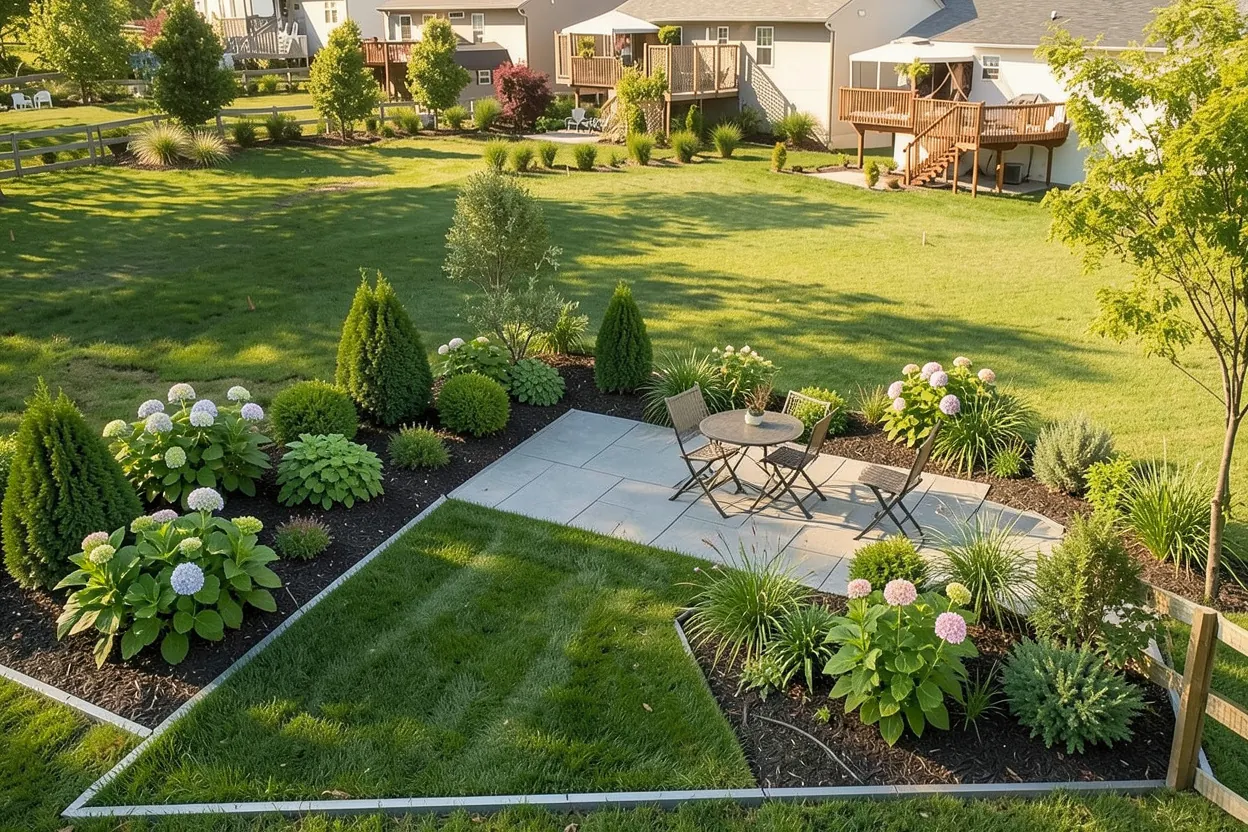 BeforeLow-maintenance
Low maintenance landscaping ideas should reduce the jobs you dislike, not replace mowing with endless weeding. Start by listing the recurring work: clipping, watering containers, edging, leaf cleanup or cutting back perennials. Then change the layout and plant choices that cause it. The comparisons below explore three visual approaches on each real yard; a tidy image is only useful if its planting and materials also suit your time and climate.
Try it on your own yardTwo real yards. Three possibilities each.
Drag each slider to reveal the original. Generated with LandscapeGPT using these actual photos; concepts are illustrative, not construction plans or verified plant lists.
Open lawn with a simple boundary
The main opportunity is simpler circulation and fewer awkward mowing edges. The cottage image is the higher-care comparison: use its overall shape only if the seasonal work appeals to you.
BeforeLow-maintenance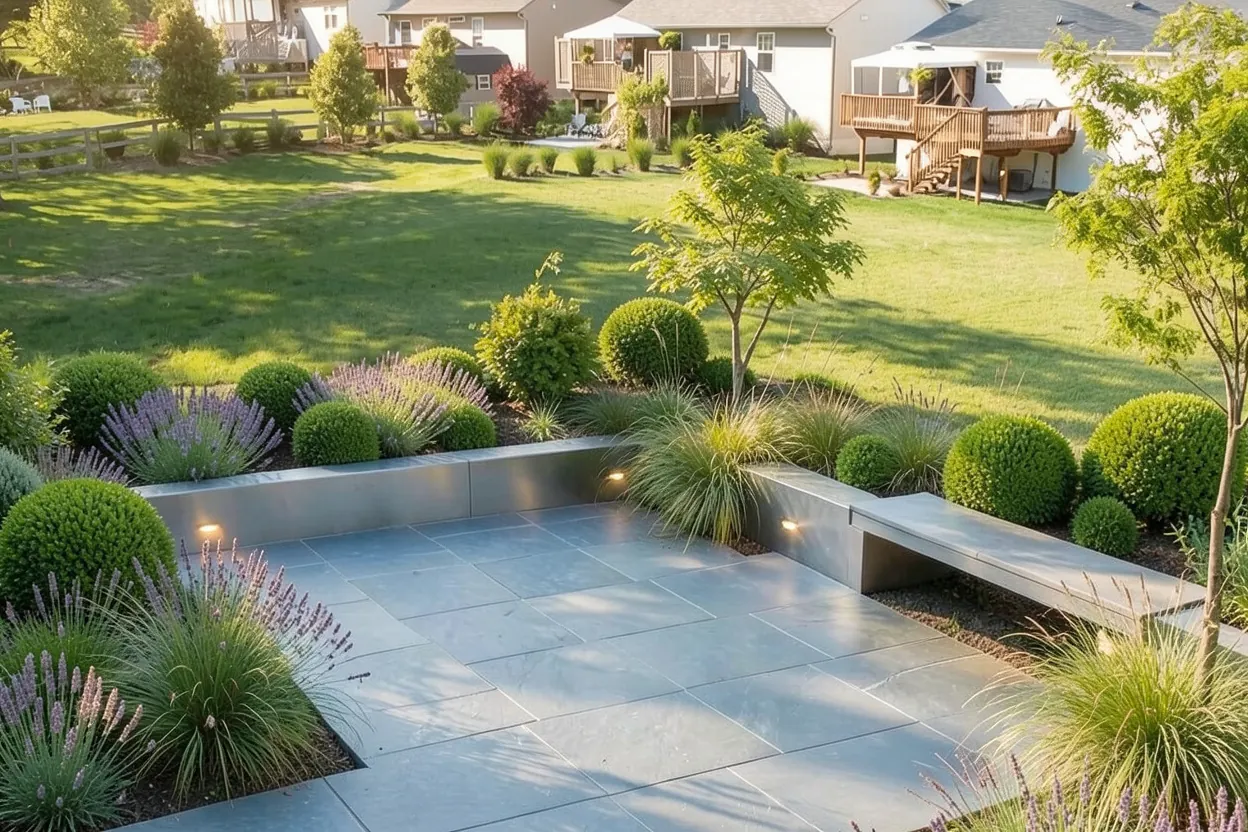 BeforeModern
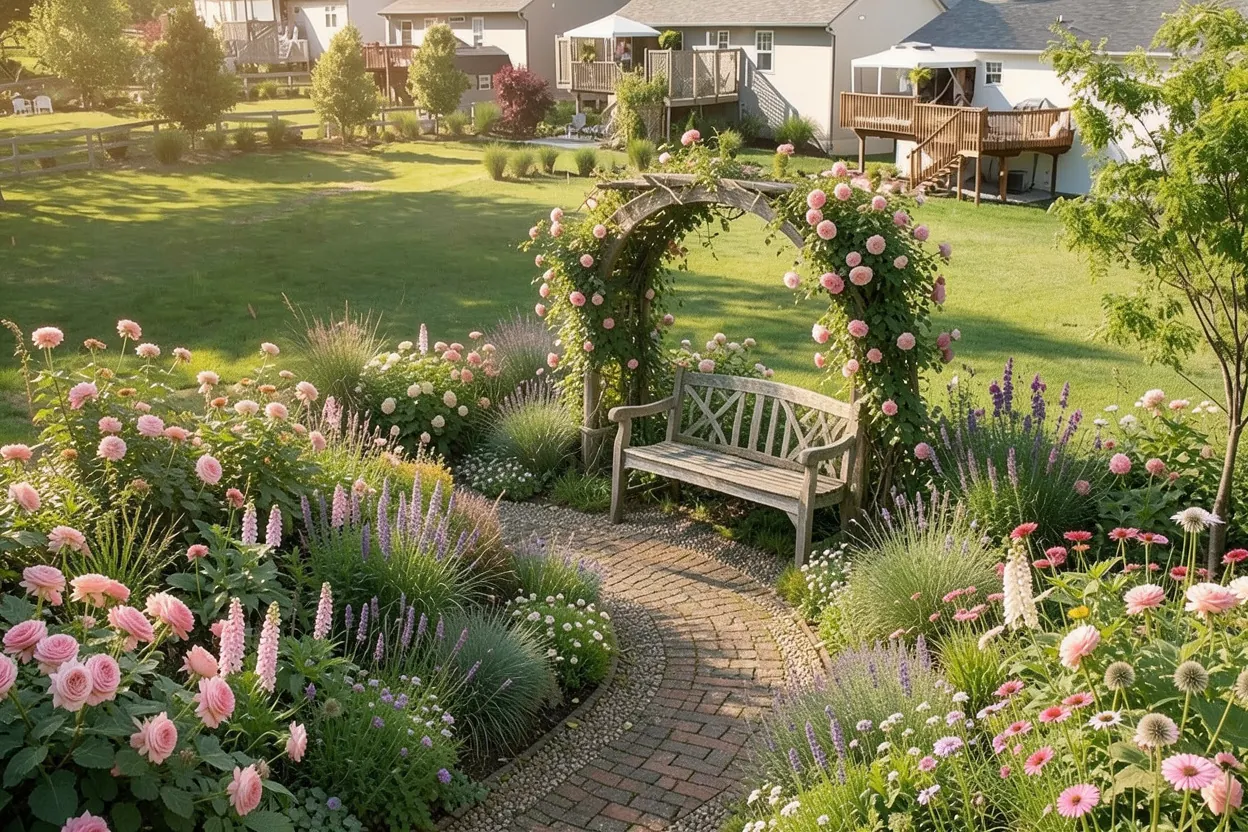 BeforeCottage
Original photo: Veracious Rey · CC BY-SA 3.0 · Wikimedia Commons source. Cropped and resized. AI redesigns are adaptations, shared under the same license.

Front lawn with established planting
A broad lawn does not need dozens of different plants. Compare repeated beds against a paved sitting area; Mediterranean containers and climbing vines bring extra pruning and watering tasks.
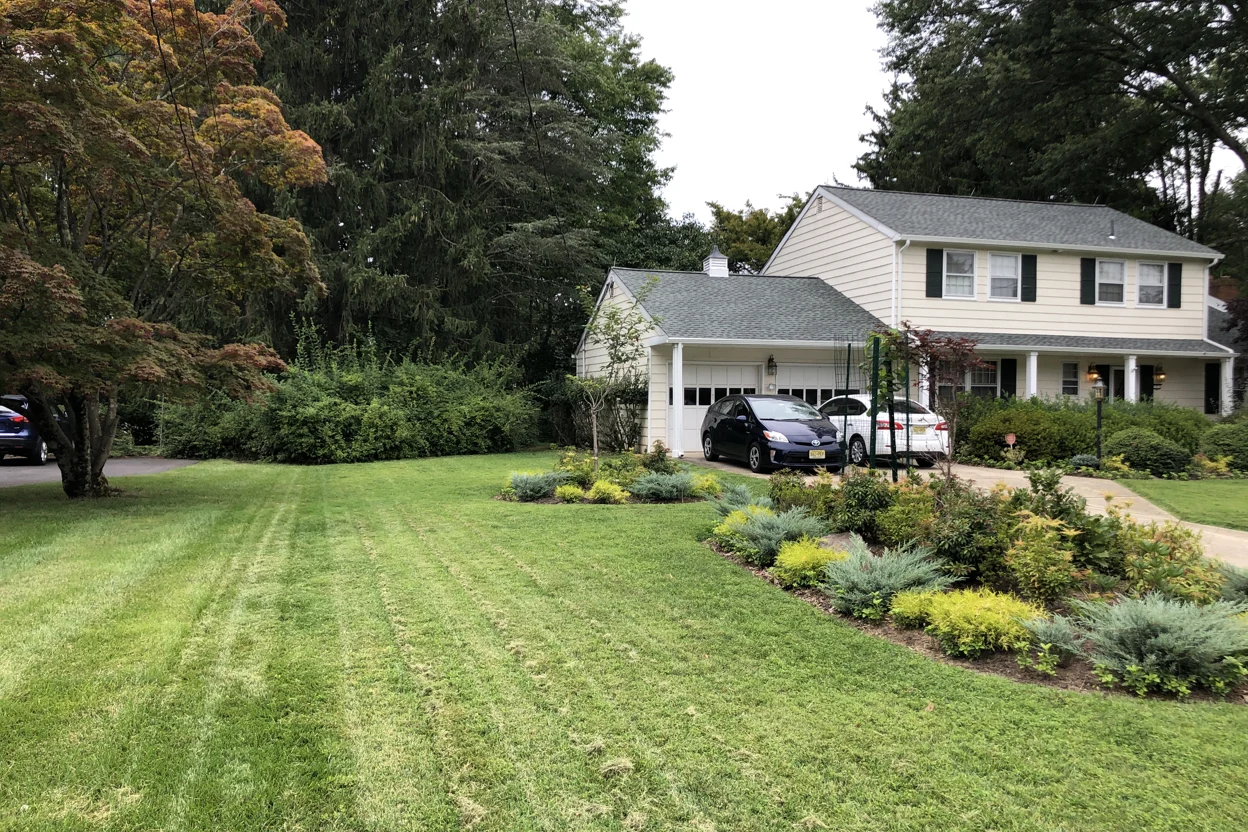
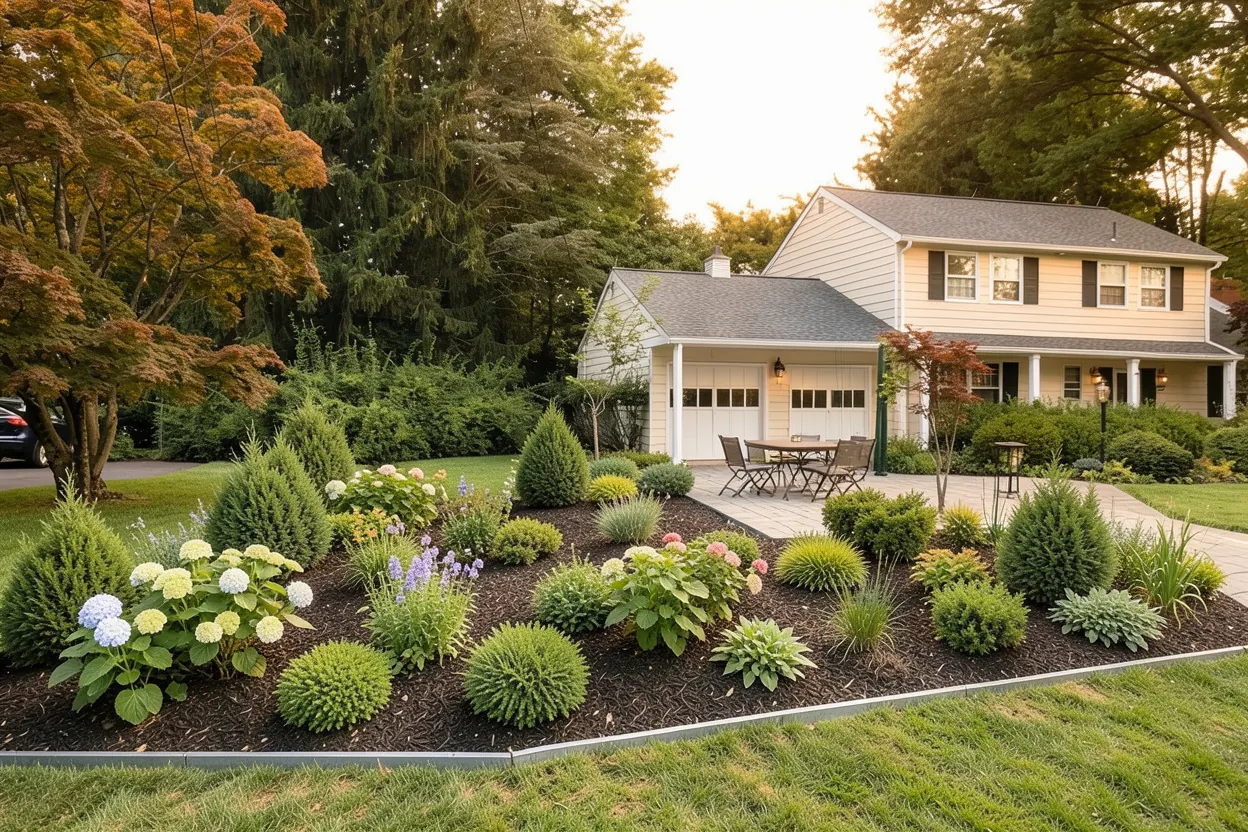 BeforeLow-maintenance
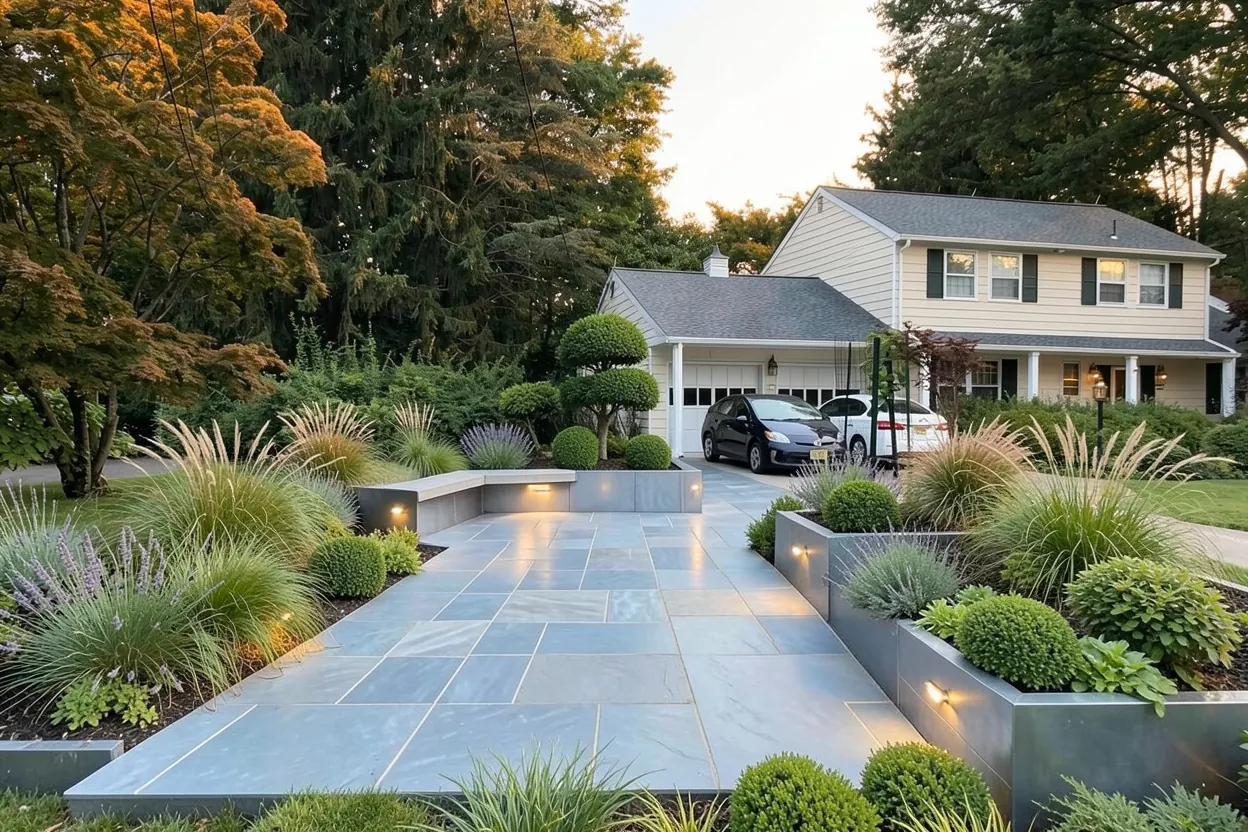 BeforeModern
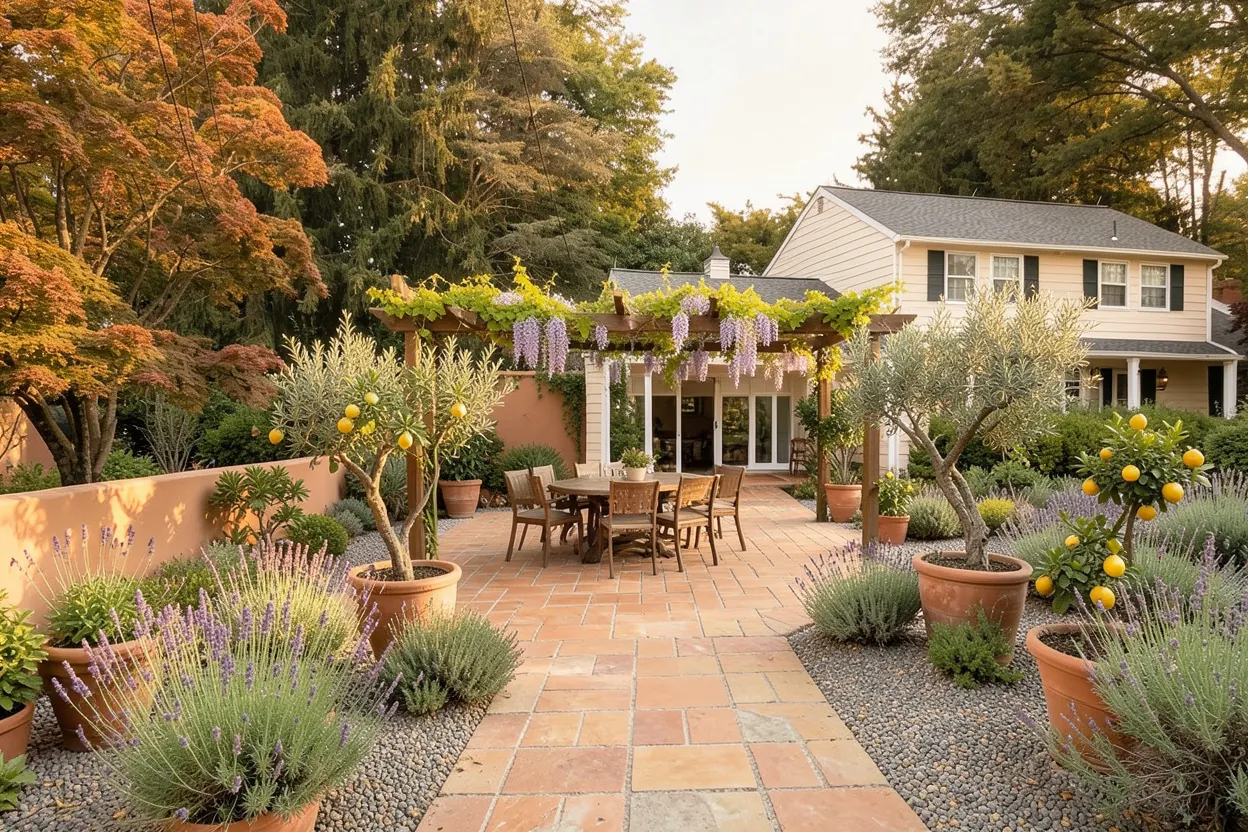 BeforeMediterranean
Original photo: Famartin · CC BY-SA 4.0 · Wikimedia Commons source. Cropped and resized. AI redesigns are adaptations, shared under the same license.

Plan a yard that works beyond the picture
1. Simplify the shape before changing plants
Remove tight lawn corners, isolated planting circles and narrow grass strips. A mower-friendly lawn panel with one continuous bed is easier to care for than several islands. Use a firm, durable edge installed flush enough to work with your equipment. Avoid creating a gravel moat around every shrub; it adds edges to weed and makes future changes harder. Retain established plants that are healthy, well placed and already thriving without much attention. Clearing everything can create several years of establishment work.
2. Choose shrubs for their eventual size
A shrub that naturally fits below a window avoids the cycle of repeated shearing. Check mature width as carefully as height, and leave access to walls, taps and utilities. In suitable eastern US conditions, compact inkberry or summersweet may fit particular beds; neither is a universal answer for dry alkaline soil. In colder sunny regions, locally recommended dwarf conifers and hardy grasses can provide structure. Look for a naturally useful form rather than a plant that only works after being clipped into a different one.
3. Repeat durable perennials
Choose a small set of plants matched to the bed’s sun, moisture and soil, then repeat them in groups. In sunny, well-drained temperate beds, hardy geranium, stonecrop and suitable ornamental grasses can reduce the need for staking and frequent replacement. Shaded woodland conditions call for a different palette, such as regional sedges and ferns. Avoid plants that spread beyond the space or seed into every paving joint. Leave enough growing room so the design does not depend on annual dividing to keep it usable.
4. Make mulch and watering do useful work
Remove established weeds before applying mulch; covering them rarely solves the underlying problem. Use a moderate layer appropriate to your plants and climate, keeping it away from trunks and crowns. Organic mulch breaks down and needs replenishment. Gravel lasts longer but traps leaves, can reflect heat and does not prevent all weeds. Group plants with similar water needs so irrigation can be targeted. A drip system needs inspection for leaks and clogged emitters, especially while plants establish; automation does not eliminate checking.
5. Reduce the number of fussy details
A few large containers usually need less frequent attention than many small pots, though they still require watering. Put seasonal color near the door where you enjoy it, and use durable planting elsewhere. Keep a practical route to the compost area and hose. Choose paving that can be swept and furniture that can stay outside in your climate. If fallen leaves are the main chore, avoid a loose-stone surface directly beneath a deciduous canopy. Match the surface to the debris the yard actually produces.
6. Invest in fewer future chores
Allow roughly $300–$1,000 for a DIY bed reset with mulch and a modest plant order. A larger shrub-and-edging refresh might use $2,000–$5,000; a contractor-led redesign with paving or irrigation can exceed $8,000–$18,000. These are illustrative US planning bands, not estimates for your property. Spend first on sound edges, appropriate spacing and difficult weeds. Expect establishment watering and early weeding even in a low-work garden. Compare the pictured styles by their likely tasks, then choose the one you would still enjoy maintaining in an ordinary busy month.
Further reading: EPA WaterSense landscape planning, University of Missouri Extension on maintenance, Colorado State Extension on xeriscape conversions, and 811 before you dig.
Questions before you start
What is the lowest maintenance landscaping?
There is no universal plant list. A simple layout with well-spaced, locally suitable shrubs, limited lawn edges and practical surfaces usually reduces recurring tasks.
Is gravel maintenance-free?
No. Leaves and soil accumulate, weeds can establish and loose stones migrate. Gravel is useful where its drainage, heat and cleanup characteristics suit the site.
Do native plants need no care?
Native plants still need suitable soil, sun and moisture, plus establishment care. Choose species adapted to your specific site rather than assuming every regional native will thrive.
Try it on your own yard
Upload a daylight photo. Compare styles on your actual space, then save a concept to discuss with your landscaper.
Design my yard — freeNo signup. Or use the camera button below to start here.