
Drought Tolerant Landscaping Ideas Beyond a Gravel Yard
 BeforeDesert xeriscape
Drought tolerant landscaping ideas begin with water, soil and shade, not a shopping list of cactus. A dry-summer coastal garden, a cold prairie yard and a hot desert frontage need different plants. Xeriscaping means planning a landscape around efficient water use while keeping the space useful. The real-yard comparisons below show contrasting visual directions; translate their structure into a locally suitable palette before buying plants.
Try it on your own yardTwo real yards. Three possibilities each.
Drag each slider to reveal the original. Generated with LandscapeGPT using these actual photos; concepts are illustrative, not construction plans or verified plant lists.
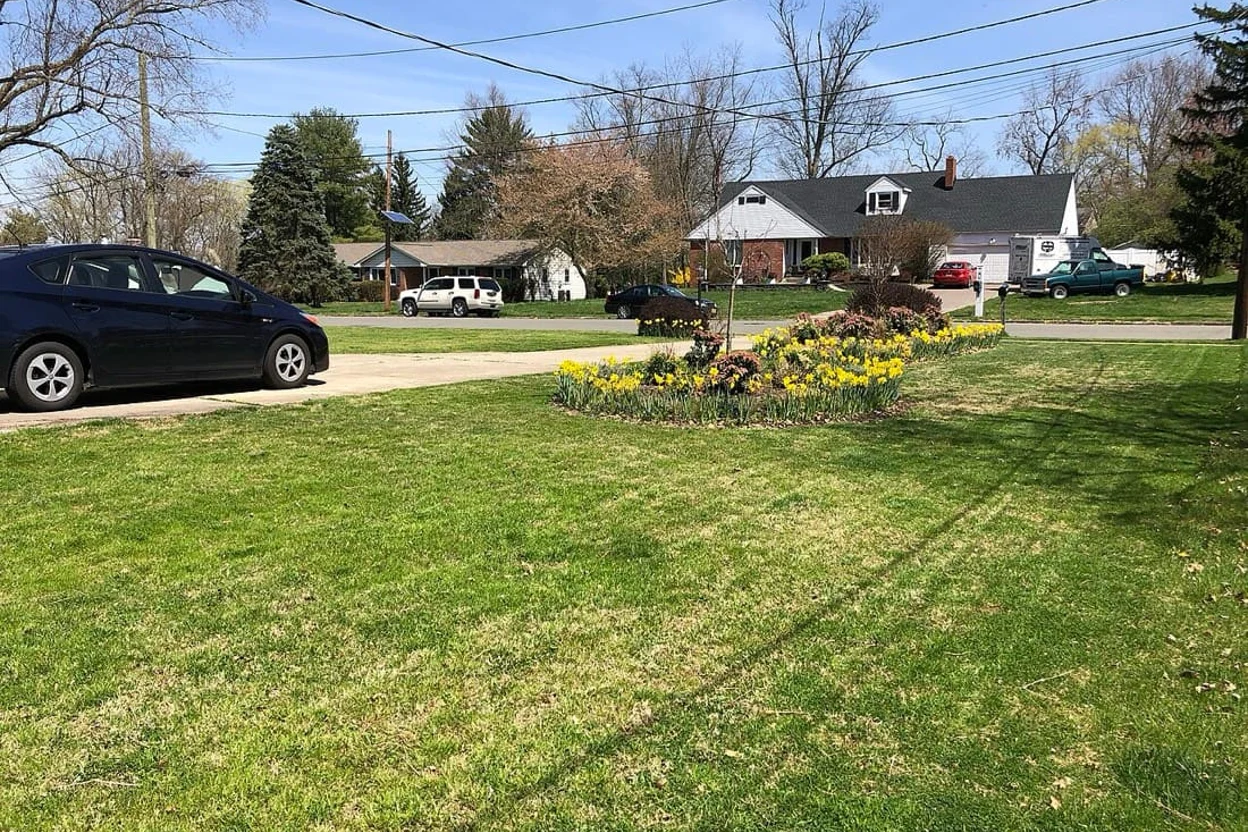
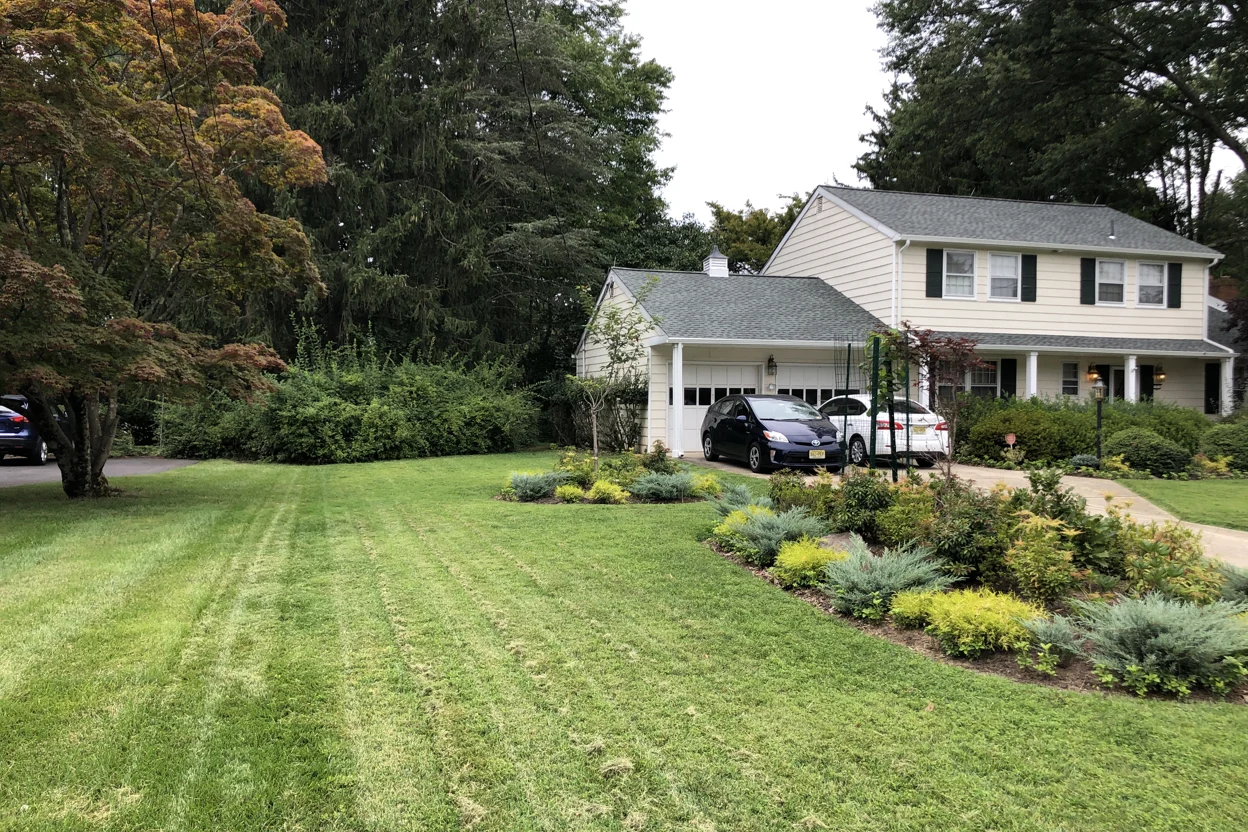
Lawn conversion canvas, New Jersey
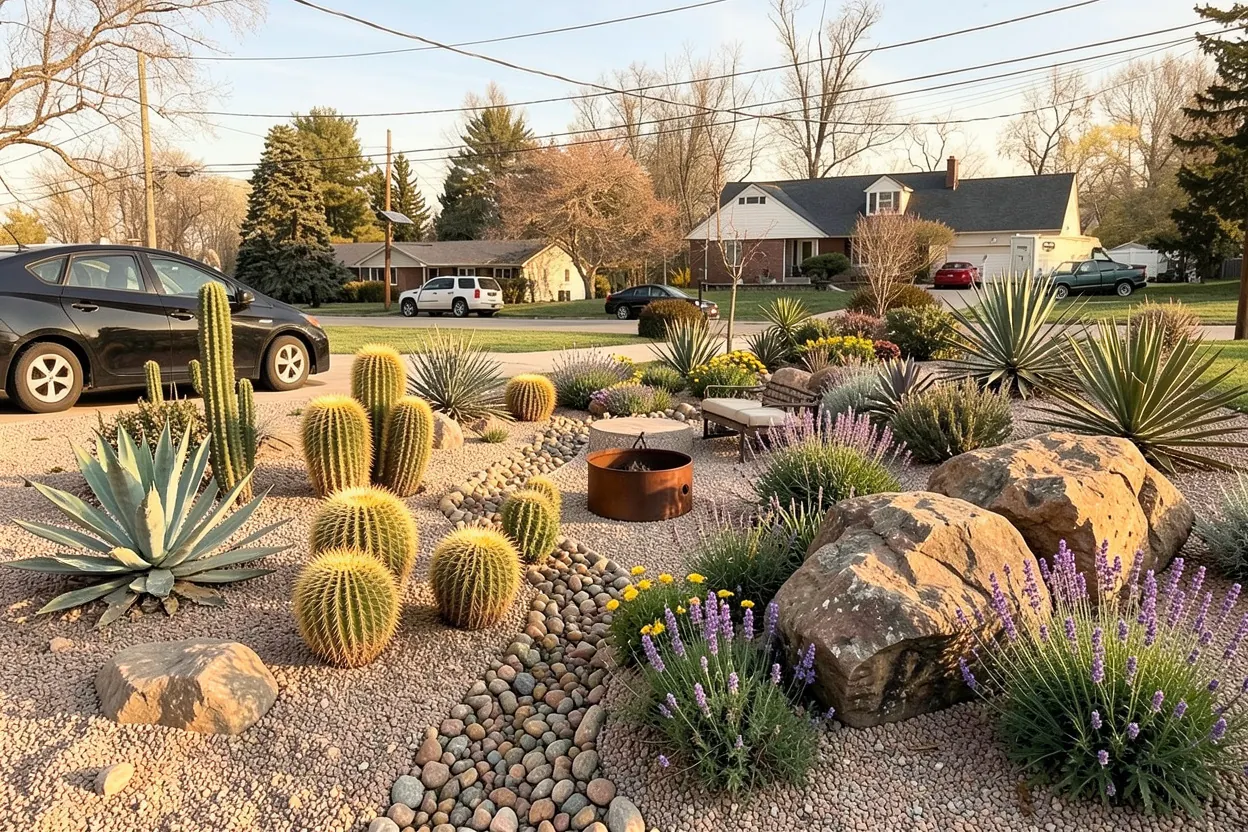
This New Jersey photo is a visual canvas. Desert cactus is a warm-climate direction, not a planting prescription for this location; use local dryland plants to recreate the shapes in colder regions.
BeforeDesert xeriscape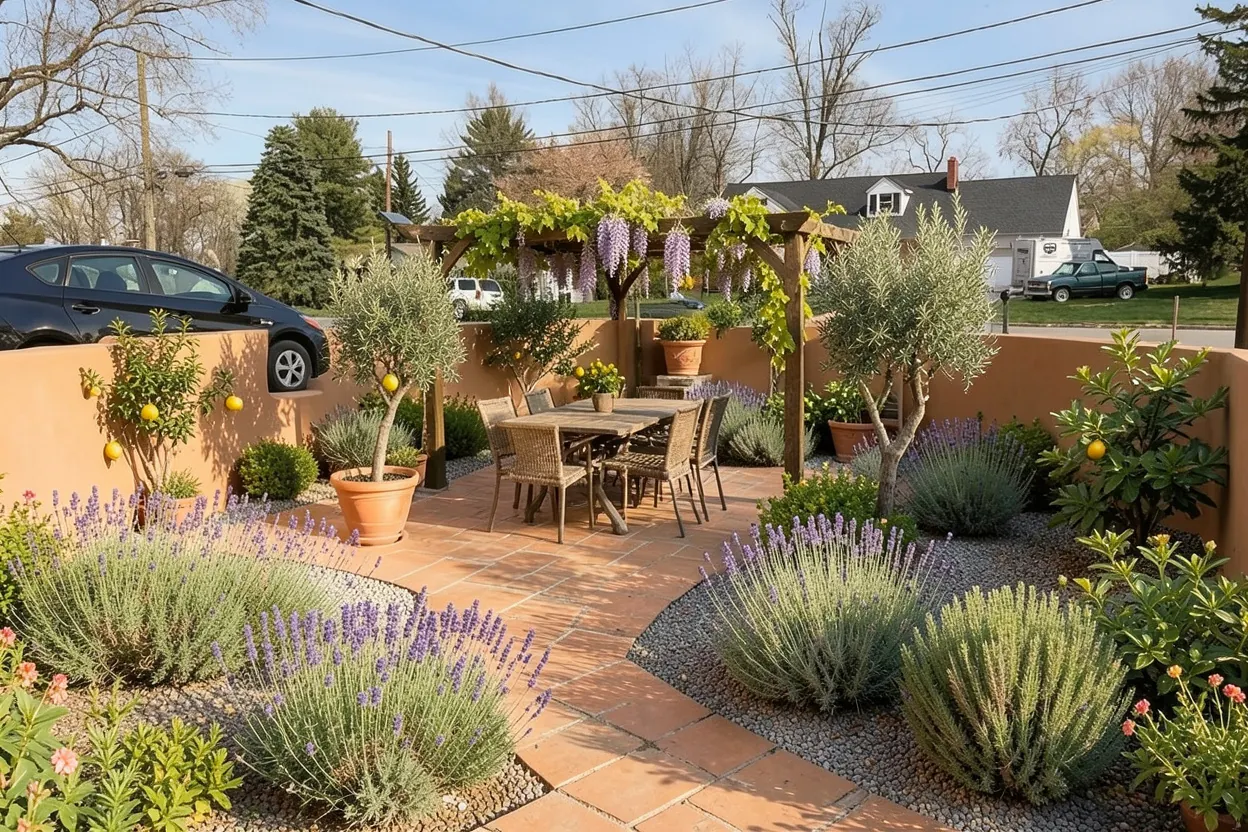 BeforeMediterranean
 BeforeModern
Original photo: Famartin · CC BY-SA 4.0 · Wikimedia Commons source. Cropped and resized. AI redesigns are adaptations, shared under the same license.

Broad front lawn conversion, New Jersey
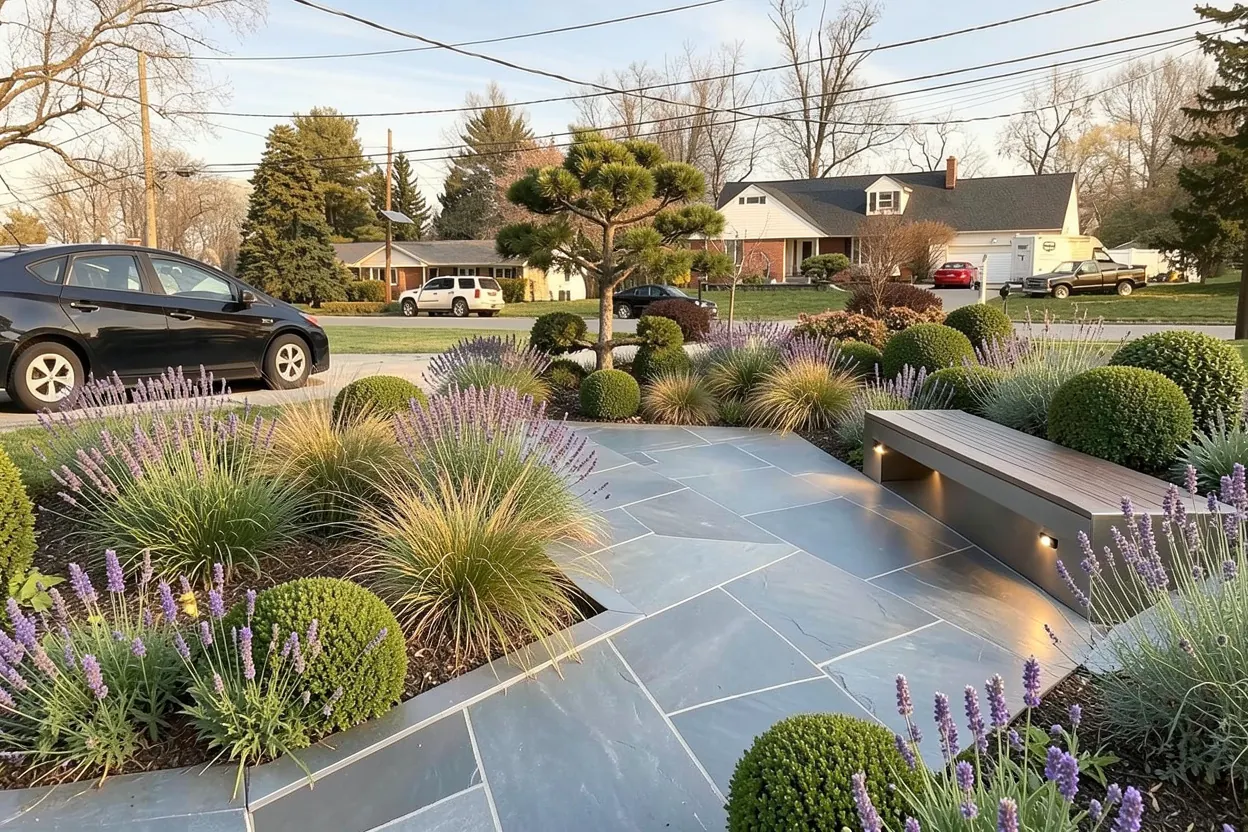
Compare a sculptural desert palette, a softer cottage border and a contemporary terrace. Keep the existing house, translate plant choices to local conditions and plan establishment watering before removing lawn.
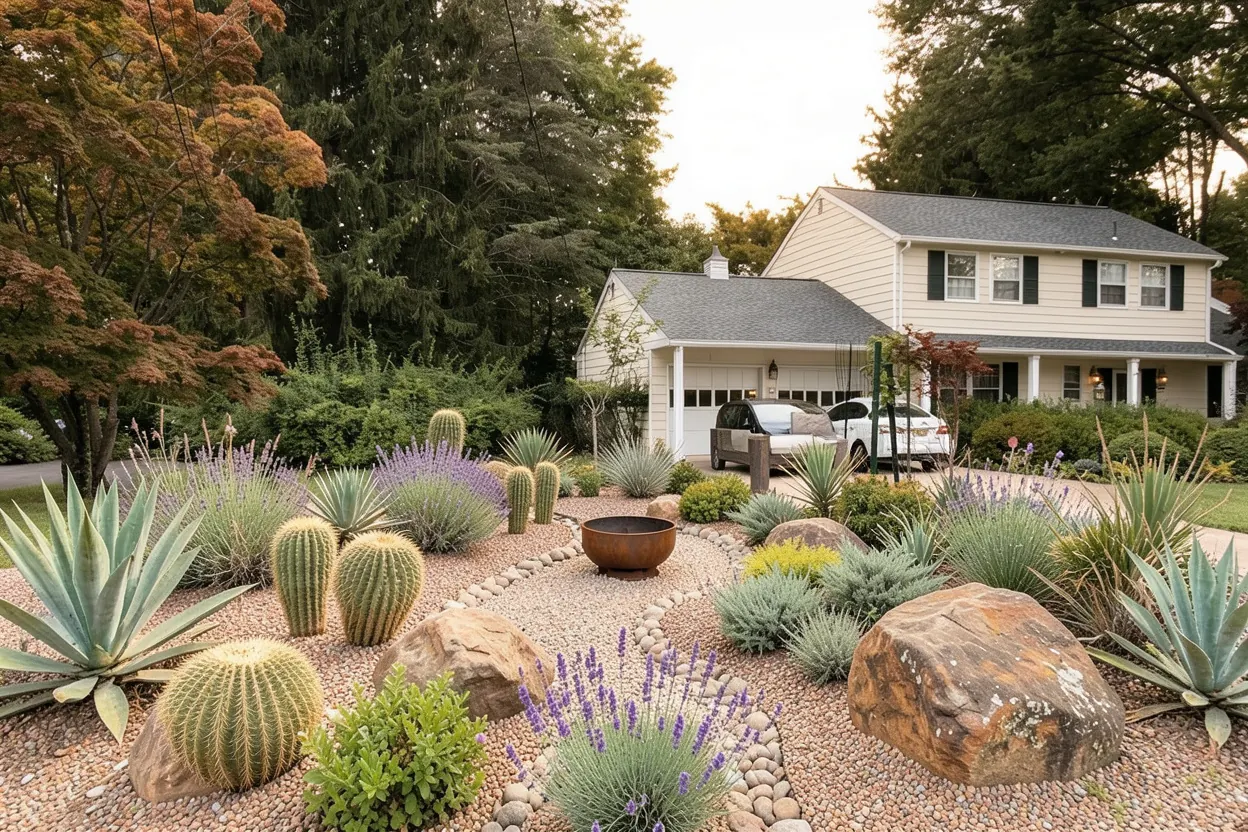 BeforeDesert xeriscape
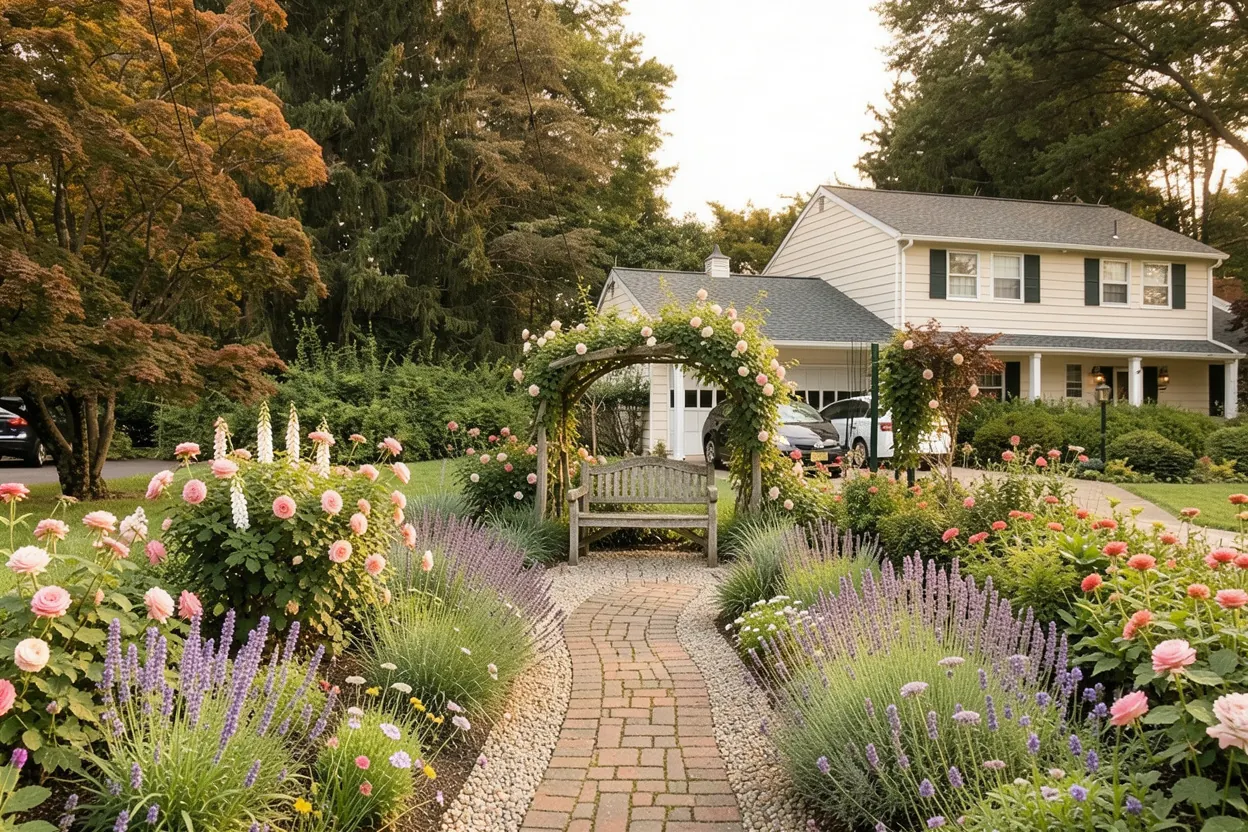 BeforeCottage
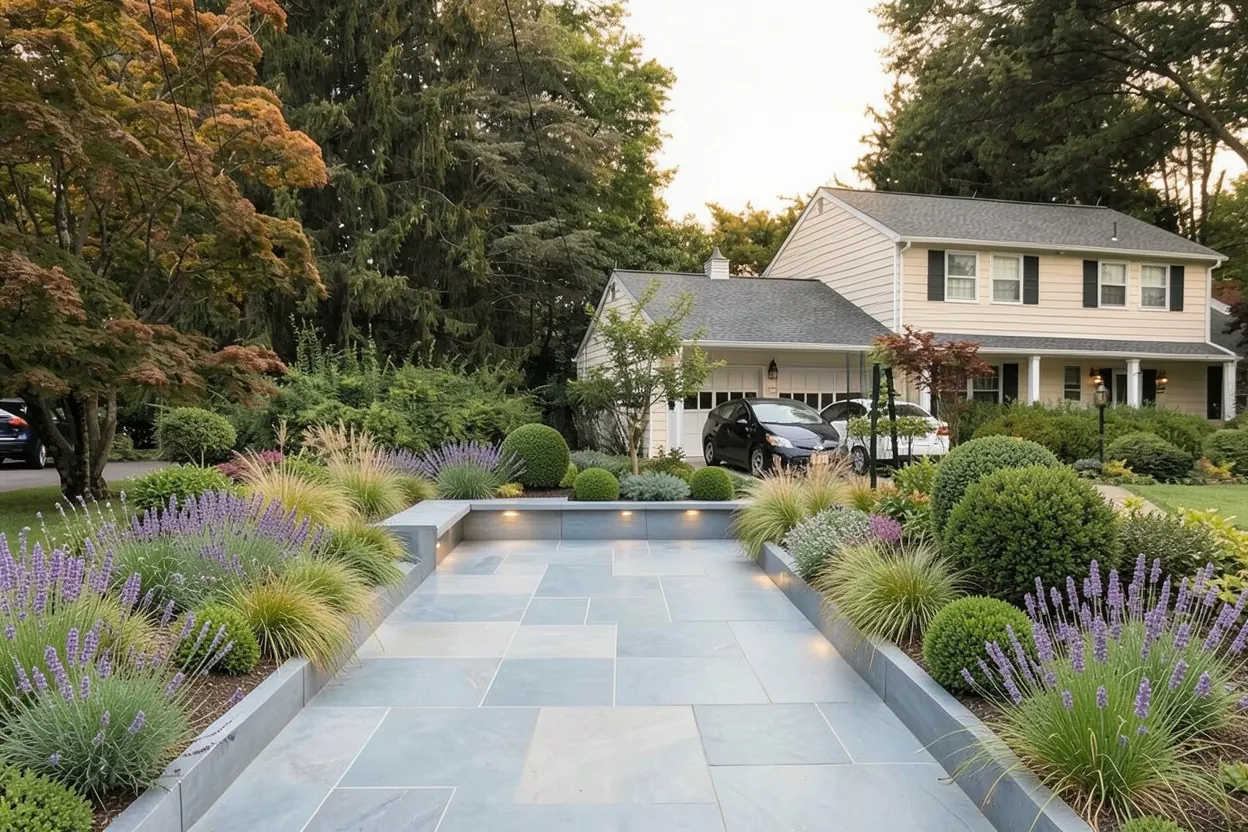 BeforeModern
Original photo: Famartin · CC BY-SA 4.0 · Wikimedia Commons source. Cropped and resized. AI redesigns are adaptations, shared under the same license.

Plan a yard that works beyond the picture
1. Map water needs into distinct zones
Mark the hottest reflected-heat area, places shaded by trees and any low spot that stays wet. Group plants with similar watering needs rather than scattering thirsty accents throughout a dry bed. Keep a small useful lawn if it supports play, then place lower-water planting elsewhere. Account for roof runoff and existing tree roots before removing turf. Mature trees may rely on water they currently receive from lawn irrigation; a conversion needs a plan for their ongoing care, not an abrupt shutoff.
2. Pick a regional palette
In a warm desert climate, regionally suitable agaves, red yucca and penstemon can provide contrasting shapes; check cold tolerance and keep spines away from paths. In cold, sunny prairie conditions, little bluestem, prairie dropseed and suitable coneflowers can create a softer planting. For mild dry-summer regions, lavender, rosemary and santolina suit well-drained sunny beds. These are starting points, not interchangeable lists. Check local invasive-plant guidance and nursery advice, especially for ornamental grasses and species marketed broadly as drought tolerant.
3. Keep soil and drainage in the design
Dig a small observation hole only after utility checks and examine how water moves through the site. Compacted construction soil and heavy clay can defeat a plant that thrives in free-draining ground. Improve the conditions according to the chosen plants rather than automatically adding rich compost everywhere. Some dryland species perform poorly in wet, fertile beds. Where drainage work is needed, get advice before building berms or redirecting runoff. The aim is a stable root environment, not simply a surface that looks dry.
4. Use stone selectively and planting generously
A few partly buried boulders and a defined gravel route can give a dry garden structure. Covering the entire yard in rock can increase reflected heat and leave a large area to clear of leaves and windblown weeds. Organic mulch may suit many planted beds, while mineral mulch can suit some dryland species; follow local guidance, including fire-related requirements near buildings. Keep all mulch away from stems and trunks. A dry-creek feature should follow a drainage purpose where possible, rather than implying that decorative rock fixes flooding.
5. Water for establishment, then adjust
Drought tolerant does not mean a newly planted root ball can be ignored. Water according to soil moisture, weather and the plant’s establishment needs, then adjust as roots spread. Separate irrigation zones help avoid watering a dry bed just to support one thirsty plant. Inspect emitters and watch plants during heatwaves. Containers dry differently from plants in the ground and may need more frequent attention. Follow local watering restrictions and ask a regional Extension service for timing advice rather than copying a fixed online schedule.
6. Convert one area and learn from it
Budget roughly $500–$1,500 for a modest DIY bed conversion with plants and a surface finish. A larger planting-led replacement might need $3,000–$7,000; extensive turf removal, irrigation changes and professional hardscape can exceed $10,000–$20,000. These are example US allowances, not quotes or promised savings. Check local rebate rules before beginning, since some require approval before turf removal. Contact 811 before digging. The New Jersey source yards below demonstrate design possibilities; desert-style images are not evidence that the pictured species suit those original climates.
Further reading: EPA WaterSense landscape planning, University of Missouri Extension on maintenance, Colorado State Extension on xeriscape conversions, and 811 before you dig.
Questions before you start
Is xeriscaping the same as a rock garden?
No. Xeriscaping combines site planning, suitable plants, soil care and efficient watering. It can include flowers, shrubs, shade trees and a useful area of lawn.
Do drought tolerant plants need water?
Yes, especially during establishment and unusual heat or dry spells. Water needs depend on species, soil, weather and root development.
Which drought tolerant plants survive cold winters?
Choose locally hardy species for your soil and exposure. Prairie dropseed, little bluestem and some penstemons can suit particular cold-climate sites; verify each species and cultivar locally.
Try it on your own yard
Upload a daylight photo. Compare styles on your actual space, then save a concept to discuss with your landscaper.
Design my yard — freeNo signup. Or use the camera button below to start here.