
Front Yard Landscaping Ideas That Work with Your House
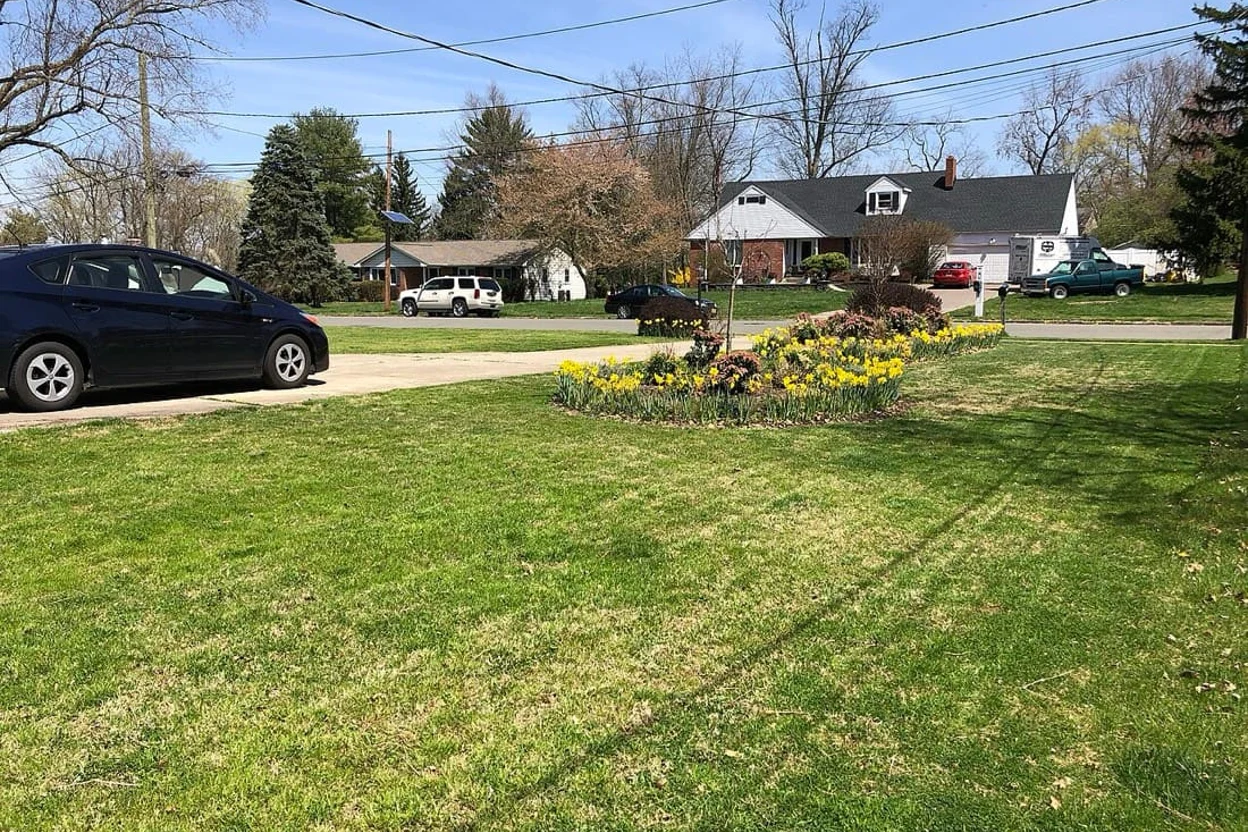
 BeforeModern
Good front yard landscaping ideas make the entrance easy to find and give the house a setting. Start from the sidewalk: can you see the front door, does the route feel obvious, and which plants have outgrown their space? Keep healthy mature trees and useful paving. A clear edge, a generous bed and one repeated plant often do more than a collection of small decorations.
Try it on your own yardTwo real yards. Three possibilities each.
Drag each slider to reveal the original. Generated with LandscapeGPT using these actual photos; concepts are illustrative, not construction plans or verified plant lists.
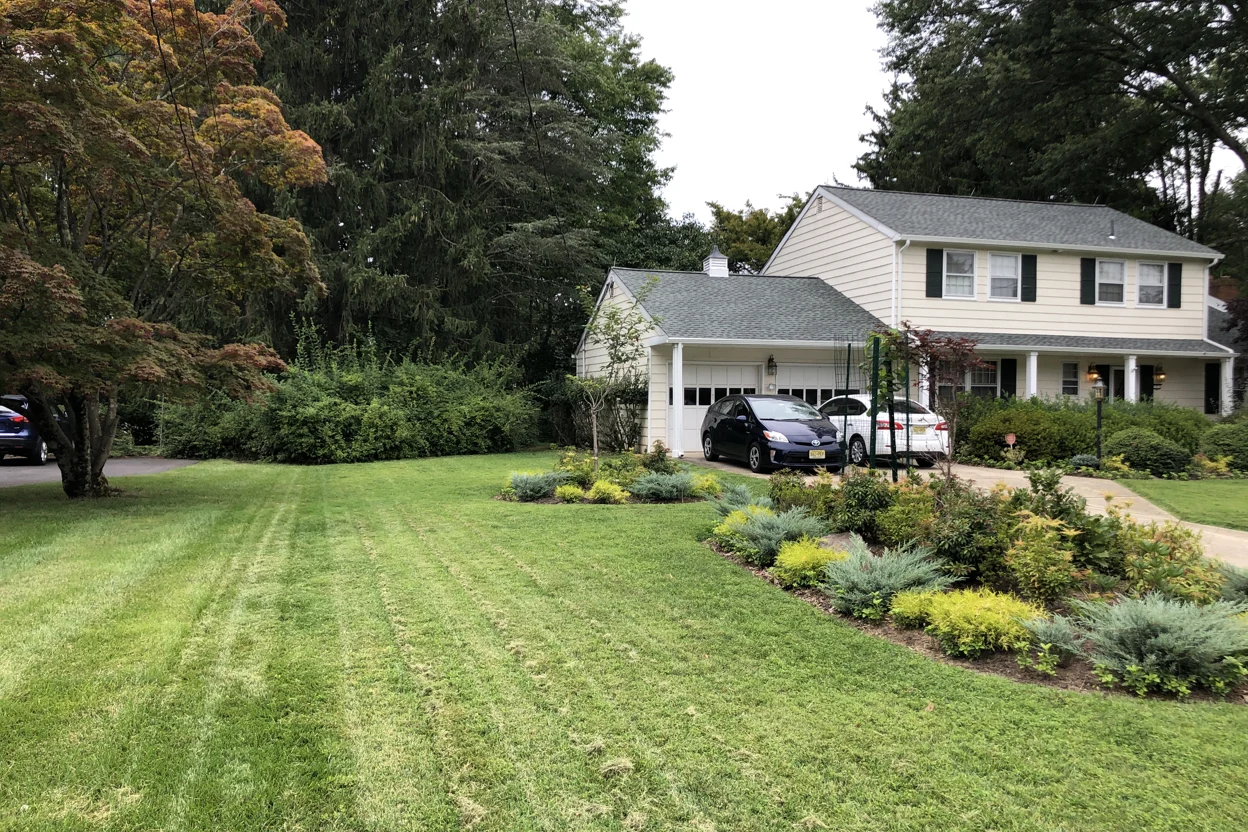
Street-facing lawn, New Jersey
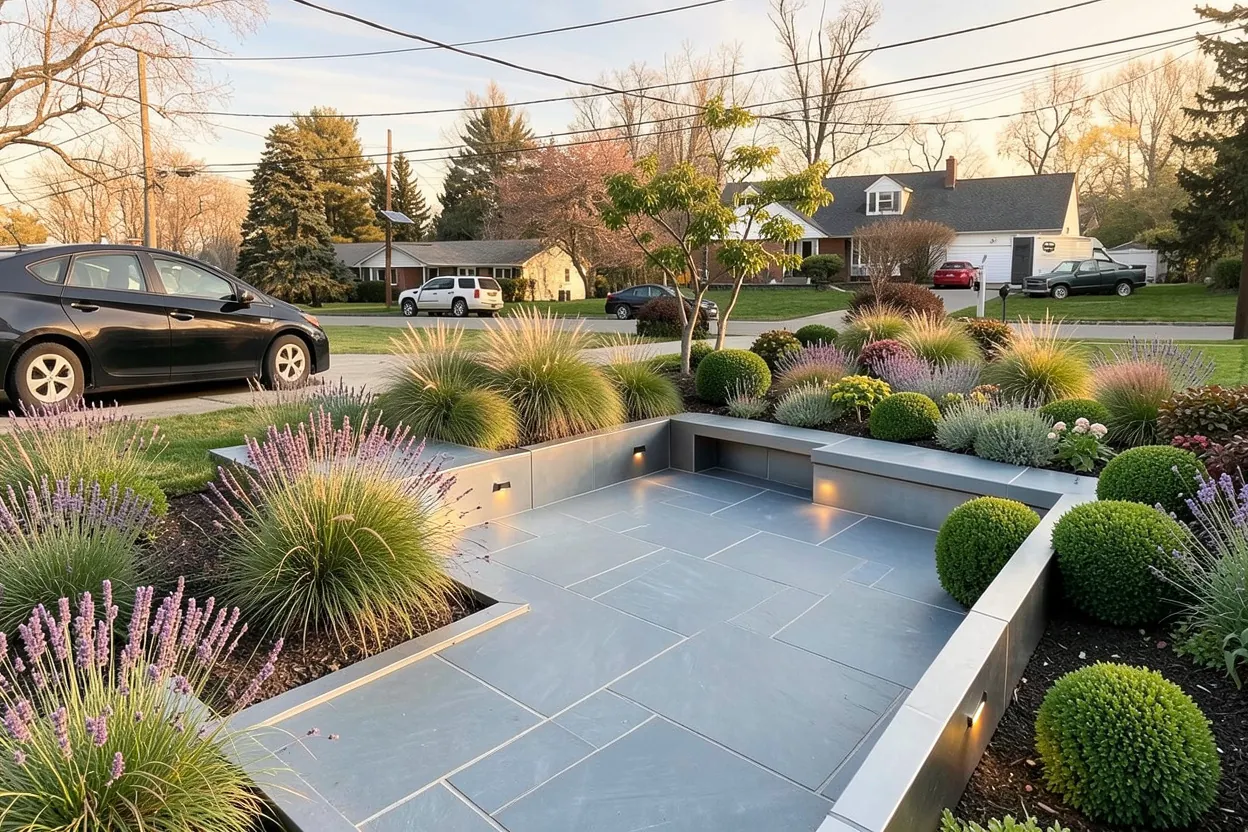
The existing street view stays open. Compare a clear paved entrance, a flower-rich path and a simpler bed edge; keep sightlines clear at the driveway.
BeforeModern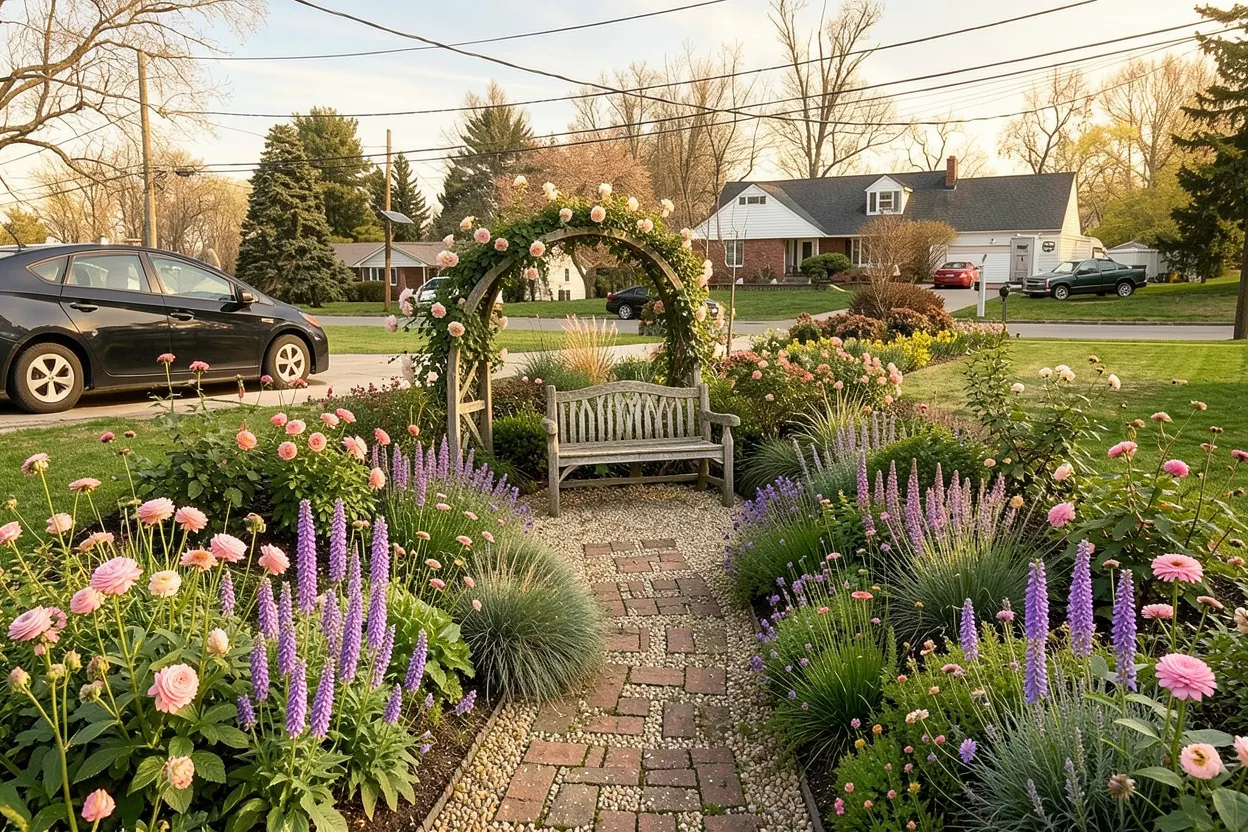 BeforeCottage
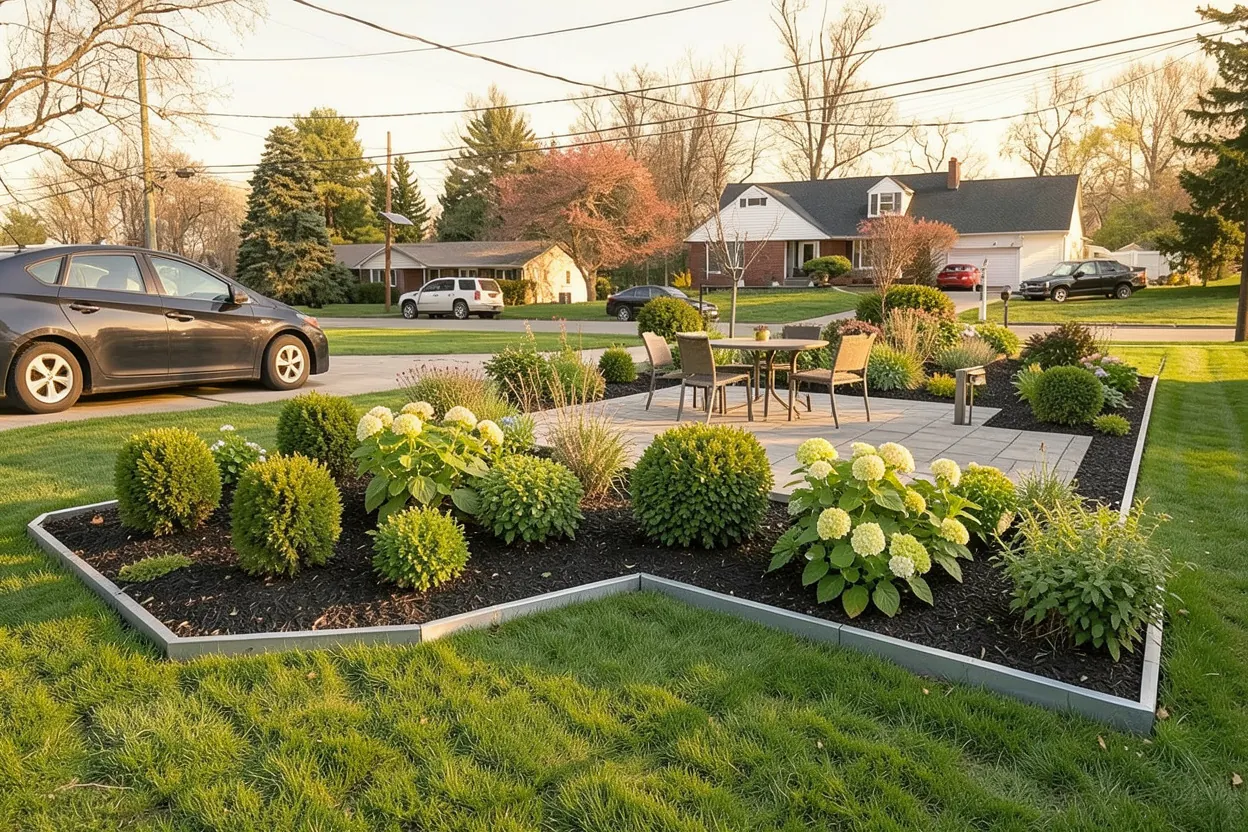 BeforeLow-maintenance
Original photo: Famartin · CC BY-SA 4.0 · Wikimedia Commons source. Cropped and resized. AI redesigns are adaptations, shared under the same license.

Broad front lawn and house, New Jersey
Use the house as the anchor: repeated planting can give this broad lawn structure without hiding the windows. The cottage option requires more seasonal care than the shrub-led version.
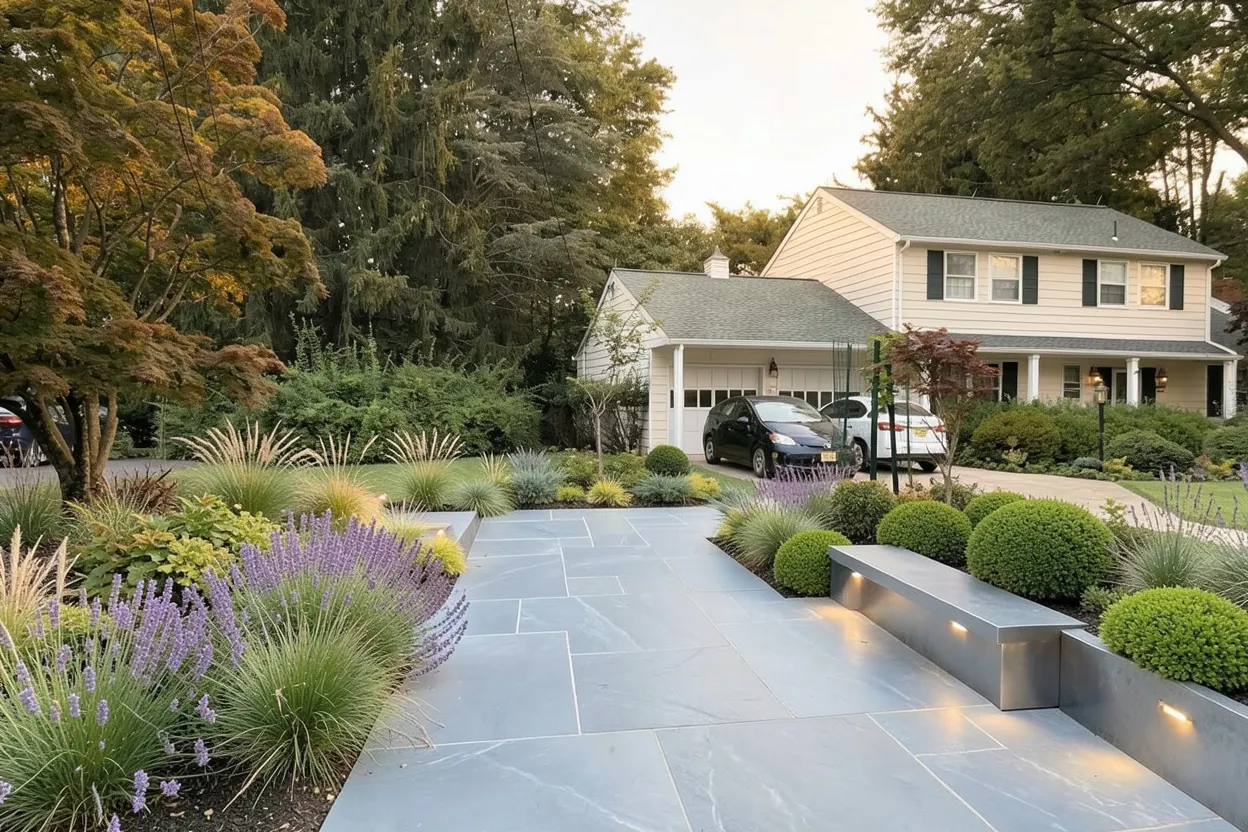 BeforeModern
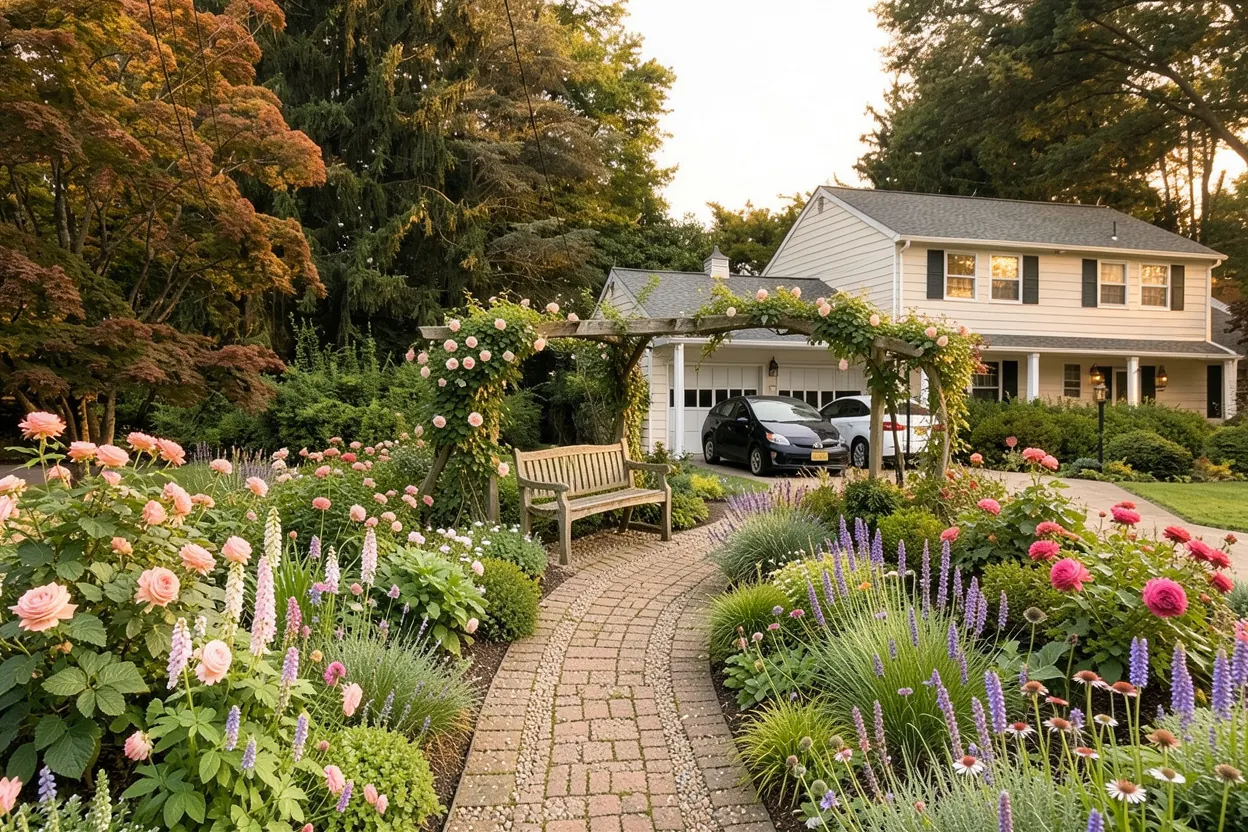 BeforeCottage
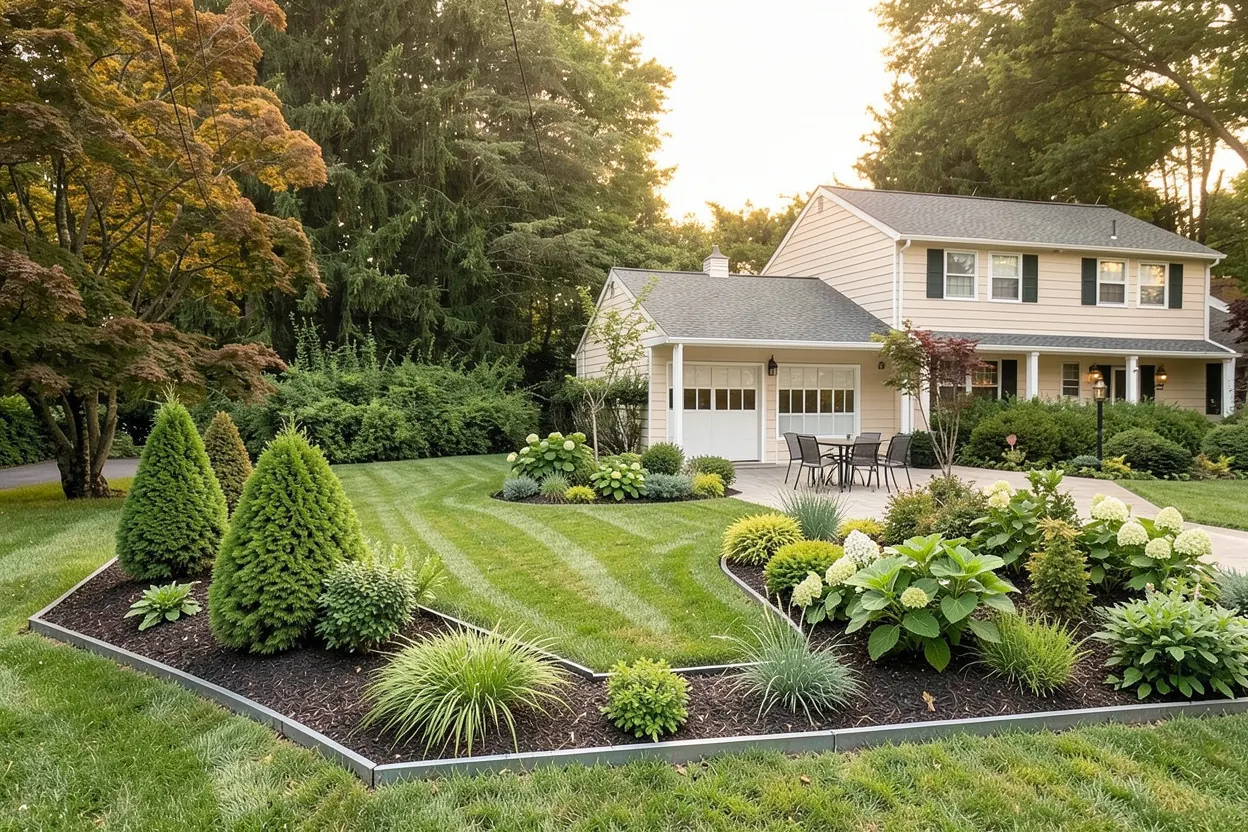 BeforeLow-maintenance
Original photo: Famartin · CC BY-SA 4.0 · Wikimedia Commons source. Cropped and resized. AI redesigns are adaptations, shared under the same license.

Plan a yard that works beyond the picture
1. Give the entrance a clear route
Trace the walk from parking to the door before drawing flowerbeds. A roughly four-foot-wide route is a useful starting point for comfortable everyday access; check local accessibility requirements where applicable. Use existing concrete if it is sound, then soften its edges with planting rather than replacing everything. At a bend, a large planter or a compact specimen shrub can signal the entrance. Keep plants low near driveway exits so drivers can see pedestrians. Avoid loose gravel on a route used by wheelchairs or where snow must be shoveled.
2. Layer the foundation without hiding it
Place the tallest shrubs at corners, medium plants between windows, and low perennials along the walk. Measure the mature spread on nursery labels; a small shrub placed against siding can become an annual pruning job. In a sunny eastern US yard, consider dwarf inkberry where soil is acidic, switchgrass and purple coneflower. In a shaded, cooler garden, try locally suitable sedges and ferns. Keep access to meters and vents, leave clearance around the building, and avoid covering the base of the siding with soil or mulch.
3. Replace one awkward lawn strip
A narrow strip between a driveway and a walk can be harder to mow than it is useful. Turn that strip into a continuous bed with three repeated plant groups. In hot, dry areas, red yucca and autumn sage can provide structure where locally hardy; in cold climates, prairie dropseed and hardy stonecrop offer a different palette. Use an edge that meets the lawn cleanly. Keep a simple patch of grass if children use it or it makes the street-facing composition calmer. Lawn removal does not require filling every square foot with stone.
4. Choose a style your climate can support
The comparisons below show alternative visual directions, not plant inventories. Cottage planting suits someone who enjoys seasonal cutting back and deadheading; a shrub-led design usually needs fewer individual tasks. Mediterranean lavender and rosemary need sun and drainage, and olive trees are unsuitable for many cold regions. The New Jersey lawn photographs are design canvases, not evidence that desert plants will survive there. Match the picture’s shapes and colors with plants recommended by your local nursery or Extension office.
5. Spend first where people arrive
For a small existing bed, reserve roughly $300–$900 for DIY plants, compost where needed, edging and mulch. A broader planting refresh might need $1,500–$4,000 in materials, while a professionally installed walk and planting scheme can run $6,000–$15,000 or more. These are illustrative US planning allowances, not quotes; demolition, drainage, access and local labor change the total. Buy fewer, well-spaced shrubs rather than crowding the bed for an instant result. Complete one visible area before spreading the same budget across the entire frontage.
6. Check the site before the shovel comes out
Watch where rainwater goes and preserve drainage away from the house. Check street-tree, visibility and HOA rules before removing trees or changing the frontage. In the US, contact 811 before digging and follow your state’s notice period and marking instructions; privately installed lines may require a separate locator. Sketch utilities and mature plant sizes on your plan. Then photograph the yard from the sidewalk and compare a few possibilities before committing to materials.
Further reading: EPA WaterSense landscape planning, University of Missouri Extension on maintenance, Colorado State Extension on xeriscape conversions, and 811 before you dig.
Questions before you start
What is the simplest front yard update?
Define one bed, remove weeds, refresh its edge and repeat a small number of suitable plants. Keep the main walk and front door visible.
What should I plant near the house?
Choose shrubs by mature height and width, sun, soil and local hardiness. Leave space for maintenance and keep planting clear of siding, vents and utility equipment.
Can I replace my front lawn with gravel?
Check local rules and drainage first. Gravel can reflect heat and still collects weeds; a planted bed with climate-suitable ground cover may be more comfortable.
Try it on your own yard
Upload a daylight photo. Compare styles on your actual space, then save a concept to discuss with your landscaper.
Design my yard — freeNo signup. Or use the camera button below to start here.