
Patio Ideas: Materials, Shade and Planting for Outdoor Living
 BeforeModern
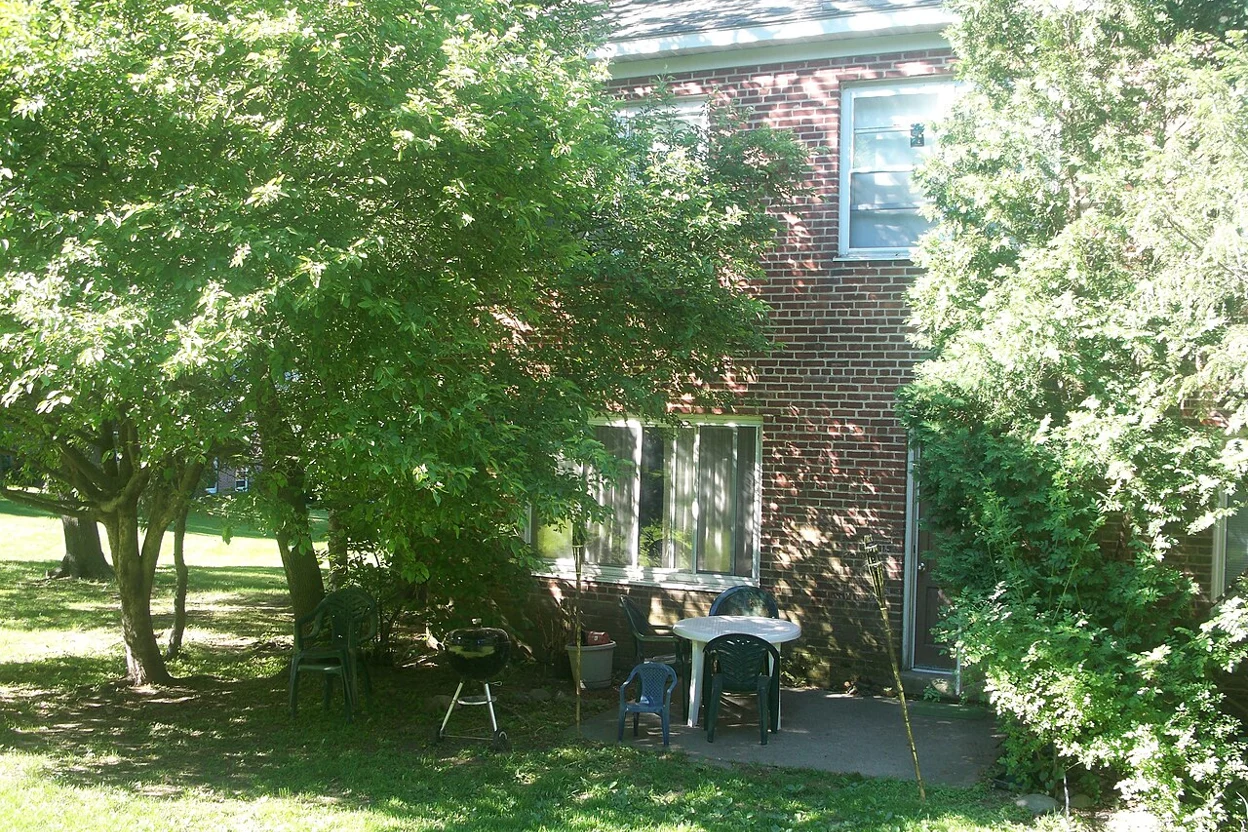
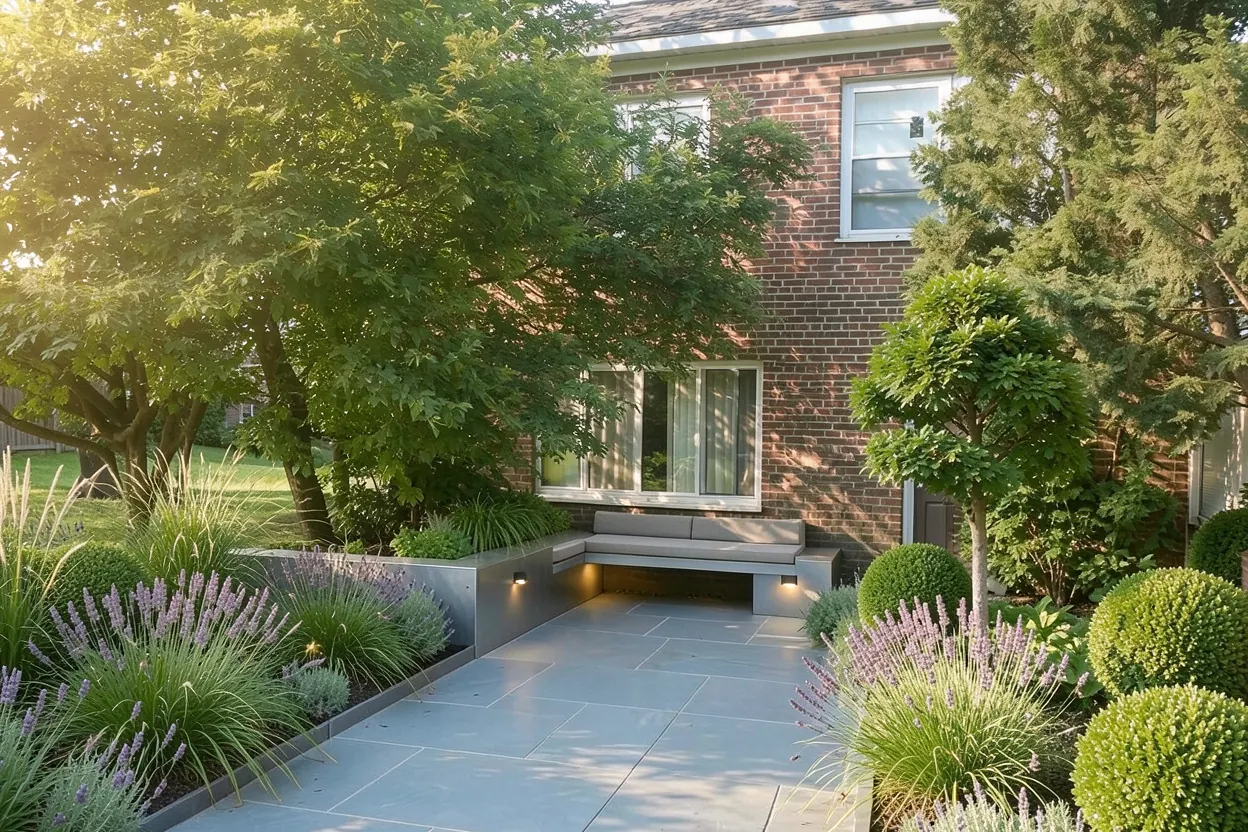
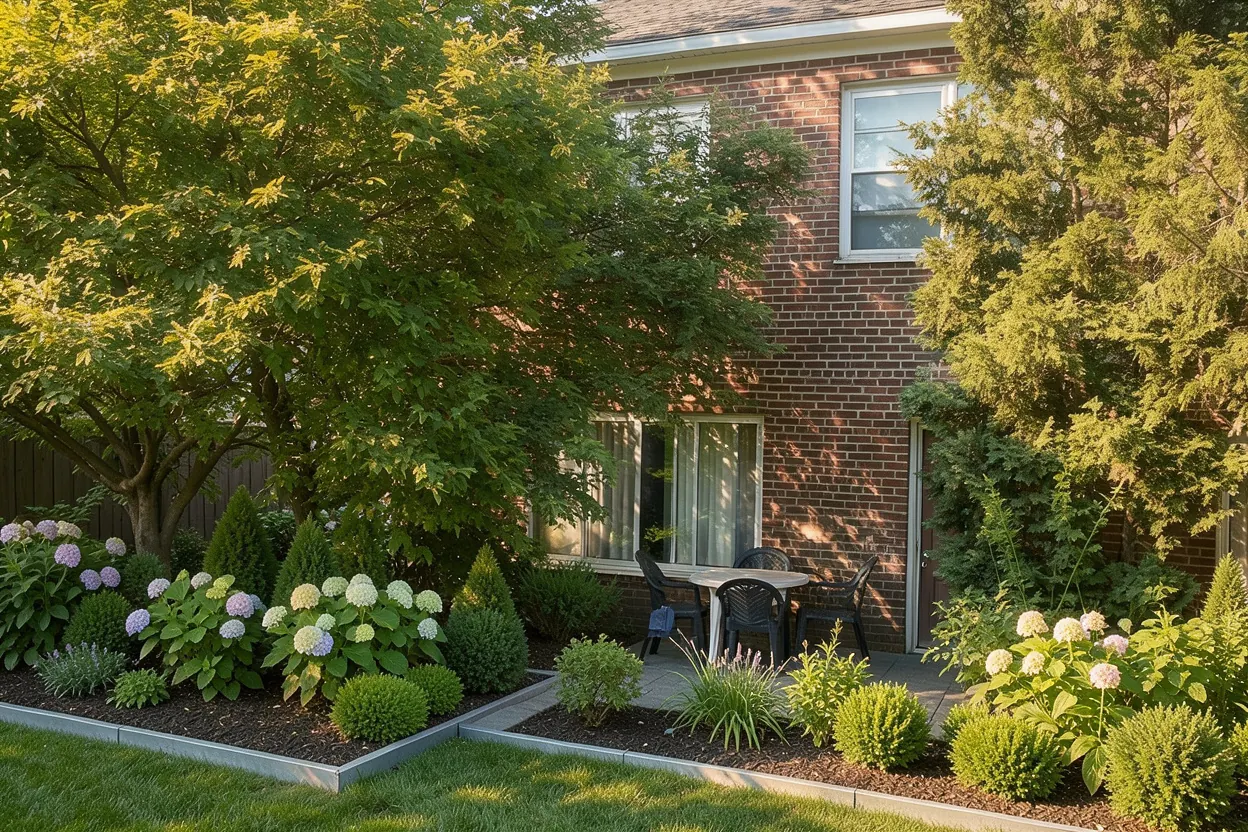
Useful patio ideas start with a table, a chair and the path between them. Before selecting a paving color, decide whether this is a dining terrace, a reading corner or a place to gather. Then check sunshine, finished levels and drainage. The two real spaces below are starting points for three different visual treatments each; compare the materials and planting, then borrow the parts that suit your site.
Try it on your own yardTwo real yards. Three possibilities each.
Drag each slider to reveal the original. Generated with LandscapeGPT using these actual photos; concepts are illustrative, not construction plans or verified plant lists.
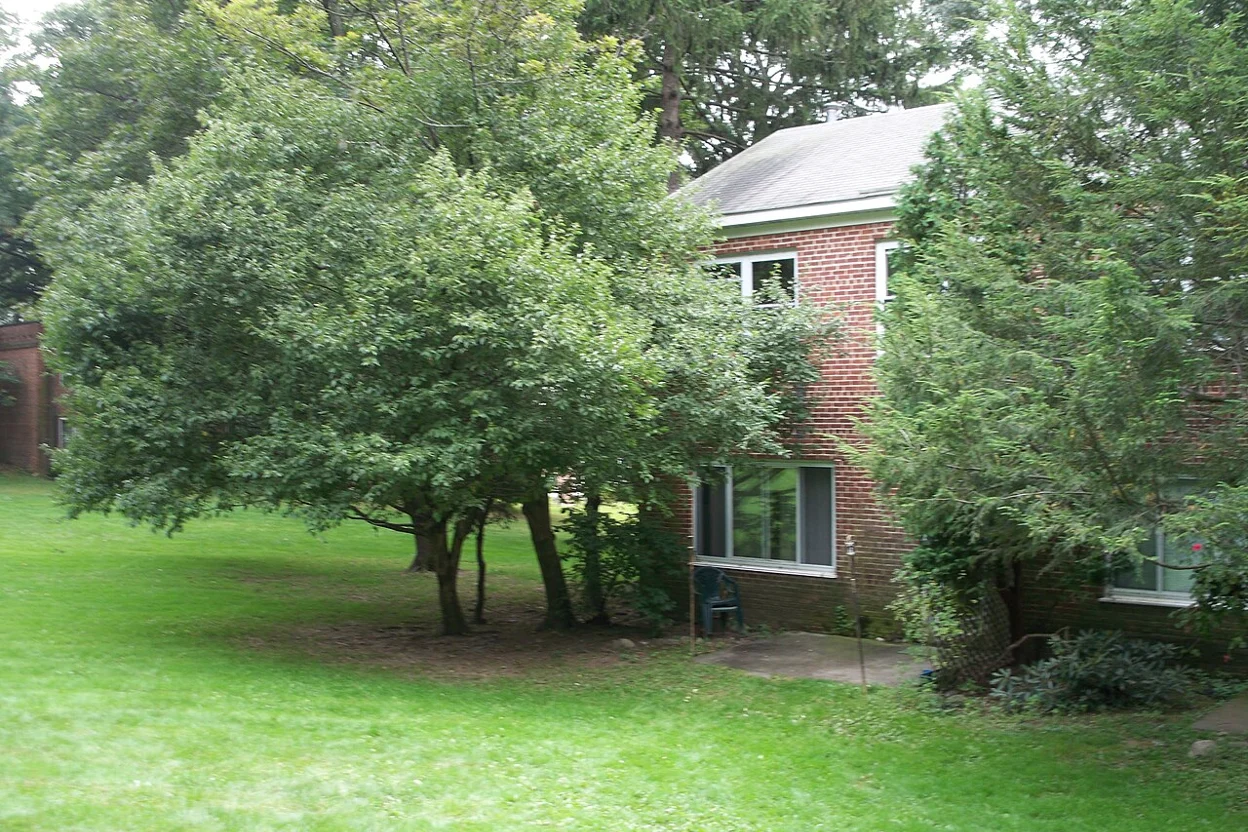
Shaded brick-townhouse patio, Massachusetts
The small patio sits beneath a tree beside a brick townhouse. Compare a generous planted edge with a more open sitting area; preserve comfortable circulation and choose plants for the actual shade.
BeforeModern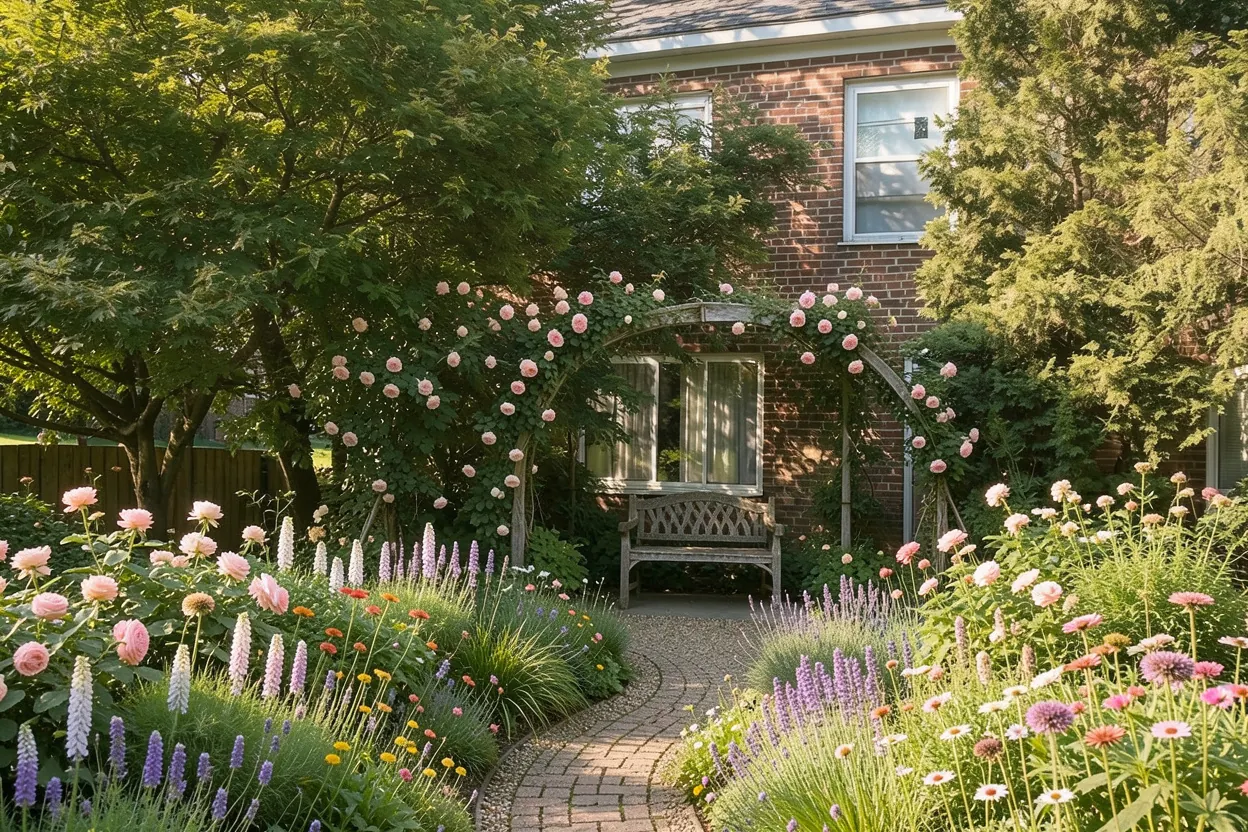 BeforeCottage
 BeforeLow-maintenance
Original photo: EgorovaSvetlana · CC BY-SA 4.0 · Wikimedia Commons source. Cropped and resized. AI redesigns are adaptations, shared under the same license.

Small townhouse terrace, Massachusetts
The original terrace is modest and partly hidden by established trees. Reuse sound paving where possible and test the furniture footprint before enlarging the outdoor room.
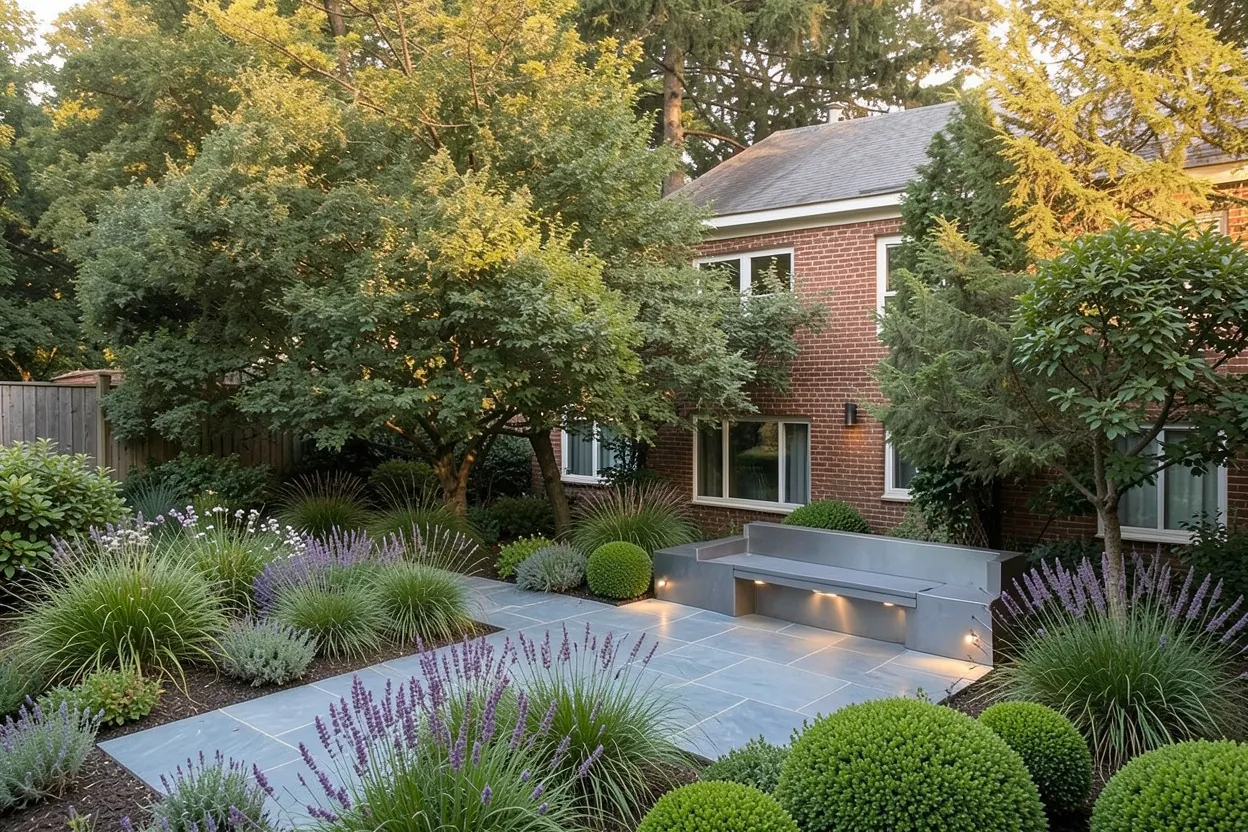 BeforeModern
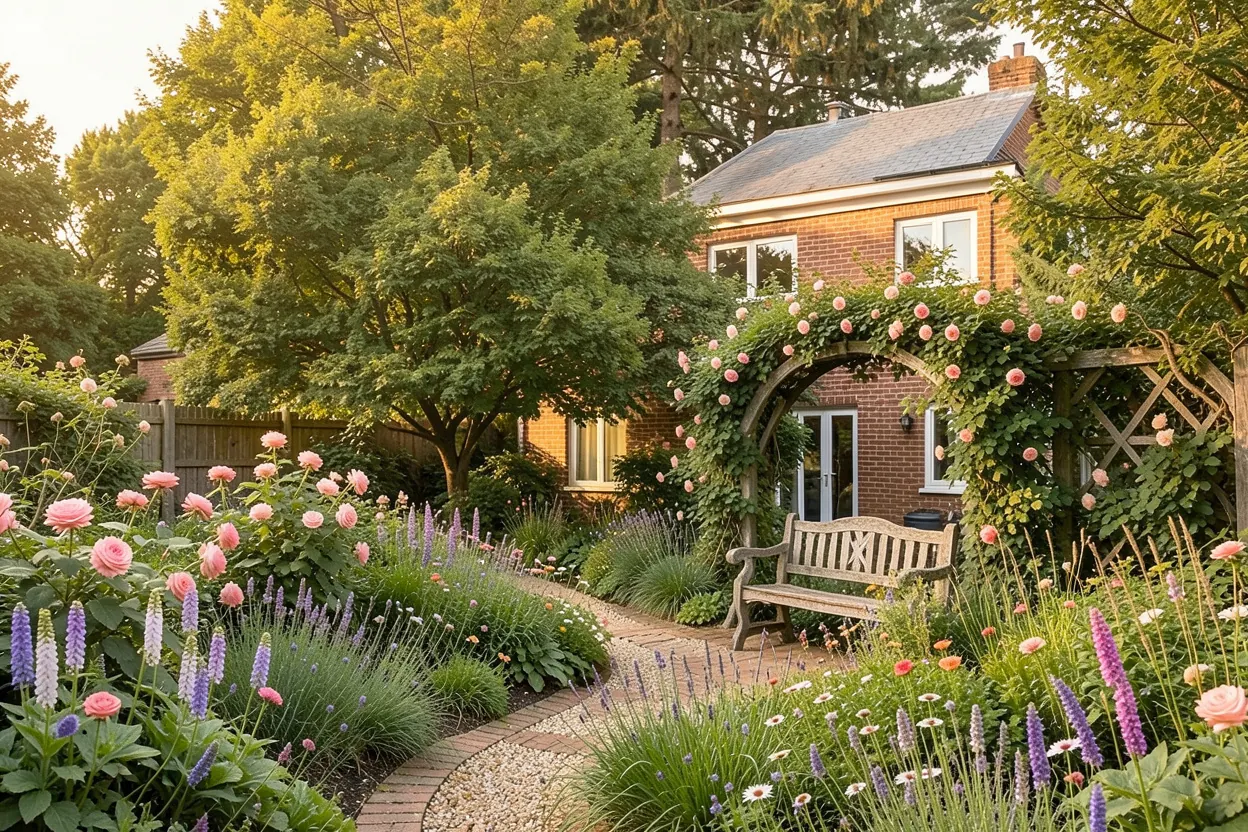 BeforeCottage
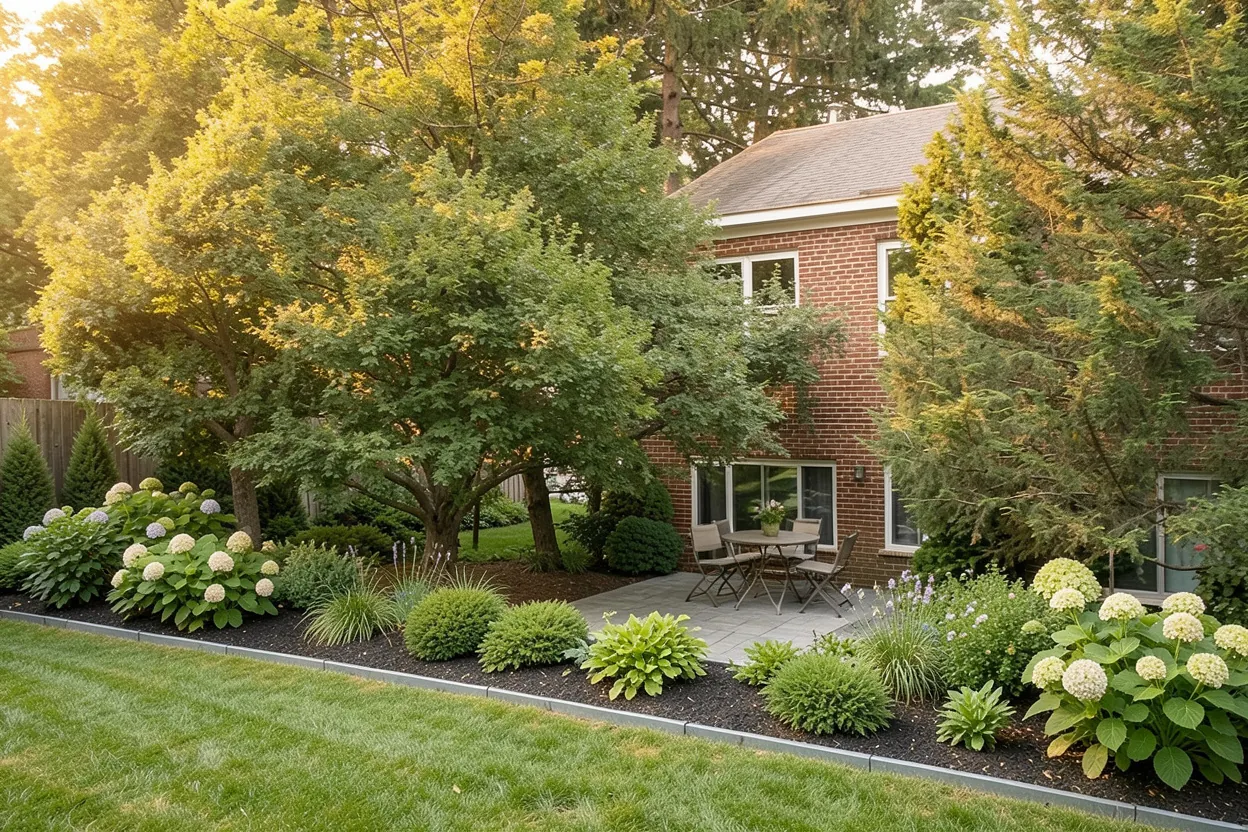 BeforeLow-maintenance
Original photo: EgorovaSvetlana · CC BY-SA 4.0 · Wikimedia Commons source. Cropped and resized. AI redesigns are adaptations, shared under the same license.

Plan a yard that works beyond the picture
1. Test the furniture before sizing the patio
Set out your actual table and pull every chair back as if someone were getting up. Walk around it carrying a tray. A compact bistro corner might fit into an eight-by-eight-foot space, while a dining area often needs closer to twelve by twelve feet or more, depending on furniture and routes. These are layout tests, not minimum standards. Keep the main door swing clear and protect the route to the garden. Avoid paying for a large paved area that will only hold two chairs.
2. Compare materials by use and upkeep
Concrete pavers give a regular, stable surface and allow individual units to be replaced. Brick brings warmth but can become uneven without a sound base. Outdoor-rated porcelain offers a precise modern look; specify a suitable slip-resistant surface and installation system. Compacted gravel costs less in some settings but can migrate, collect leaves and make wheeled access difficult. Ask for physical samples and examine them wet as well as dry. Pale paving may feel cooler visually yet create glare in a very sunny courtyard.
3. Let drainage determine the construction
A patio should not trap water against a threshold or send runoff onto a neighbor’s property. The necessary slope, base depth and drainage outlet depend on the existing levels, soil and local requirements. A permeable paver is part of a system, not simply a normal paver with gaps: the base and underlying soil must work together. Ask the installer how water leaves the surface and where it ends up. Fix settlement and trip edges before adding rugs, furniture or decorative planters.
4. Put shade where you sit
Track the afternoon sun with your chairs in place. A movable umbrella can test a location before you commission a pergola. A pergola with open rafters creates partial shade, not a rainproof room; vines also need a suitable support and regular care. Keep any structure clear of doors, windows and utilities, and check permit requirements. In windy areas, use a shade solution rated and anchored for the site. Leave enough room to close an umbrella safely without dragging furniture through the planting.
5. Soften the edges with a limited palette
Repeat a few generous containers instead of lining the patio with many small pots that dry out quickly. For sunny, well-drained warm climates, lavender, rosemary and santolina suit a Mediterranean palette. In a colder region, hardy catmint and locally suitable grasses can give similar softness. In shade, use climate-appropriate ferns or sedges rather than forcing sun-loving herbs to struggle. Pots need drainage holes, regular watering and frost-safe materials where winters freeze. Keep foliage from narrowing the main walking route.
6. Budget for the base, then the finishing touches
A furniture-and-container refresh on sound paving could use a $400–$1,500 DIY allowance. For a new 150–200-square-foot patio, a rough installed planning band is $3,000–$8,000 or more, with premium stone, difficult access and drainage work pushing it higher. Treat these as example US allowances, not contractor quotes. Ask quotes to separate demolition, base preparation, surface, edge restraints and drainage. A sound modest patio with comfortable seating usually earns more use than expensive paving with no shade or room to move.
Further reading: EPA WaterSense landscape planning, University of Missouri Extension on maintenance, Colorado State Extension on xeriscape conversions, and 811 before you dig.
Questions before you start
What is a budget-friendly patio idea?
Refresh an existing safe surface, use movable shade and add a few large planted containers. If building new, compare complete installed systems rather than surface prices alone.
Is gravel good for a patio?
It can suit a casual, level sitting area, but loose gravel moves under furniture and wheels. Test the intended furniture and consider a firmer accessible route.
What plants work around a patio?
Choose for actual sun, winter temperatures and drainage. Repeat a small palette, leave circulation clear and avoid thorny plants beside seats.
Try it on your own yard
Upload a daylight photo. Compare styles on your actual space, then save a concept to discuss with your landscaper.
Design my yard — freeNo signup. Or use the camera button below to start here.