
How to Landscape a Front Yard on a Busy Street
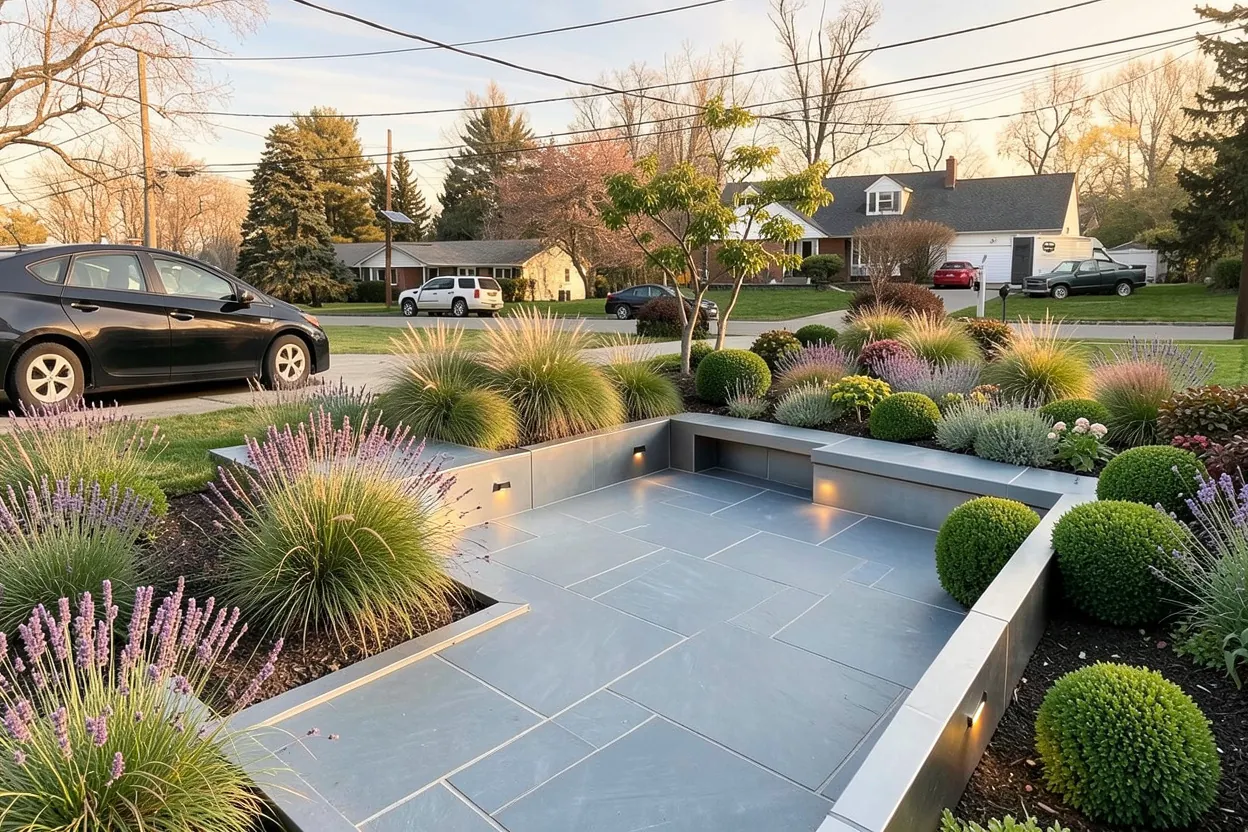 BeforeModern
Landscaping a front yard on a busy street starts with deciding what you need to screen: passing headlights, a view into the living room or a chair beside the porch. Each needs a different height and position. A hedge can soften the view of traffic, but an ordinary residential planting strip will not silence it. Mark the driveway, sidewalk, property boundary and road exposure before choosing plants. The existing front-yard comparisons below help you judge space for beds and a retreat; they do not depict engineered noise barriers or prove that the photographed streets are busy.
Try it on your own yardTwo real yards. Three possibilities each.
Drag each slider to reveal the original. Generated with LandscapeGPT using these actual photos; concepts are illustrative, not construction plans or verified plant lists.
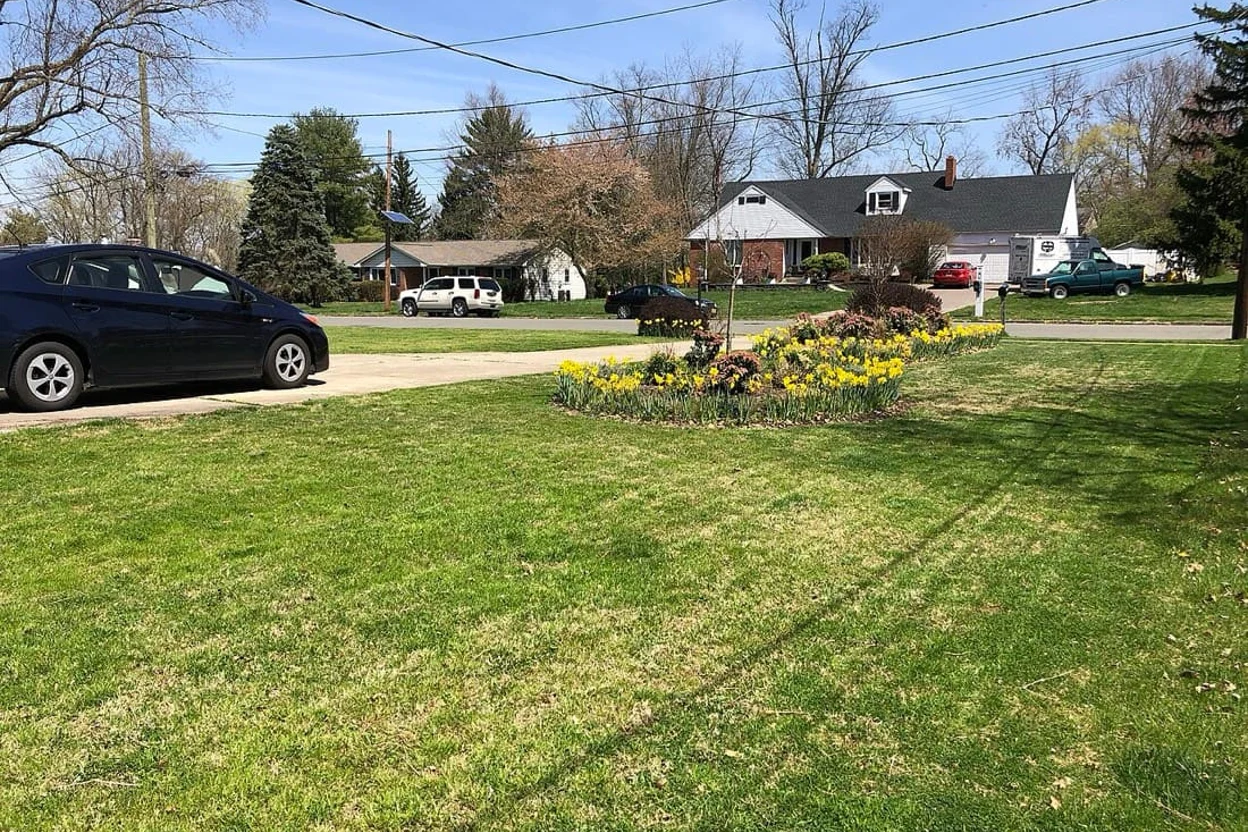
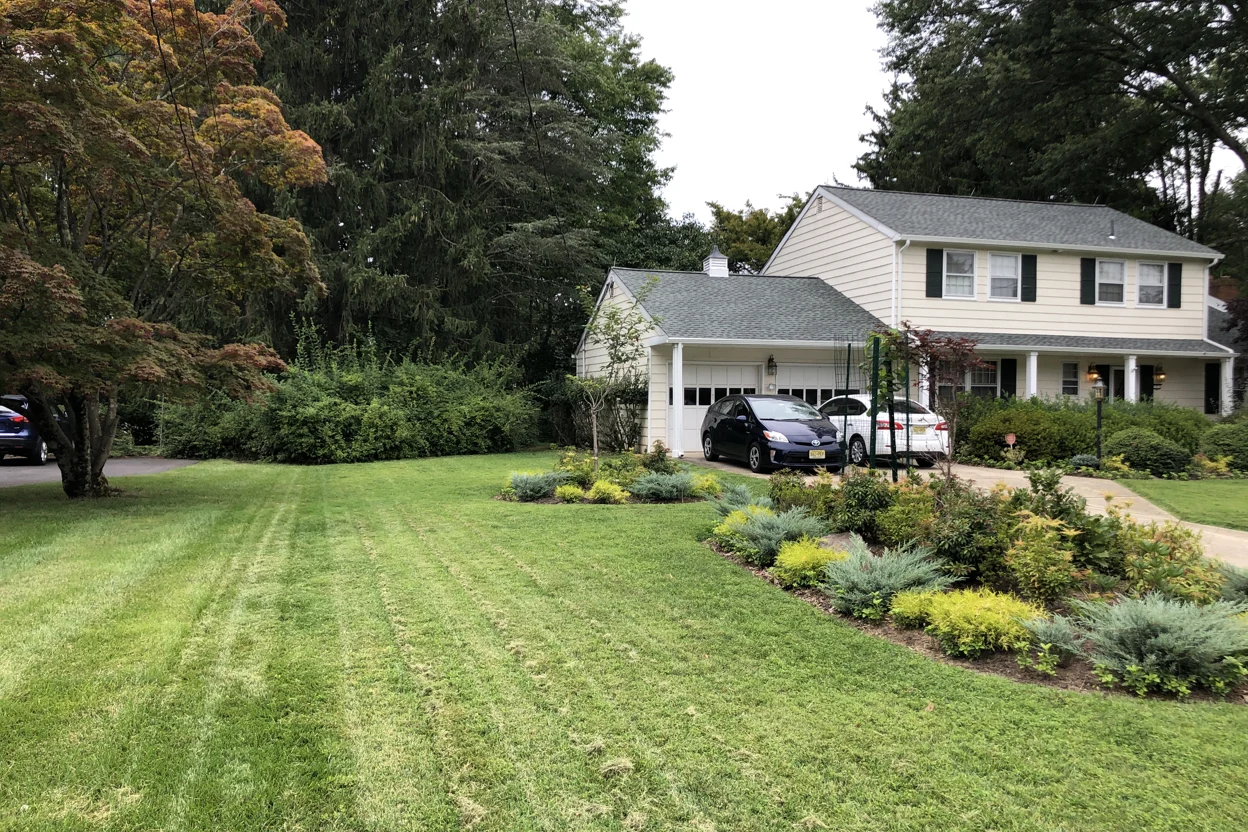
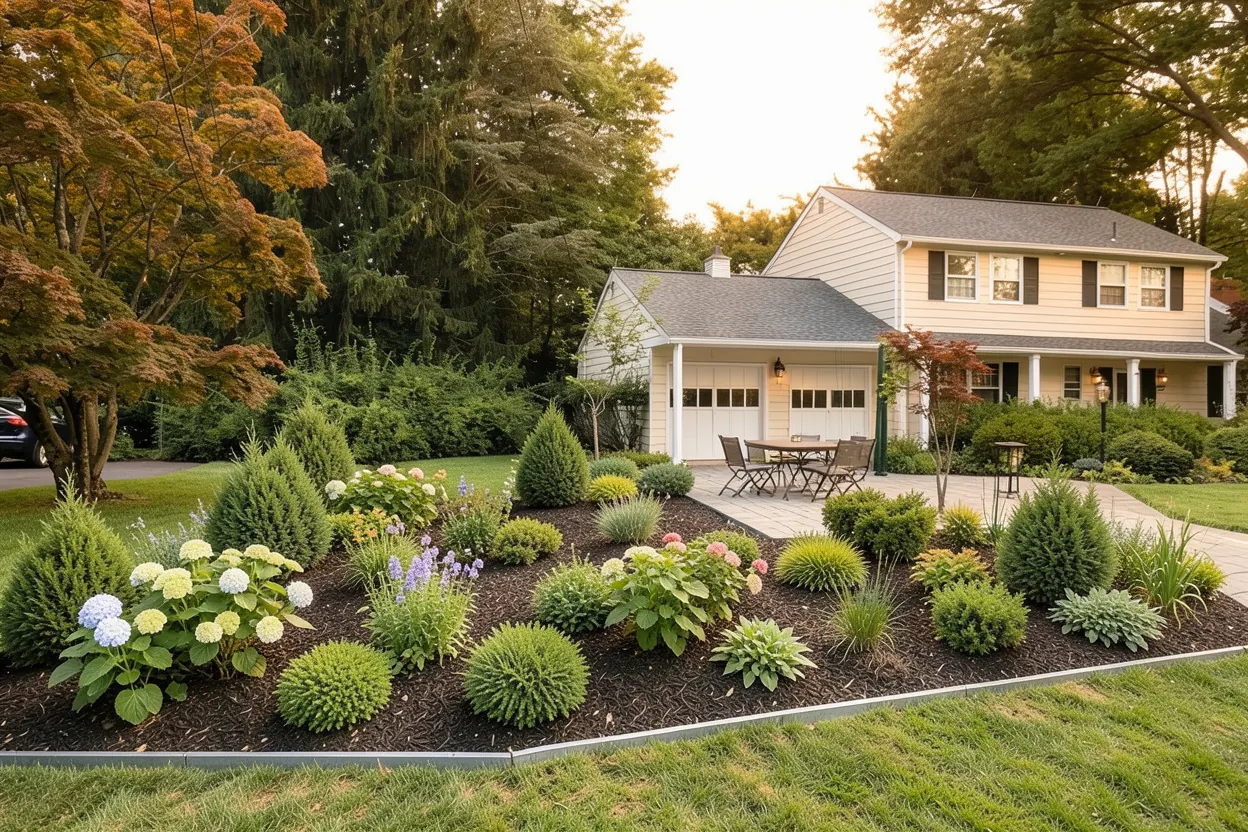
Street-facing lawn, New Jersey
The existing street view stays open. Compare a clear paved entrance, a flower-rich path and a simpler bed edge; keep sightlines clear at the driveway.
BeforeModern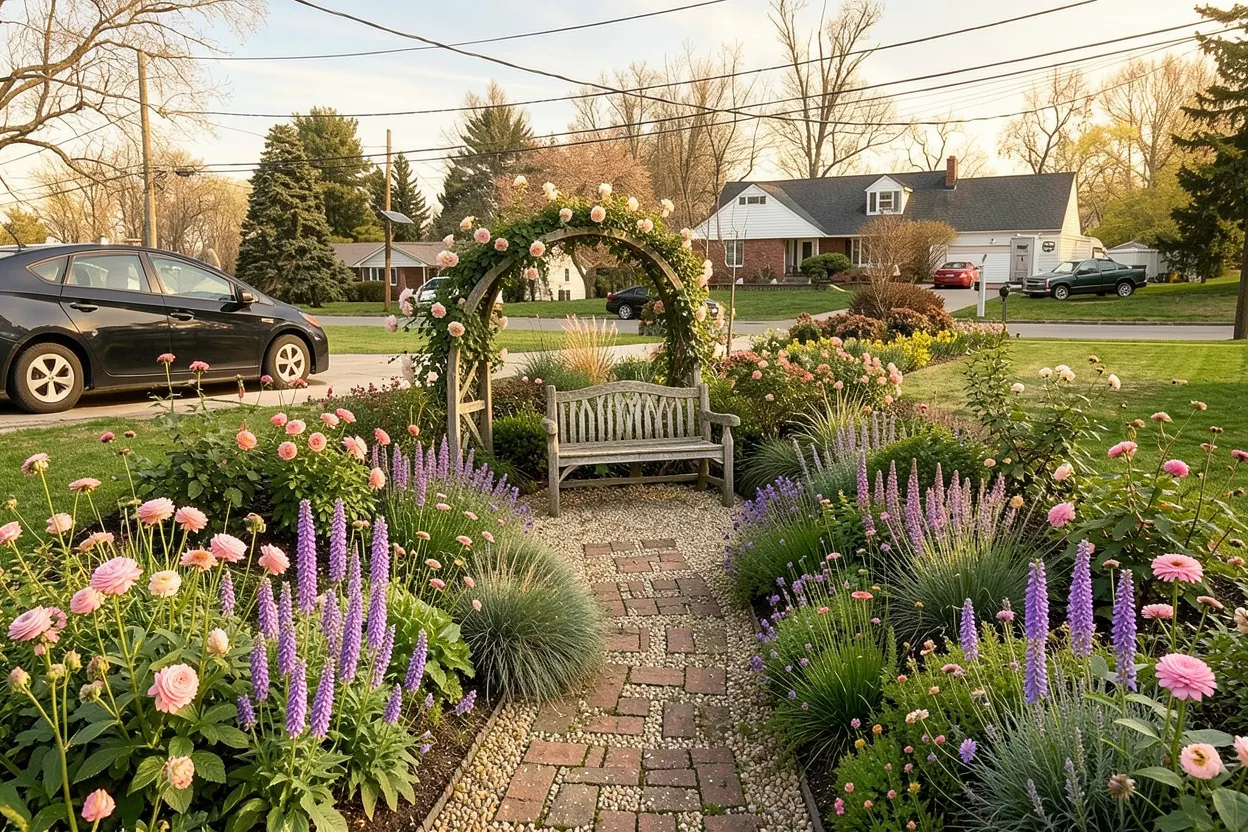 BeforeCottage
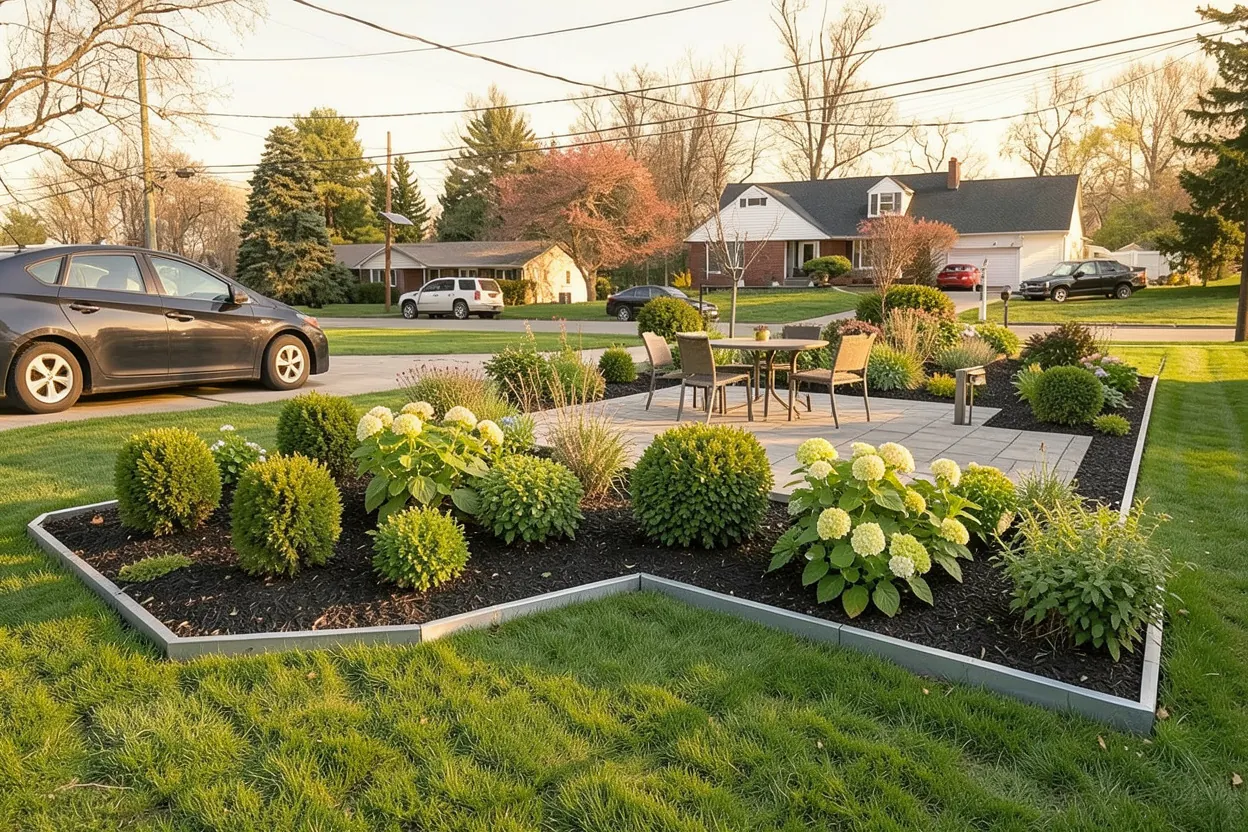 BeforeLow-maintenance
Original photo: Famartin · CC BY-SA 4.0 · Wikimedia Commons source. Cropped and resized. AI redesigns are adaptations, shared under the same license.

Front lawn with established planting
A broad lawn does not need dozens of different plants. Compare repeated beds against a paved sitting area; Mediterranean containers and climbing vines bring extra pruning and watering tasks.
 BeforeLow-maintenance
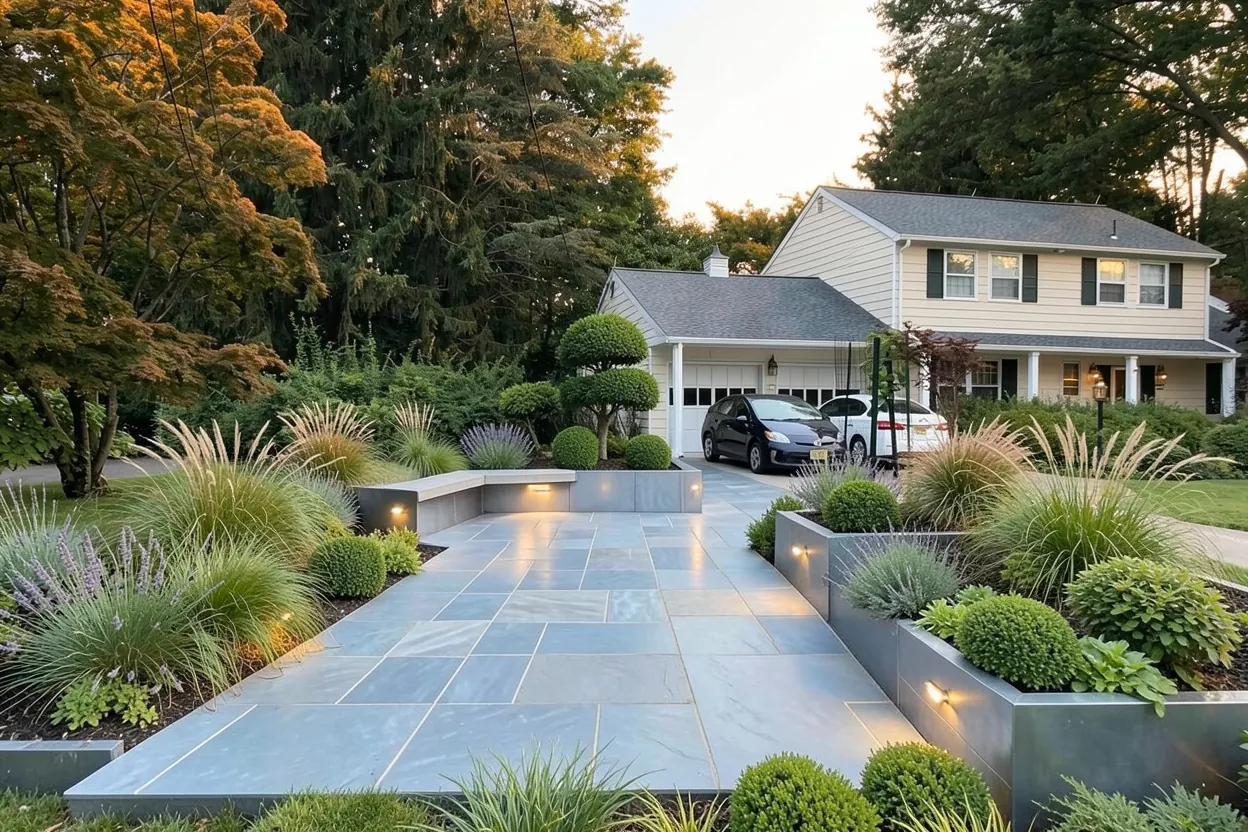 BeforeModern
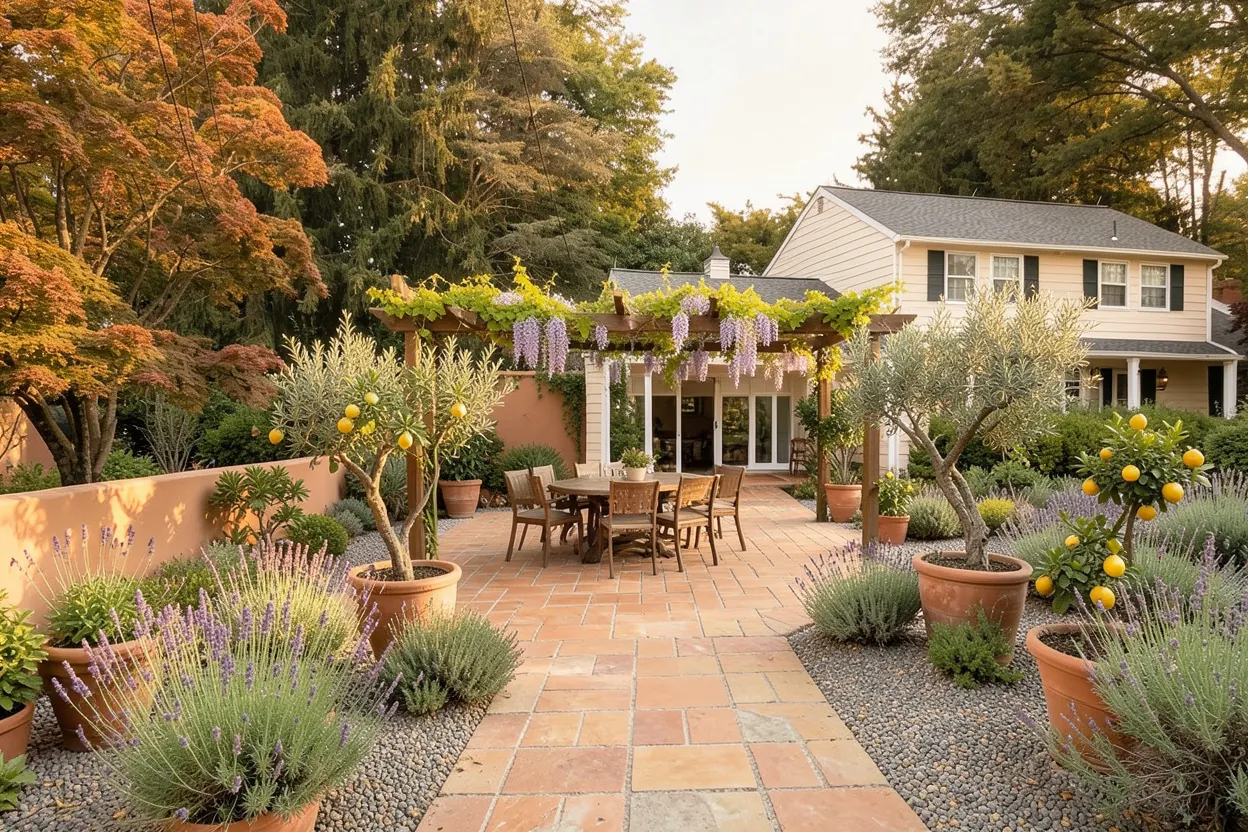 BeforeMediterranean
Original photo: Famartin · CC BY-SA 4.0 · Wikimedia Commons source. Cropped and resized. AI redesigns are adaptations, shared under the same license.

Plan a yard that works beyond the picture
1. Find the sightline and keep access open
Sit where you want privacy and ask someone to stand on the sidewalk to identify the actual view. A short screen close to a porch chair may solve the problem with less material than enclosing the whole lot. Keep the front door legible from the approach and preserve a direct route for visitors and deliveries. Leave a practical strip for snow storage where needed. At a driveway or street corner, map the required visibility area before adding tall planting. Avoid creating a hidden exit where drivers have to pull across the sidewalk to see traffic.
2. Separate visual screening from noise control
A hedge can hide moving vehicles and make a yard feel more sheltered, but a narrow row of shrubs provides little meaningful traffic-noise reduction. Effective sound barriers depend on height, length, continuity and position relative to the road and listener. Slatted fences and gaps under panels allow sound through; even a solid fence may leave substantial noise coming around its ends or from elevated vehicles. Start by moving seating farther from the road or using the house as a shield where possible. For an expensive barrier intended to reduce sound, get site-specific acoustic advice rather than accepting a promise based on plant density alone.
3. Layer a hedge without crowding it
Where the allowed height and space permit, place taller shrubs behind a lower street-facing layer. In cold regions, eastern redcedar (Juniperus virginiana) can offer evergreen structure on suitable sunny sites, but its mature size needs room and it can host cedar-apple rust near susceptible apples. Black chokeberry (Aronia melanocarpa) and fragrant sumac (Rhus aromatica) can suit some exposed northern or eastern sites; neither replaces an evergreen winter screen. In mild regions, consider locally suitable evergreen shrubs rather than importing a cold-climate list. Choose several compatible species to reduce dependence on one pest-prone hedge, and leave access for pruning and fence repairs.
4. Check fencing rules before buying panels
Front-yard fences can have different height and openness limits from backyard fences. Confirm the property line, road right-of-way, utility easements, corner visibility requirements and any HOA restrictions with the relevant local authority. A fence just inside an existing hedge may still occupy public land if the hedge was planted beyond the boundary. Ask whether a permit or survey is needed and how height is measured beside a slope or raised bed. Gates should not obstruct the sidewalk. Do not assume a tall rear-boundary fence design can be copied along the road; choose the permitted envelope first, then design planting around it.
5. Treat a berm as grading work
A broad, gently shaped earth mound can raise planting and change a sightline if the yard is deep enough. A narrow steep pile tends to erode, dry unevenly and force plants into difficult conditions. Before importing soil, check drainage, existing tree roots, buried utilities and whether the added height affects fence measurements. Do not bury trunk flares, block a swale or send runoff onto the sidewalk or a neighbor. Retaining edges and slopes may trigger engineering or permit requirements. In a small frontage, a level planted screen near the seat is often more practical than using most of the usable yard for a berm.
6. Choose for salt, heat and dry soil separately
Road salt arrives as spray and salty snowmelt; drought tolerance alone does not establish salt tolerance. Keep sensitive plants away from plowed snow and choose species using regional roadside guidance. Common bearberry (Arctostaphylos uva-ursi) can suit some cool, sunny, well-drained sites, while little bluestem (Schizachyrium scoparium) suits many sunny lean-soil plantings; confirm local salt exposure suitability rather than assuming either is indestructible. In hot, frost-limited regions, red yucca can tolerate dry conditions after establishment, but needs a different climate assessment. Protect new plants from splash where practical, mulch appropriately and inspect irrigation after winter. No plant palette compensates for repeatedly dumping salty snow directly on the roots.
7. Budget for one usable protected area
Use roughly $600–$2,000 as a DIY planning allowance for a modest bed with small shrubs, mulch and establishment watering. A professionally installed layered planting strip might run $3,000–$8,000 or more. For an initial fence allowance, test $40–$120 per linear foot installed, then obtain local quotes; gates, footings, access and acoustically designed construction can push costs well beyond it. These illustrative US bands exclude major berm construction, engineered walls and permit costs. Start with the screen serving one window or seat. Avoid instant giant hedges planted too close together, and contact 811 before digging in the US, with separate locating for private lines where needed.
Further reading: EPA WaterSense landscape planning, University of Missouri Extension on maintenance, Colorado State Extension on xeriscape conversions, and 811 before you dig.
Questions before you start
What is the best hedge for a busy-street front yard?
Choose by winter screening needs, mature width, local hardiness, deer pressure and salt exposure. A mixed planting can be more resilient than one continuous species. Keep tall shrubs outside required driveway and corner visibility areas.
Will a hedge block traffic noise?
A typical residential hedge mainly screens the view. Substantial noise reduction needs a suitable barrier design or much greater vegetation depth than most front yards have. Compare the cost of an acoustic assessment with the cost of a fence before building for sound control.
Can I put a six-foot privacy fence in my front yard?
That depends on the local rules, lot and road frontage. Confirm front-yard height, openness, setback and visibility limits before ordering. A height allowed behind the house may be prohibited at the street.
Is a berm a good way to get front-yard privacy?
Only where there is room for stable slopes and a workable drainage plan. Berms can affect roots, runoff and regulated fence height. A small yard may gain more from a screen close to the seating area.
How can I compare layouts before paying for planting?
Photograph the frontage from the road and from your intended seat. Use an AI landscape concept to compare bed shapes and screen positions, then verify mature plant sizes, sightlines and permitted structures on a measured plan.
Try it on your own yard
Upload a daylight photo. Compare styles on your actual space, then save a concept to discuss with your landscaper.
Design my yard — freeNo signup. Or use the camera button below to start here.