
Dry Landscaping Ideas with Gravel, Succulents and Planted Beds
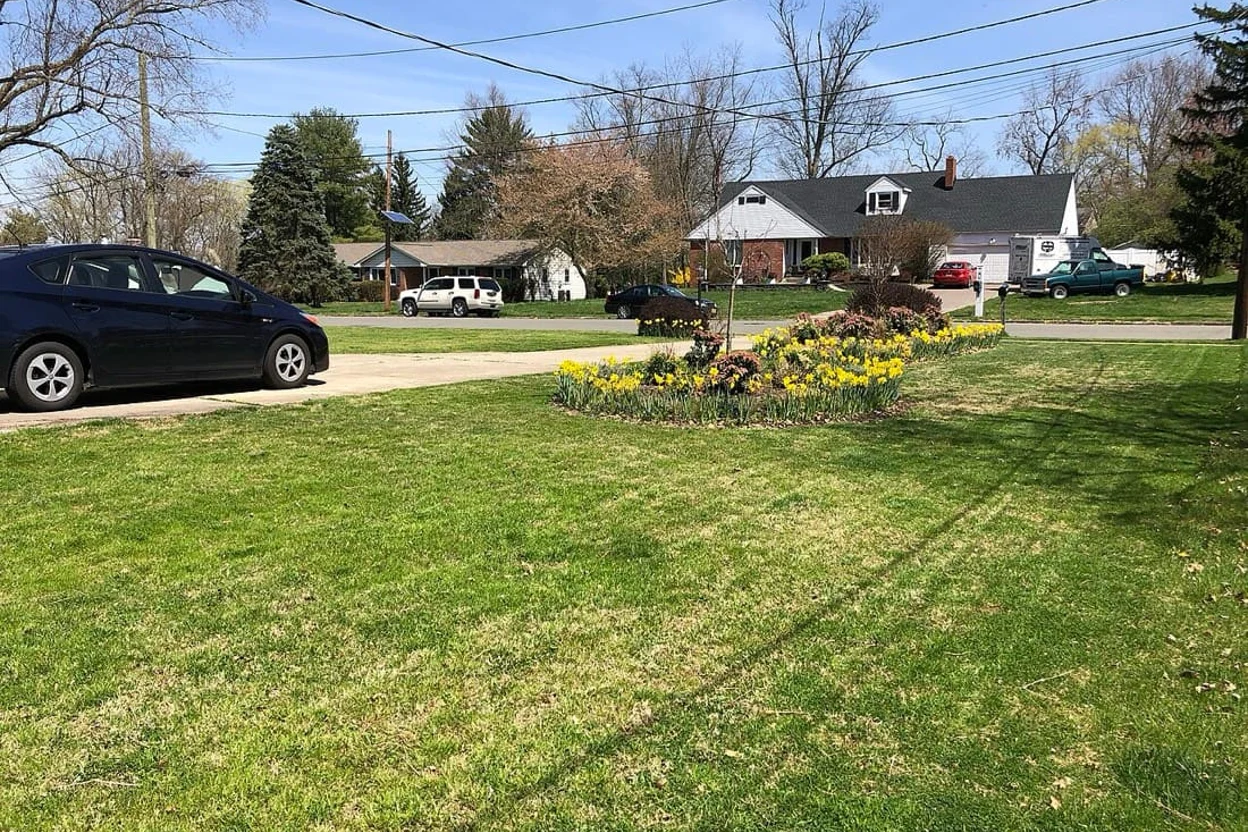
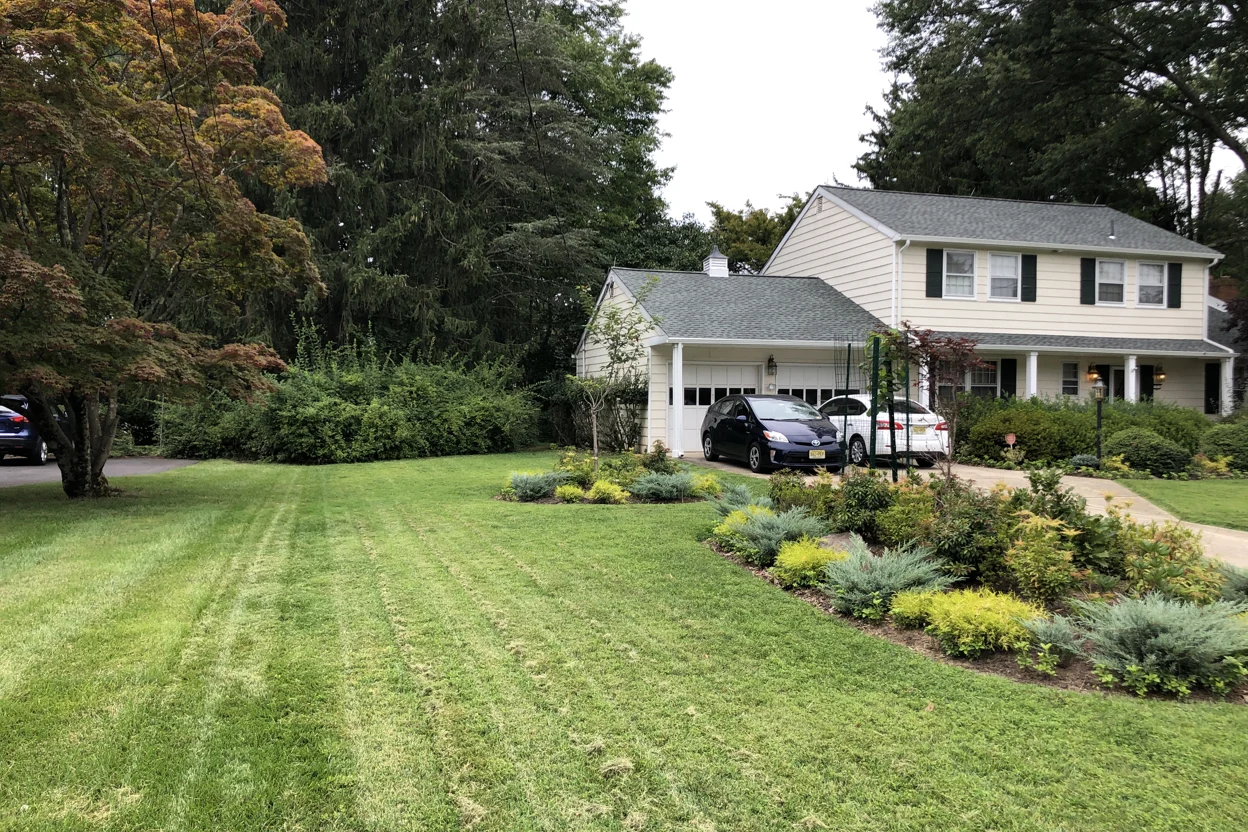
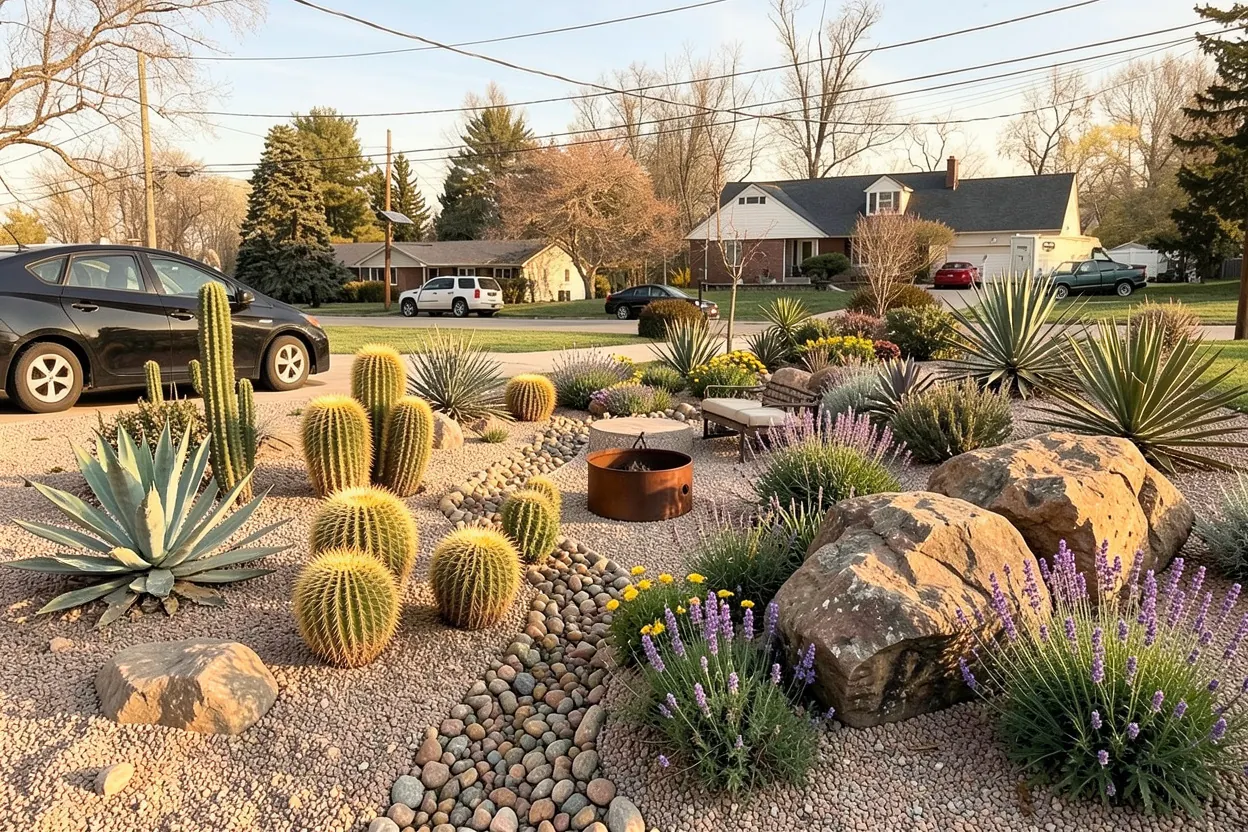 BeforeDesert xeriscape
Dry landscaping ideas often begin with a look: gravel between planted islands, a few sculptural succulents and open space around a boulder or path. This guide focuses on composing and building that dry-garden surface, from choosing aggregate to keeping stone out of the walk. Xeriscaping is a broader water-use strategy, and it can look lush rather than rocky. Use the drought-tolerant landscaping guide linked below for regional plant palettes, hydrozones and establishment watering. Here, start with the layout and material quantities so a lawn replacement becomes a usable garden rather than an expensive field of loose rock.
Try it on your own yardTwo real yards. Three possibilities each.
Drag each slider to reveal the original. Generated with LandscapeGPT using these actual photos; concepts are illustrative, not construction plans or verified plant lists.
Lawn conversion canvas, New Jersey
This New Jersey photo is a visual canvas. Desert cactus is a warm-climate direction, not a planting prescription for this location; use local dryland plants to recreate the shapes in colder regions.
BeforeDesert xeriscape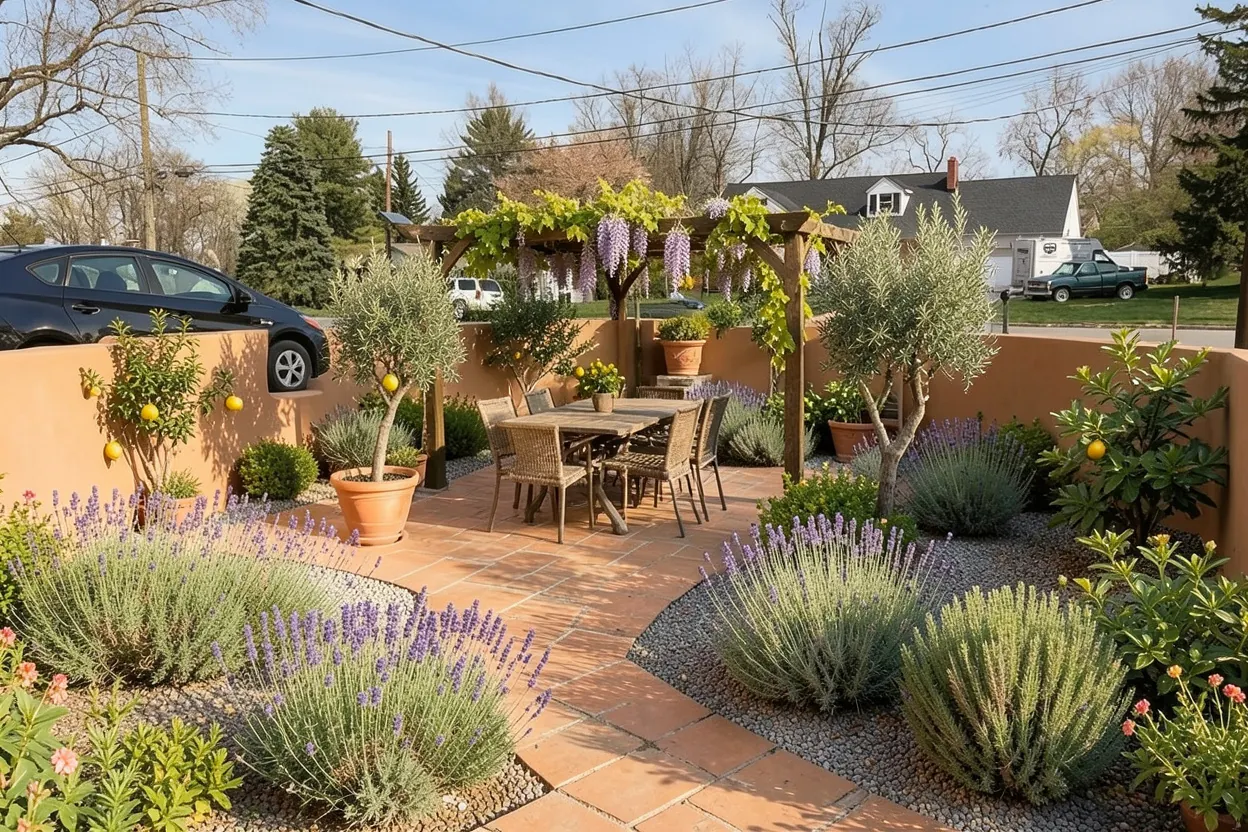 BeforeMediterranean
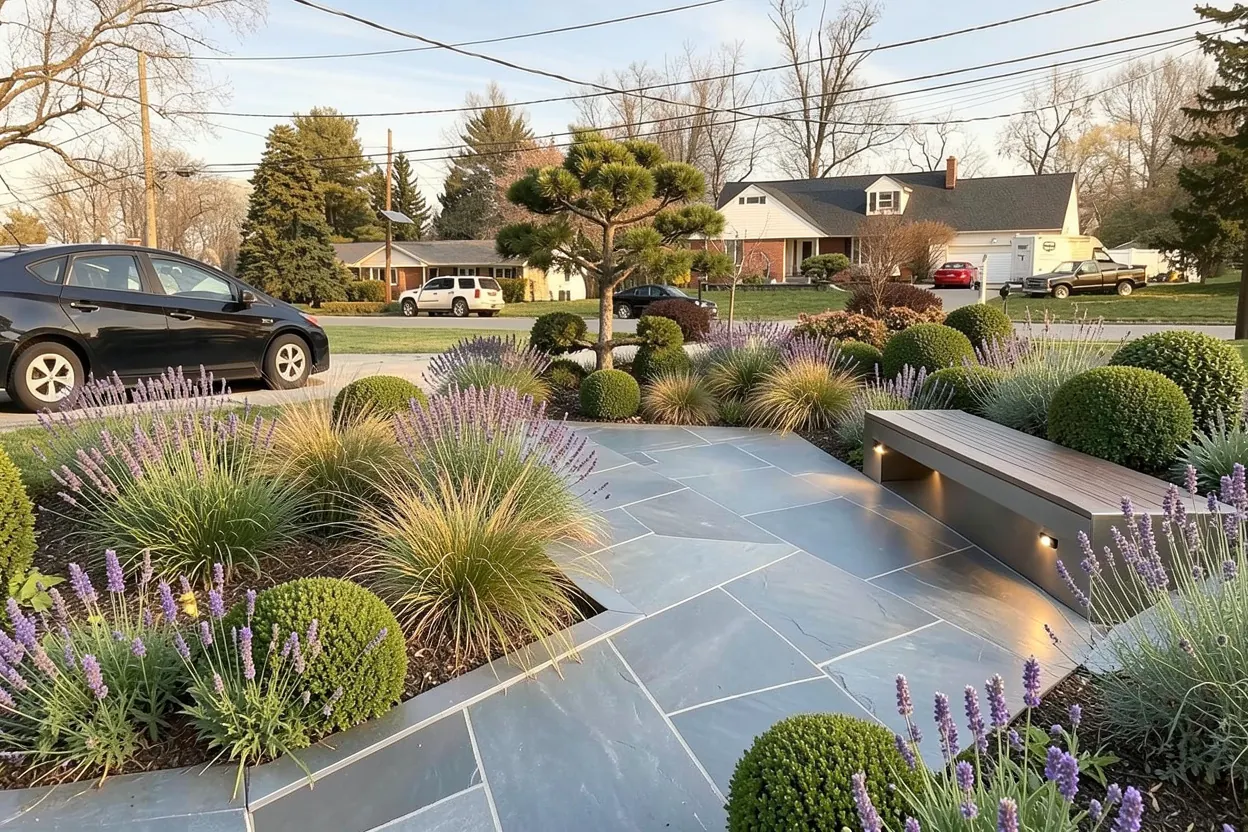 BeforeModern
Original photo: Famartin · CC BY-SA 4.0 · Wikimedia Commons source. Cropped and resized. AI redesigns are adaptations, shared under the same license.

Broad front lawn conversion, New Jersey
Compare a sculptural desert palette, a softer cottage border and a contemporary terrace. Keep the existing house, translate plant choices to local conditions and plan establishment watering before removing lawn.
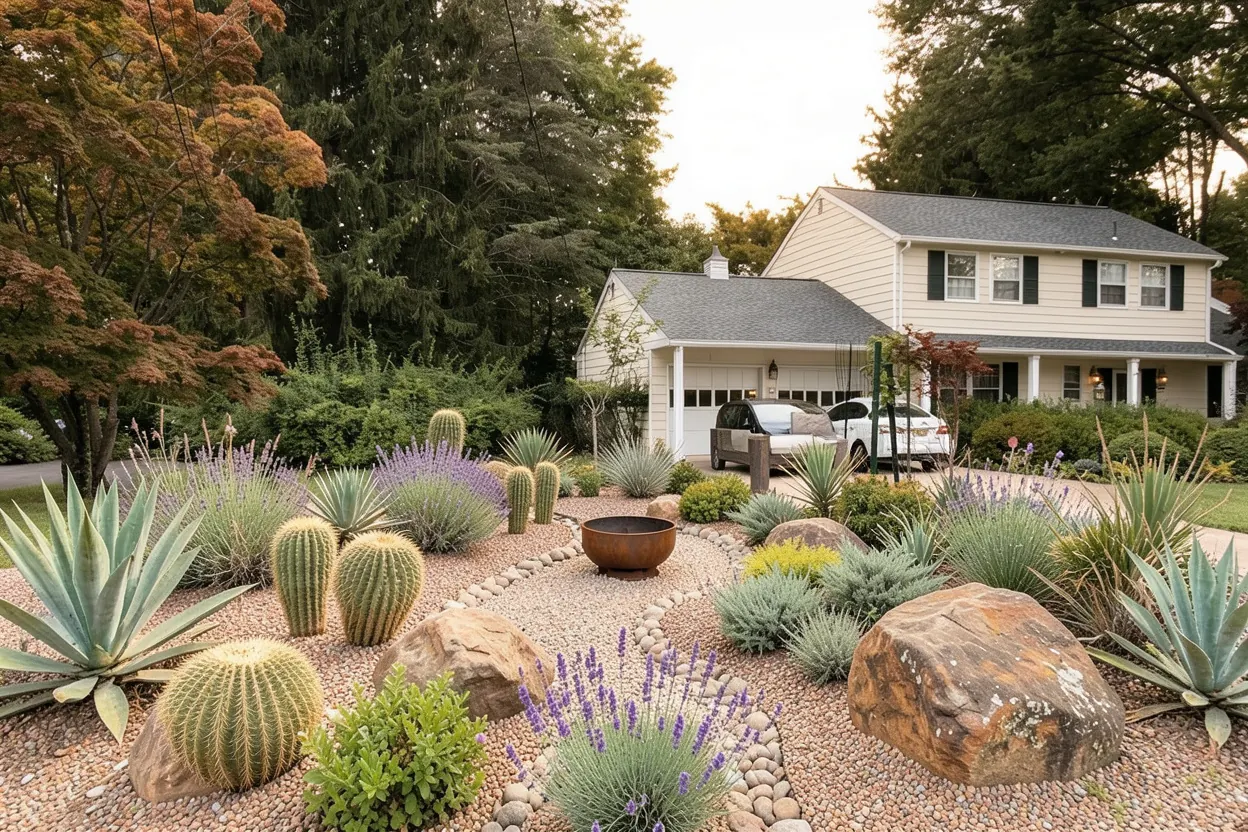 BeforeDesert xeriscape
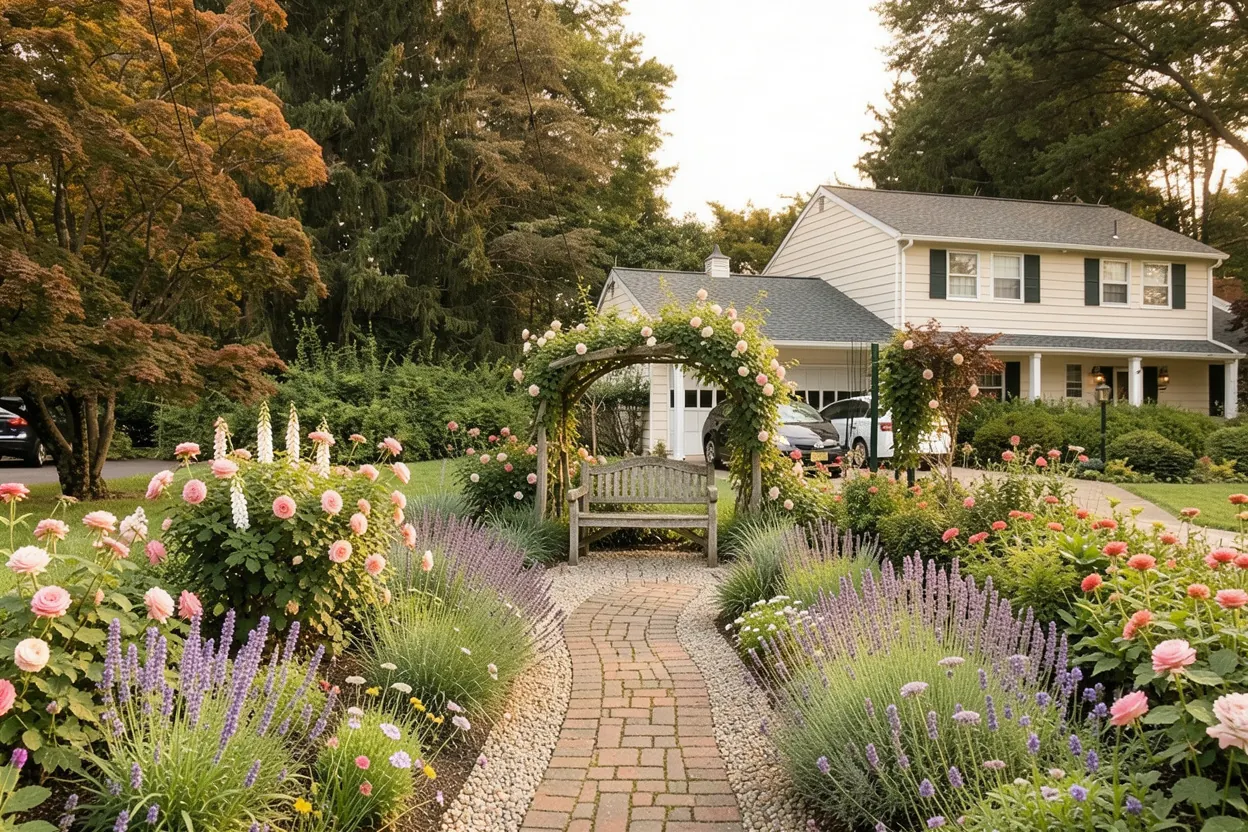 BeforeCottage
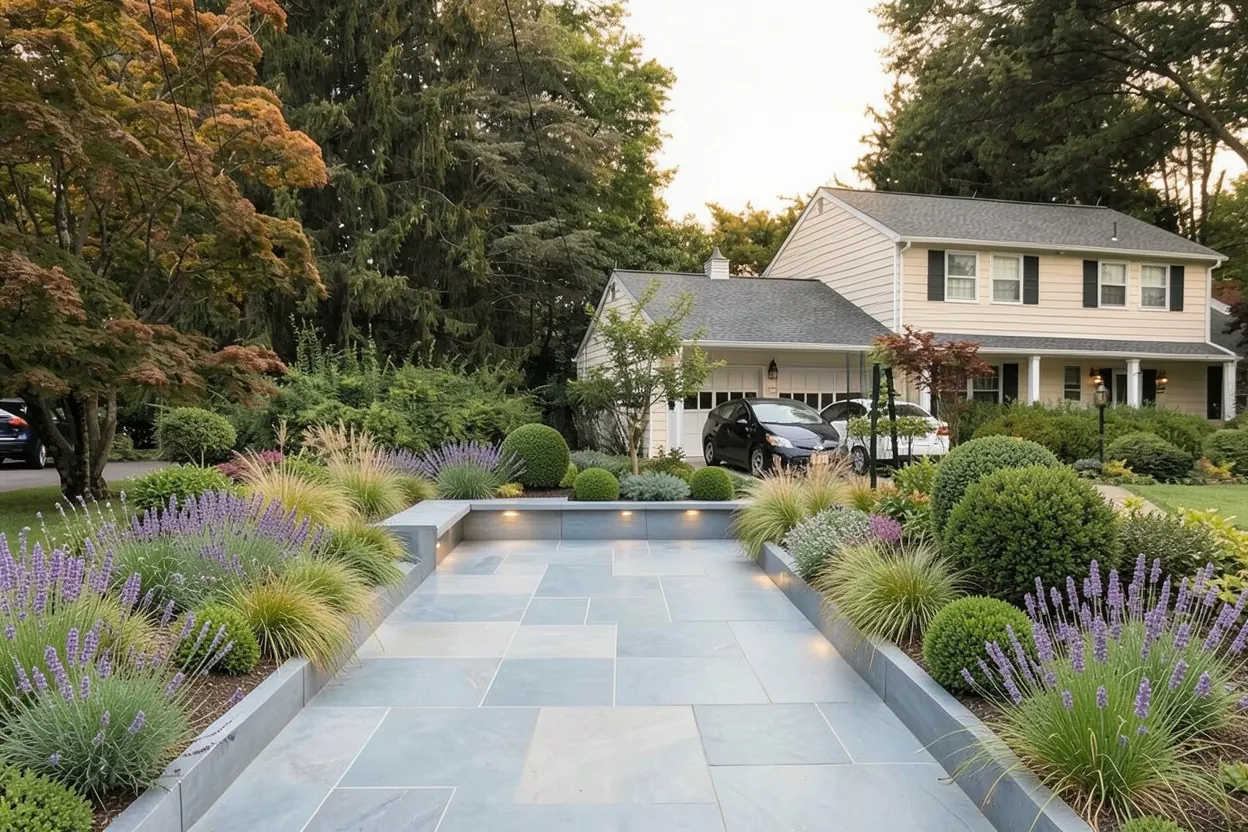 BeforeModern
Original photo: Famartin · CC BY-SA 4.0 · Wikimedia Commons source. Cropped and resized. AI redesigns are adaptations, shared under the same license.

Plan a yard that works beyond the picture
1. Draw planted islands before ordering gravel
Divide the site into the main route, planted beds and a limited area of exposed mineral mulch. Keep existing shade trees and account for their roots and ongoing water needs when removing lawn irrigation. One generous planted island usually gives roots more useful space than several tiny holes surrounded by stone. Use a hose or string to test the outline from the front door and sidewalk. Leave room for plants at mature width; an agave that eventually fills the path is a layout failure even if it looked elegant in its nursery pot. Retain a comfortable, firm route to the door.
2. Choose aggregate for the job
Angular crushed stone tends to interlock better than rounded pea gravel, which rolls underfoot. Decomposed granite can create a finer-looking route, but its firmness and erosion resistance depend on the product, base, drainage and compaction. Decorative gravel used as mulch is a different specification from a structural path. Compare sample trays against the house in sun and shade; white rock can glare, dark rock can store heat and mixed colors can distract from the plants. Add an edge to keep aggregate off adjoining paving. Avoid using loose stone on a steep slope or expecting it to provide reliable wheelchair access.
3. Calculate the volume and prepare the surface
For a mineral mulch area, a two-inch layer over 300 square feet is about 50 cubic feet, or 1.85 cubic yards, before allowances. Confirm the depth appropriate to the stone size and intended use with the supplier; a walk needs its own base specification. Remove unwanted turf and persistent weeds, establish finished levels and preserve drainage away from buildings before delivery. Do not pile gravel above siding clearances or over tree root flares. Landscape fabric is not a permanent weed cure: windblown soil and seeds accumulate on top, and roots can entangle it. Resolve weeds and maintenance access rather than treating fabric as a substitute for preparation.
4. Use succulents that survive your winter
In suitable mild, dry regions, Agave attenuata offers a broad rosette, though it is frost-sensitive and needs generous space. Cold-winter gardeners can consider locally hardy hens-and-chicks (Sempervivum) or creeping stonecrops such as Sedum album in sunny, well-drained sites. Red yucca (Hesperaloe parviflora) and locally suitable penstemons can add taller forms in appropriate regions. These plants differ in cold tolerance and moisture needs; do not select them from color alone. In humid or clay-soil gardens, drainage may matter more than summer drought. Keep spines away from walks and play areas. The New Jersey comparison photos are design canvases, not proof that the generated desert species belong in that climate.
5. Combine boulders with mulch rather than covering everything
A small group of boulders in one local stone can anchor a bed more convincingly than evenly spaced rocks dotted across it. Plan delivery and equipment access before selecting pieces; heavy stone near utilities, slopes or roots needs professional handling. Set boulders so they appear grounded rather than perched on the surface. Use organic mulch where it suits the selected shrubs and perennials, and mineral mulch where the chosen dryland plants benefit from it. Keep mulch away from trunks and crowns, and follow local fire guidance near buildings. Large unshaded gravel expanses can reflect heat onto walls and windows, so leave a substantial role for living plants.
6. Install irrigation before the finishing layer
Lay out a suitable drip system while the soil is accessible, with filtration, pressure regulation and any locally required backflow protection. Group plants by water needs rather than placing every emitter on the same schedule. Keep valves and flush points reachable, document tubing routes and check that water reaches root balls instead of running across the stone. Gravel can make a bed look dry even when the soil beneath is wet; check below the surface before watering. Adjust as roots establish, and plan continued care for retained trees. For the fuller water-management approach, use the drought-tolerant guide rather than copying a universal once-a-week timer setting.
7. Price delivery, removal and upkeep
For an illustrative 300-square-foot DIY conversion, allow roughly $1,000–$3,000 for modest plants, aggregate delivery, edging and basic irrigation adjustments if no major grading is needed. A professionally installed 500–1,000-square-foot dry garden can reach $5,000–$15,000 or more. These are US planning allowances, not quotes; turf disposal, difficult access, boulders, drainage and premium stone can dominate the bill. Request quantities and separate delivery and removal charges. Keep spare matching aggregate for repairs, remove windblown leaves before they decompose into weed-growing soil, and hand-pull seedlings early. Dry landscaping reduces mowing where it replaces turf; it does not eliminate weeding or irrigation maintenance.
Further reading: EPA WaterSense landscape planning, University of Missouri Extension on maintenance, Colorado State Extension on xeriscape conversions, and 811 before you dig.
Questions before you start
Is dry landscaping the same as drought-tolerant landscaping?
Dry landscaping often describes a visual treatment using gravel, stone and sculptural planting. Drought-tolerant landscaping focuses on plants and site management that use water efficiently. They overlap, but a rocky yard with poorly chosen plants can still waste water.
What is the cheapest way to start a dry garden?
Convert one awkward lawn strip, keep existing sound paving and use small locally suitable plants with a simple mulch finish. Measure aggregate volume and delivery access before ordering; decorative boulders and full-yard excavation are optional costs.
Should I put plastic or landscape fabric under gravel?
Avoid assuming a sheet will make a planted bed weed-free. Impermeable plastic can interfere with water movement, while fabric collects debris above it and can complicate later planting. A constructed path may need a specified separation layer; that is a different job from covering planted soil.
Can succulents grow in a cold-climate dry garden?
Some can. Locally hardy Sempervivum and certain stonecrops can suit well-drained cold-winter sites. Tender agaves are a different choice. Verify the exact species, winter minimums and wet-weather tolerance before buying.
Does gravel fix a muddy or poorly drained yard?
A decorative gravel layer does not fix compacted soil, low grades or a blocked drainage route. Diagnose where water enters and where it can legally leave before installing the finish. Some sites need drainage work or a different planting scheme.
Try it on your own yard
Upload a daylight photo. Compare styles on your actual space, then save a concept to discuss with your landscaper.
Design my yard — freeNo signup. Or use the camera button below to start here.