
Modern Front Yard Landscaping Ideas for the Front of Your House
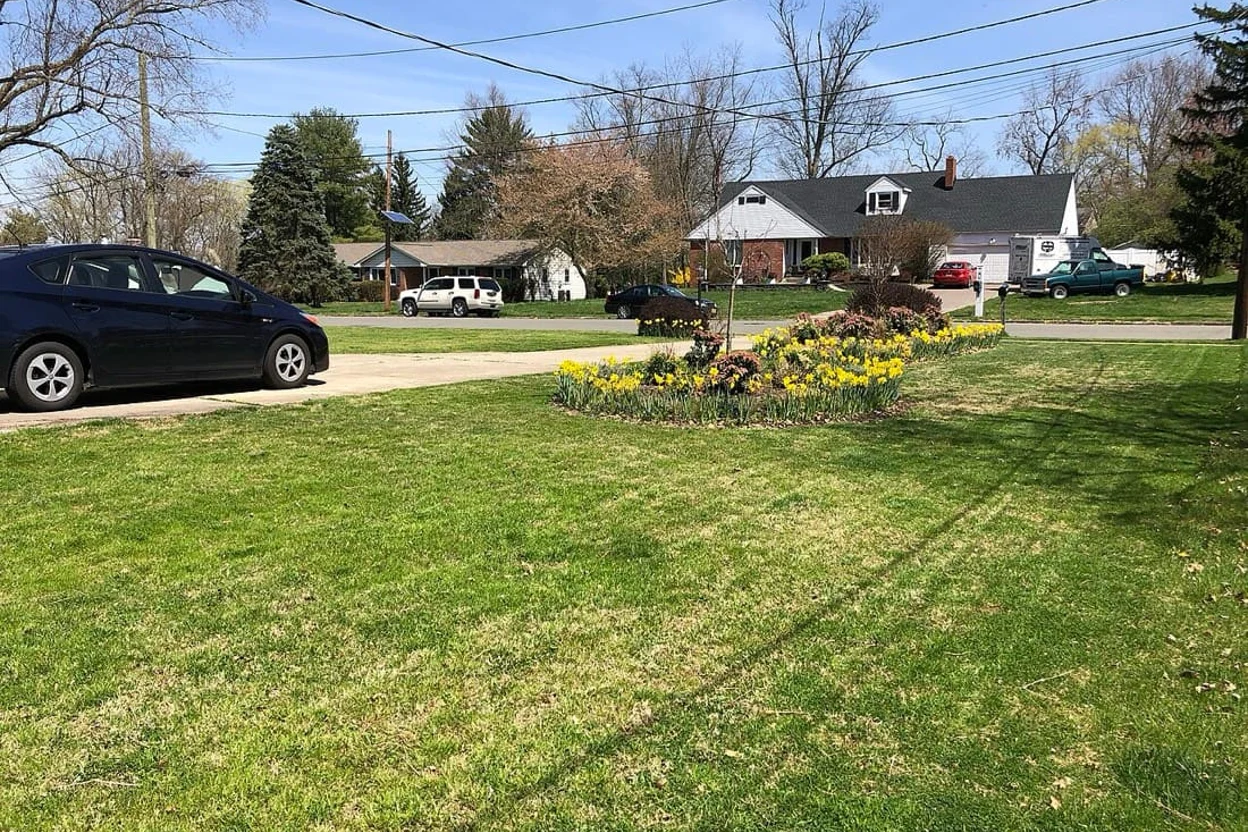
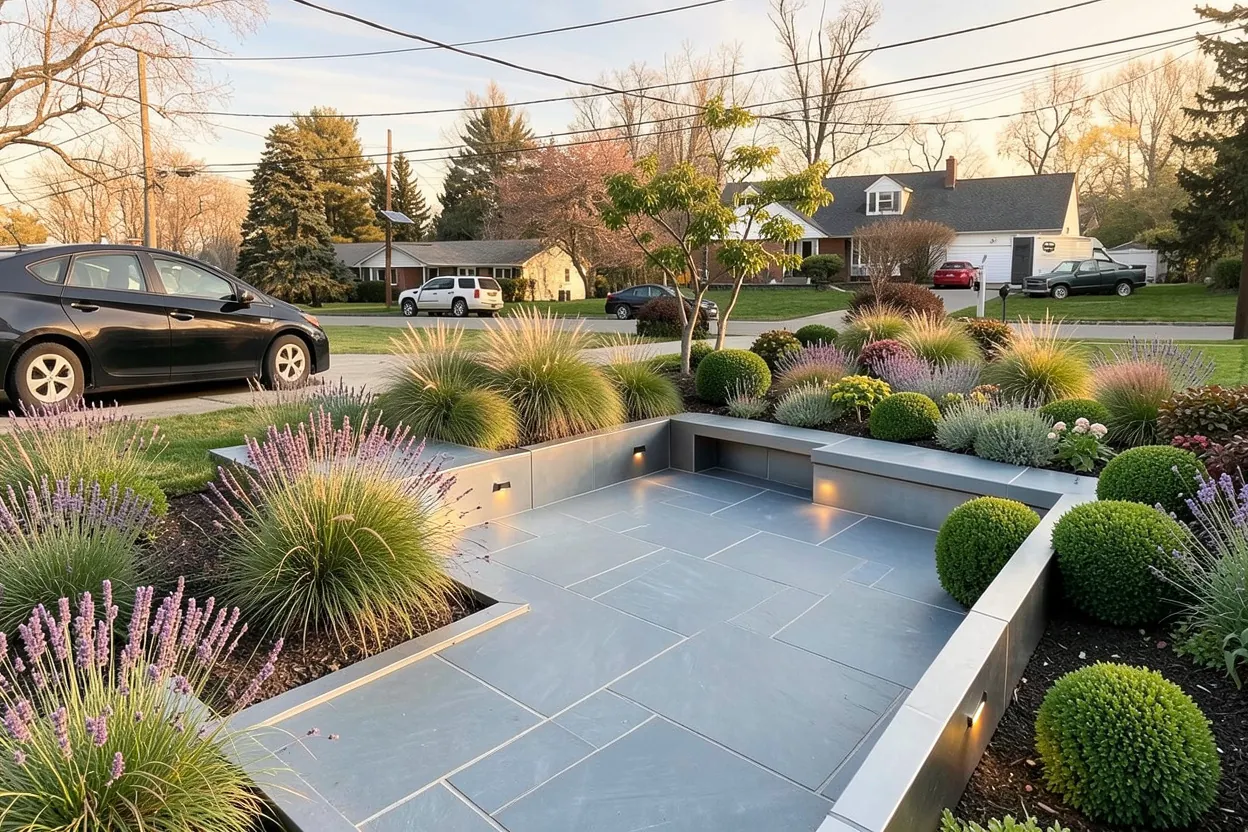 BeforeModern
Modern front yard landscaping works when the house, entrance and planting read as one composition. You do not need a flat-roofed home or an all-concrete yard: a traditional facade can sit comfortably behind a simple path, a generous planted bed and a short list of repeated plants. Start by photographing the front of your house from across the street. Identify the door, the strongest architectural line and anything that competes with them. The comparisons below show alternative layouts on real front lawns; borrow their proportions rather than treating the generated plants as a shopping list.
Try it on your own yardTwo real yards. Three possibilities each.
Drag each slider to reveal the original. Generated with LandscapeGPT using these actual photos; concepts are illustrative, not construction plans or verified plant lists.
Street-facing lawn, New Jersey
The existing street view stays open. Compare a clear paved entrance, a flower-rich path and a simpler bed edge; keep sightlines clear at the driveway.
BeforeModern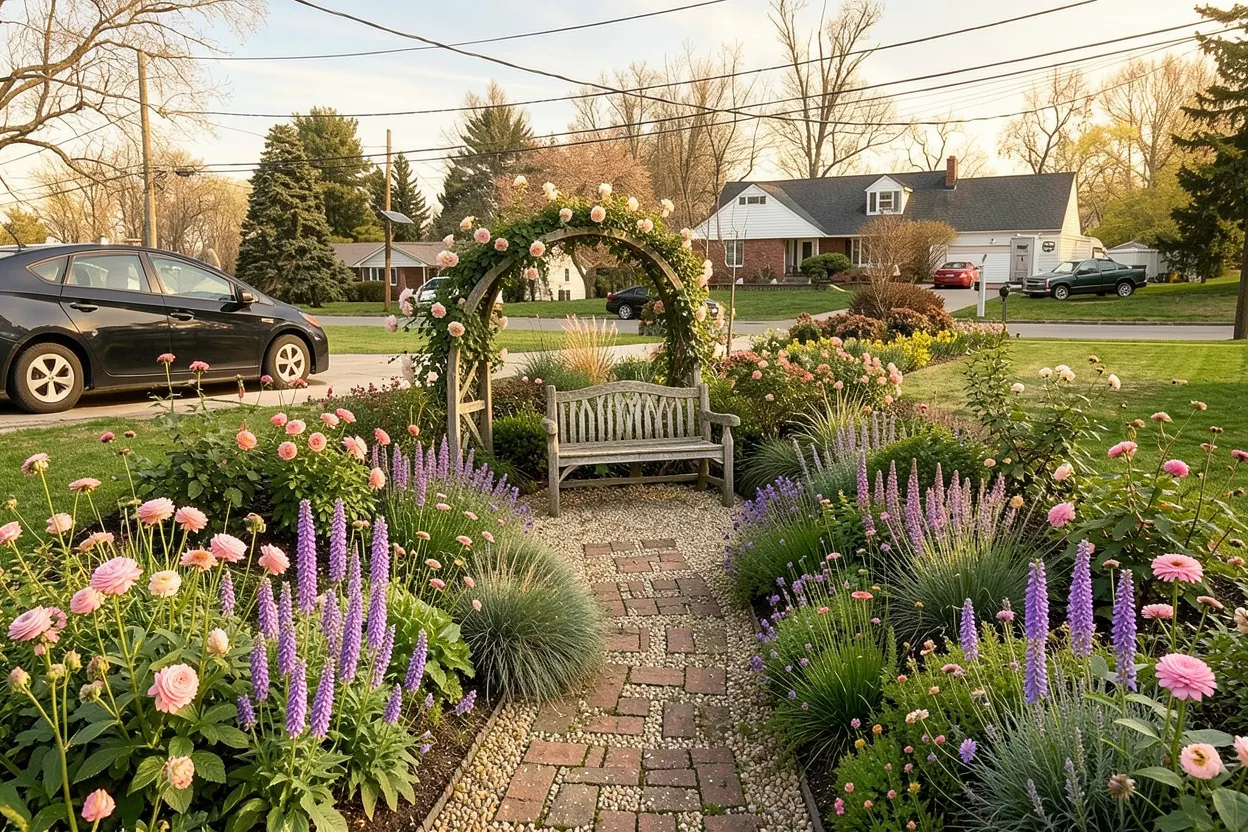 BeforeCottage
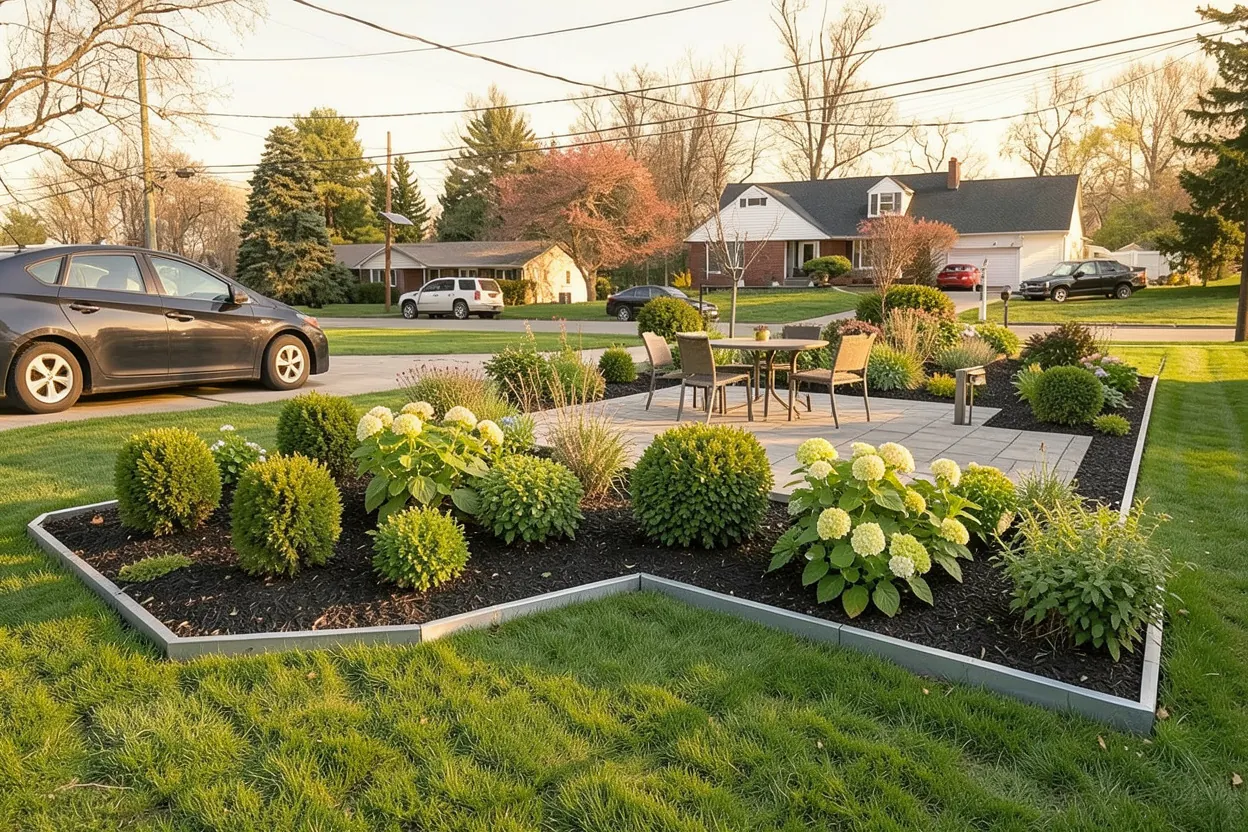 BeforeLow-maintenance
Original photo: Famartin · CC BY-SA 4.0 · Wikimedia Commons source. Cropped and resized. AI redesigns are adaptations, shared under the same license.

Broad front lawn and house, New Jersey
Use the house as the anchor: repeated planting can give this broad lawn structure without hiding the windows. The cottage option requires more seasonal care than the shrub-led version.
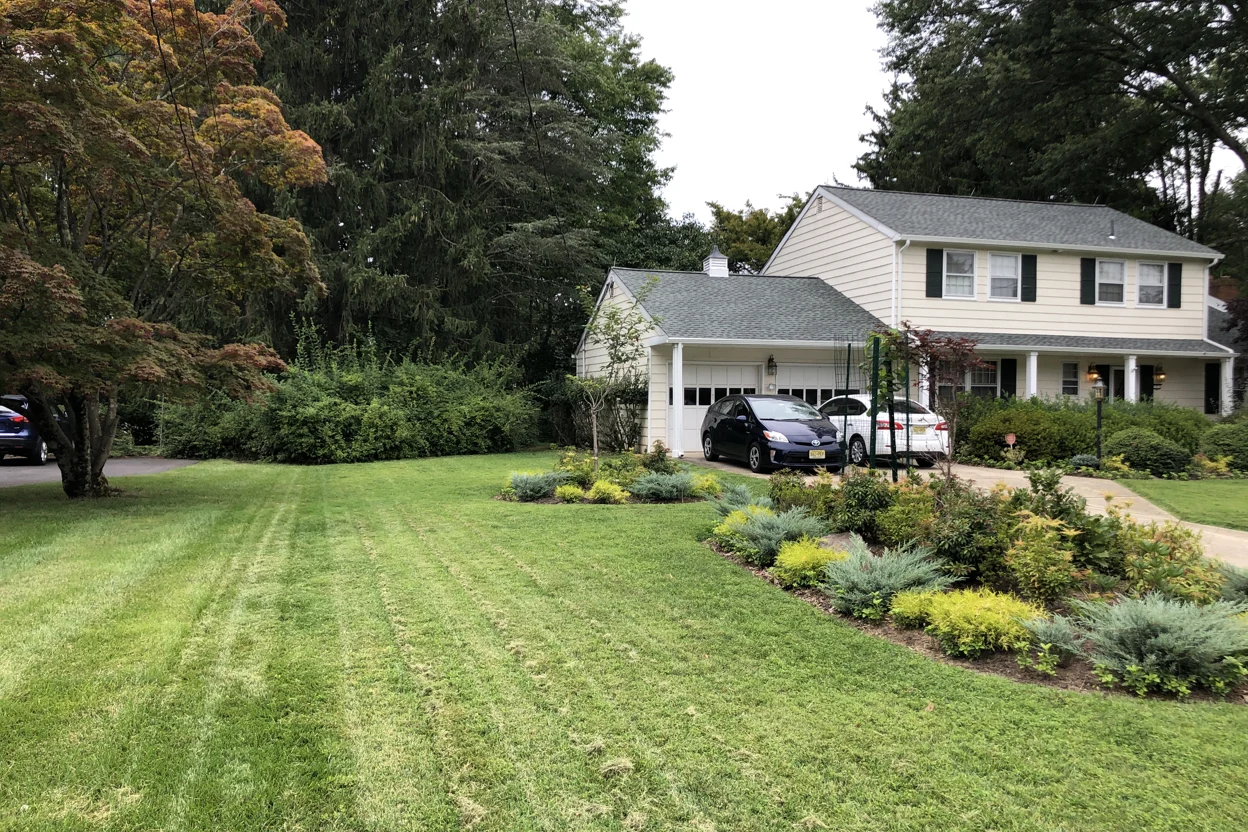
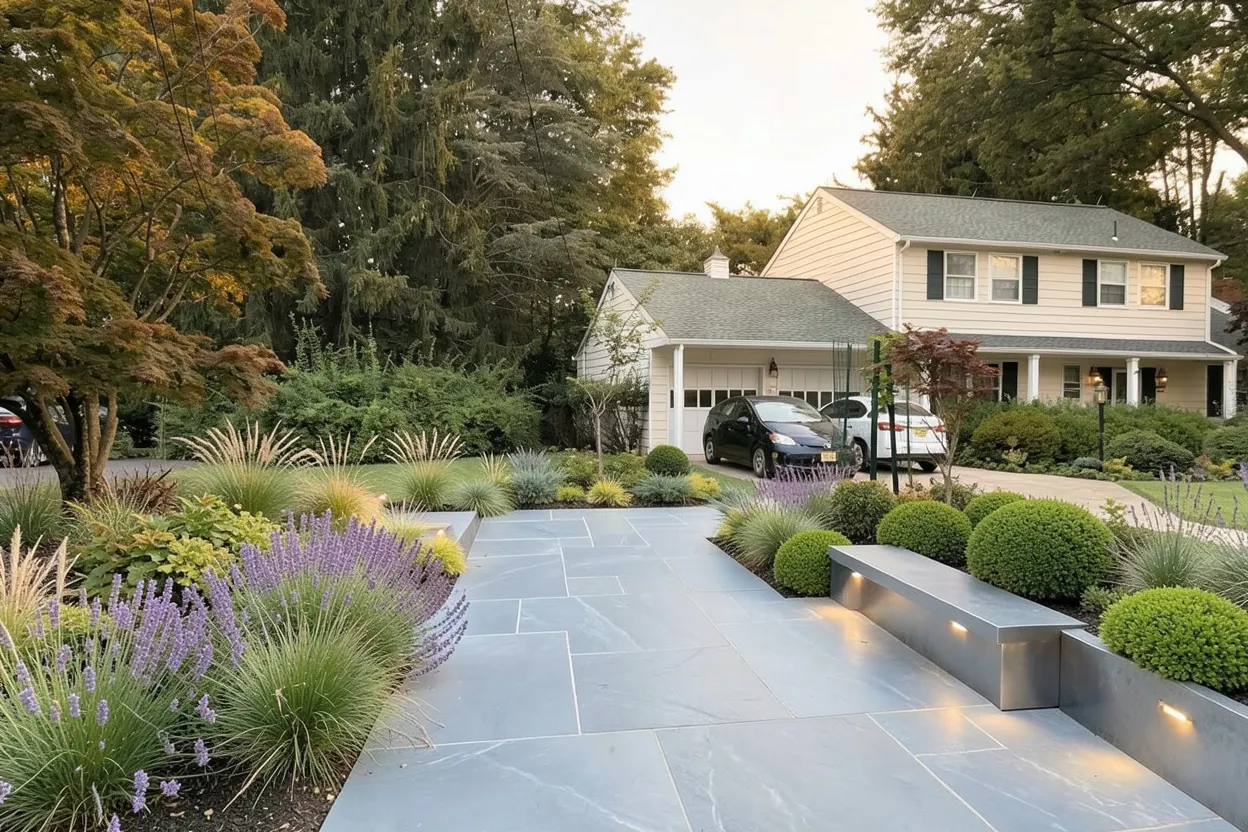 BeforeModern
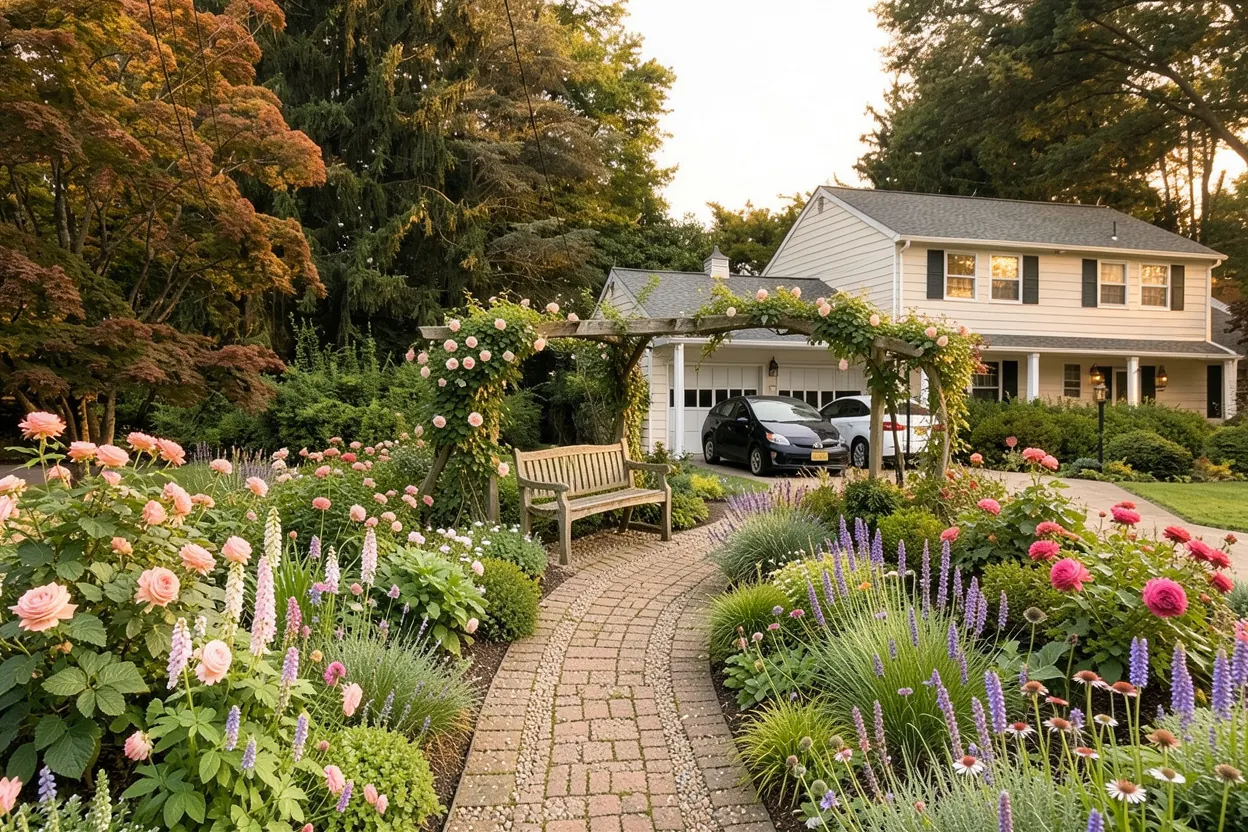 BeforeCottage
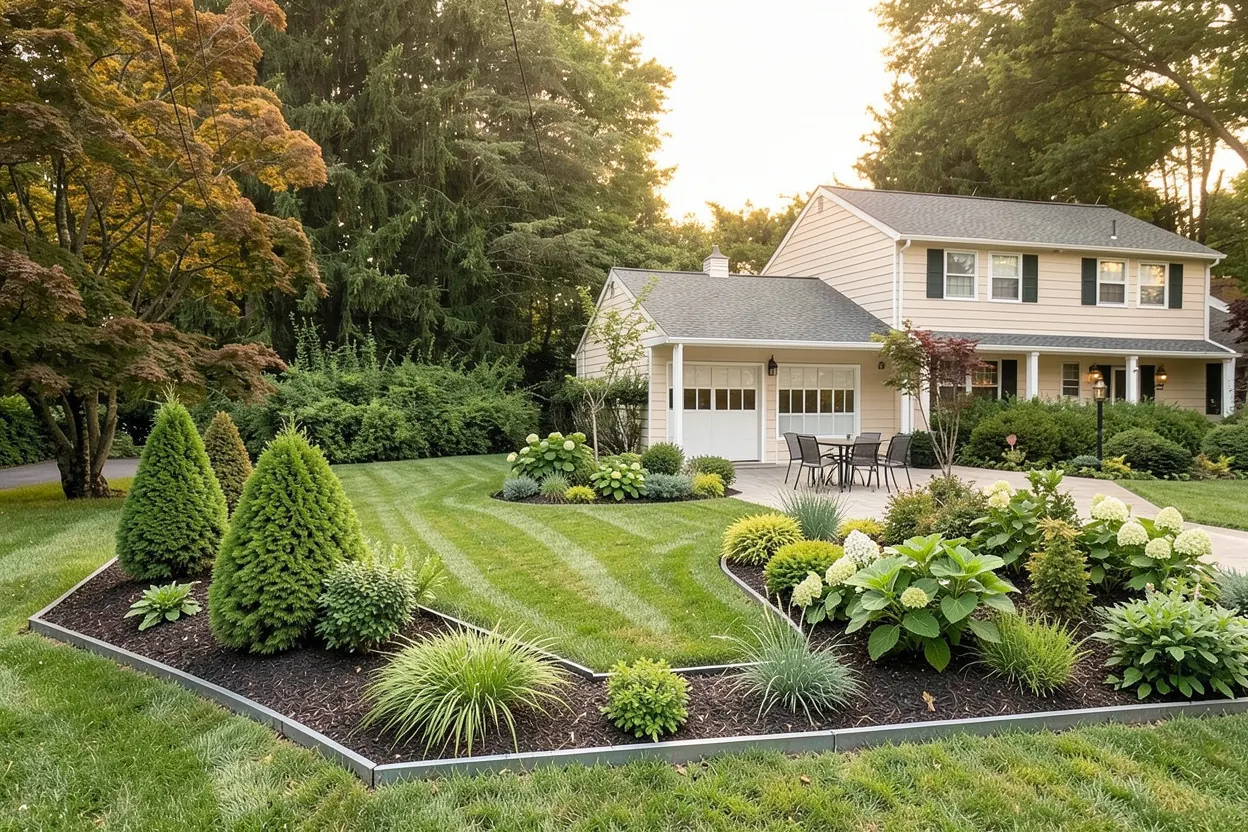 BeforeLow-maintenance
Original photo: Famartin · CC BY-SA 4.0 · Wikimedia Commons source. Cropped and resized. AI redesigns are adaptations, shared under the same license.

Plan a yard that works beyond the picture
1. Draw the entrance before drawing the beds
Align a direct route with the front door or porch opening, then use the same line to organize nearby beds. A roughly four-foot-wide walk is a useful starting point for everyday comfort; check applicable access requirements before construction. On a wide frontage, one rectangular lawn panel can balance a deeper planted area. On a narrow lot, a single continuous bed often looks calmer than several little islands. Retain sound concrete and use a crisp edge to improve it. Replacing a serviceable walk just to add fashionable stepping slabs can spend most of the budget without improving arrival.
2. Limit the hardscape palette to two main materials
Pair warm gray concrete pavers with dark steel edging, or brushed concrete with a small gravel accent. Repeat the paving color in a porch planter instead of introducing a third stone. Large slabs need a suitable base and handling access; outdoor-rated porcelain needs an installation system specified for your climate. Stabilized decomposed granite can suit a secondary path in some regions, but loose pea gravel shifts under wheels and tracks onto sidewalks. Ask for physical samples beside the actual siding, wet and dry. Dark surfaces can become hot, while very pale aggregate can create glare below a sunny window.
3. Repeat plants in generous groups
Choose an evergreen or woody framework, one grass or grasslike plant and one flowering perennial. In a sunny, cold-winter yard, prairie dropseed (Sporobolus heterolepis) and purple coneflower can soften a geometric bed; dwarf inkberry suits some eastern sites with acidic soil. In a mild dry-summer climate, rosemary and lavender can supply repeated mounds where sun and drainage suit them. Red yucca (Hesperaloe parviflora) offers a stronger silhouette in suitable hot, dry regions. These are separate regional palettes, not plants to mix indiscriminately. Space each by mature width and let mulch occupy the gaps while plants establish rather than planting twice as many for the first photograph.
4. Keep the house visible and the corners soft
Use lower planting below windows and near the walk, then reserve a taller shrub or small tree for an off-center focal point where mature roots and canopy have room. Keep vents, meters and hose connections accessible. A narrow strip of gravel against the house does not fix poor grading or make it safe to raise soil against siding. Avoid an uninterrupted clipped hedge that turns every window into a pruning deadline. In a shady frontage, substitute locally suitable sedges and ferns for sun-loving grasses. A modern design depends on repeated shapes and clear space; it does not depend on forcing desert plants into wet shade.
5. Add lighting and drainage to the drawing
Use a few shielded, downward-facing path lights at changes of direction and steps, then test them after dark from the street and the windows. A row of bright fixtures every few feet can make a quiet entrance feel like a runway. Keep runoff moving away from the building and identify its permitted destination before adding paving. Permeable paving needs a designed base and suitable underlying conditions; gaps between slabs alone do not make a drainage system. Check local frontage, tree and visibility requirements, and contact 811 before digging in the US. Privately installed utilities may need separate locating.
6. Put a realistic budget behind the clean lines
For one existing 100–200-square-foot bed, use roughly $500–$1,500 as a DIY allowance for small plants, edging and mulch. A planting-led frontage refresh may need $2,000–$5,000 in materials; a new professionally installed walk plus planting can reach $8,000–$20,000 or more. These are illustrative US planning ranges, not quotes, and difficult access, demolition, drainage and premium slabs change them sharply. Ask installers to separate base preparation from surface materials. If funds are tight, complete the entrance bed first and postpone new paving. The common mistakes are too many finishes, crowded shrubs and a beautiful path that is awkward to use.
7. Adapt the composition to your street
A modern front of house can remain open where the street is quiet, with one tree and low planting framing the lawn. On a busy road, move a small sitting area behind a permitted screen and keep visibility at driveways clear. The busy-street front yard guide in Keep exploring covers hedges, barriers and road exposure; the broader front yard guide covers routes and foundation planting across styles. Compare the front-lawn and front-house sliders for the relationship between house and beds. Their modern versions show a visual direction, not verified drainage details, plant species or an installation specification.
Further reading: EPA WaterSense landscape planning, University of Missouri Extension on maintenance, Colorado State Extension on xeriscape conversions, and 811 before you dig.
Questions before you start
How do I make the front of my house look modern on a budget?
Keep sound paving, define one generous bed and repeat two or three locally suitable plants. Remove competing small decorations before buying new materials. A clear entrance and consistent edges matter more than expensive slabs.
Does a modern front yard need to be symmetrical?
No. Align the main route with the entrance, then balance a larger planted bed with a simpler lawn or open area. Asymmetry can suit a house with an off-center door better than identical beds on both sides.
What plants work in modern front yard landscaping?
Look for repeated forms suited to your conditions: prairie dropseed for some sunny cold-winter gardens, dwarf inkberry for suitable acidic eastern soils, or rosemary for mild dry-summer sites. Choose by mature size, drainage and local hardiness before appearance.
Can I keep grass in a modern front yard?
Yes. One useful lawn panel with a clear edge can give the design breathing room. Remove awkward strips first rather than replacing every planted surface with heat-reflecting stone.
Try it on your own yard
Upload a daylight photo. Compare styles on your actual space, then save a concept to discuss with your landscaper.
Design my yard — freeNo signup. Or use the camera button below to start here.